Gaza-style assault: Israel prepares large-scale operation in Lebanon

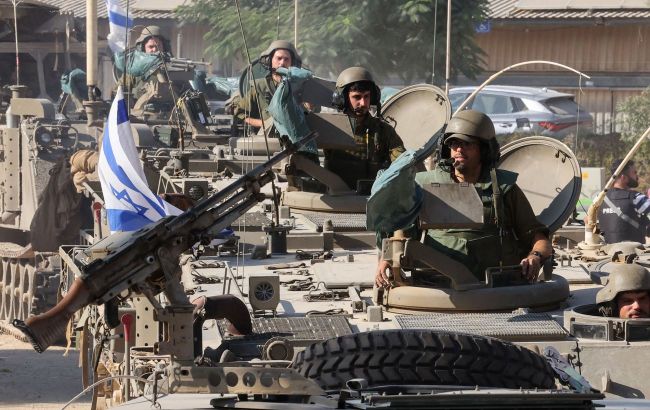 Photo: The IDF is preparing to seize territory up to the Litani River in Lebanon (Getty Images)
Israel is deploying three divisions to the border with Lebanon and preparing for its largest ground operation in 20 years, according to Axios.
The media outlet states that Israeli and American officials have confirmed plans for an expanded operation.
What triggered the offensive
On March 11, Hezbollah, together with Iran, launched a coordinated strike — more than 200 rockets from Lebanon and dozens from Iran.
After that attack, Israel changed its approach. Before the strike, Jerusalem had tried to avoid escalation in the north in order to focus on Iran.
"Before this attack, we were ready for a ceasefire in Lebanon, but after it, there is no way back from a massive operation," a senior Israeli official said.
What the army plans
The goal of the operation is to capture all territory south of the Litani River, push Hezbollah north, and destroy its weapons depots.
"We are going to do what we did in Gaza," the official said, referring to demolishing facilities Israel considers the group’s military infrastructure.
On Friday, March 13, the Israeli army announced reinforcements and the mobilization of reservists.
The US position
The Trump administration supports the operation, but asked Israel not to bomb Beirut airport and state infrastructure.
Israel agreed to spare the airport, but said other targets would be coordinated with Washington on a case-by-case basis.
What Lebanon says
Because of the fighting, more than 800,000 civilians have already fled their homes. At least 773 people have been killed.
Hezbollah leader Naim Qassem rejected diplomacy and called for "resistance."
"When the enemy threatens a ground invasion, we tell him: this is not a threat, but one of the traps you will fall into," he said.
The Lebanese government, for its part, said it is ready for direct negotiations with Israel without preconditions.
Since the US–Israel operation against Iran began on February 28, thousands of people have been killed across several countries in the region.
The largest number of casualties was recorded in Iran — more than 1,200 people, including hundreds of civilians and children.
Lebanon, Iraq, Gulf countries, and other states have also been affected by waves of strikes.
Meanwhile, the United States struck Kharg Island near the Iranian coast, through which about 90% of Iran’s oil exports pass.
Donald Trump called it one of the most powerful bombings in Middle East history and warned that if Iran interferes with shipping in the Strait of Hormuz, the island’s oil infrastructure will also be destroyed.