From Tesla to NATO: Ex-engineers build a robot designed to take risks for humans

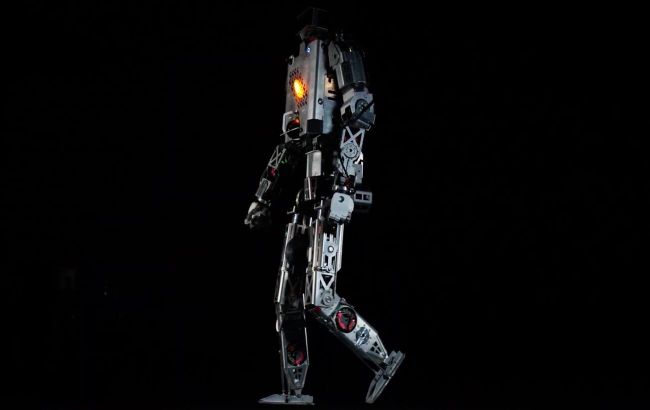 Humanoid Roger could replace bomb disposal experts in hazardous areas (photo: Minerva Humanoids)
The Roger humanoid has been trained to work in places too dangerous for humans. US startup Minerva Humanoids built the robot in just five months. It can remotely handle explosives, toxic substances, and high-voltage electrical equipment, according to Interesting Engineering.
AI keeps the robot balanced while humans stay in control
According to its developers, Roger combines direct remote control with intelligent autonomy powered by Minerva Intelligence, its onboard system.
Artificial intelligence handles complex technical tasks, automatically maintaining balance, adjusting the robot's path, and helping it get back up if it falls.
An operator controls the humanoid through a VR headset, viewing a real-time camera feed and directing the robot's movements. Thanks to a low-latency communication link, every movement made by the operator is instantly replicated by the robot's mechanical hands.
The main goal is not to replace humans entirely, but to keep bomb disposal experts out of harm's way. Minerva Humanoids says technicians can learn to operate the robot fully in just a few minutes.
A solution to the bomb disposal challenge that saves lives
The developers believe traditional tracked or wheeled bomb disposal robots with a single manipulator are suitable only for basic operations. When a task requires high precision or the simultaneous use of both hands, bomb disposal experts still have to risk their lives and carry out the work manually.
"Every EOD operator knows the long walk. When the robot can’t complete the task and the operator has to put the EOD suit on and approach the device alone," explains Dominic Asquith, a British Special Forces veteran and Minerva’s head of hazardous operations
Roger changes this approach: an experienced specialist makes decisions and controls the operation in as much detail as if they were on-site, while remaining completely safe inside a control room.
Read also: NASA readies Valkyrie humanoid robot to pioneer lunar colonization
Former Tesla and Boston Dynamics engineers are behind the project
Minerva was founded in late 2025 by Sandor Felber (CEO) and Maurice Rahme (CTO).
Before launching the startup, Felber researched humanoid robotics at MIT's Computer Science and Artificial Intelligence Laboratory (CSAIL) and contributed to Tesla's Optimus project. Rahme spent six years at Boston Dynamics, where he led the engineering work on Stretch, the company's warehouse robot.
The team developed a fully functional walking prototype of Roger in a record time of just five months, building the hardware from scratch.
Interestingly, the software for the humanoids is being developed in the United States, while the first prototypes are manufactured and assembled in Germany. Minerva plans to establish manufacturing operations in both countries in the future.
NATO-standard testing and preparations for first contracts
Even before its official launch, Minerva tested its technology at NATO's Explosive Ordnance Disposal Centre of Excellence in Slovakia and successfully conducted field trials at two major international airports.
The company is also collaborating with Mohamed bin Zayed University of Artificial Intelligence and the University of Waterloo. Together, they are investigating how the robot performs in critical conditions, including dense smoke, complete darkness, and sudden sensor failures.
Read also: Even 8 quadrillion years wouldn't be enough: Scientists say safe AI is impossible