From clicks to jail: Russia expands online repression — Intel

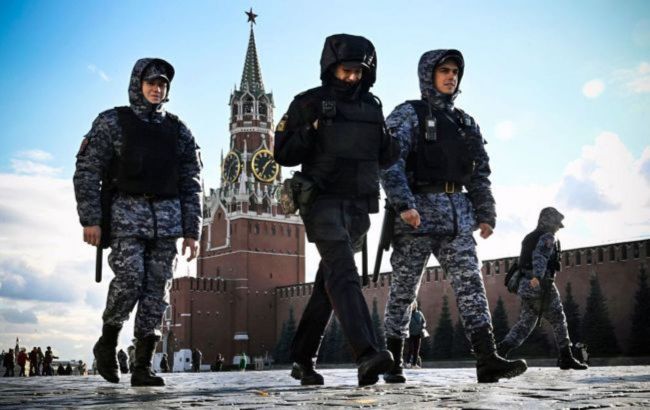 People in Russia can now face punishment for online searches and "likes" (photo: Getty Images)
Russia has intensified its crackdown on online activity, now holding citizens accountable even for searching allegedly "extremist" content in web browsers, according to the Ukraine's Foreign Intelligence Service.
Read also: Russia's FSB set to gain power to fully cut internet and phone networks
New methods of control and device inspections
Since December 2025, Russia's Code of Administrative Offenses has included Article 13.53, which allows authorities to punish individuals for merely searching in an internet browser.
In practice, intelligence reports say, this is reinforced by total control over personal devices. Police can demand that citizens unlock their phones for inspection, including browser history, photo galleries, and Telegram channels.
"Searching, subscribing, or viewing can be interpreted as 'interest in extremism' or even 'dissemination'. Any 'suspicious content' found is used to open a case or exert pressure," the Foreign Intelligence Service stresses.
The boundaries of these inspections remain vague, and any attempt to resist law enforcement can result in violence or additional charges.
Repression statistics, informants' role
Over the past 15 years, Russian authorities have opened more than 30,000 cases related to social media activity. Users of VKontakte have historically been the most targeted, but recently, one in four criminal cases involves posts on Telegram.
The punitive system increasingly relies not on automated monitoring but on reports from the "concerned" citizens.
"Often, cases begin not with monitoring, but with denunciation from colleagues, neighbors, or acquaintances with screenshots of private correspondence. Sometimes the reason is a personal conflict, and the accusation is based on the principle of word against word," the intelligence agency explained.
Now, simply subscribing to an "undesirable" channel or forwarding a message in a private chat is enough to face accusations of participating in an "extremist community."
Federal Security Service's control over Internet
Russia moves to block access to foreign media and human rights organizations, cutting off citizens from alternative sources of information.
Following YouTube, several popular foreign platforms have been fully blocked in Russia as part of a broader strategy to isolate the Russian segment of the internet.
In addition, the Federal Security Service has gained control over communications networks, enabling real-time monitoring of every user's online activity. This new system allows authorities to track internet traffic and online behavior across the country.