France quietly withholds €18B in Russian assets from Ukraine's reparation loan

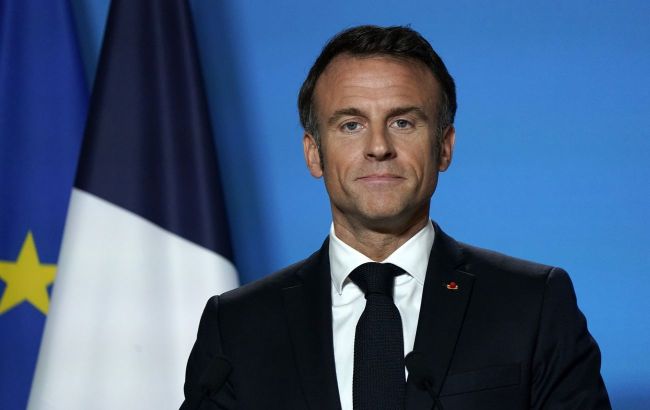 Photo: French President Emmanuel Macron (Getty Images)
France has stated that it is not ready to include those Russian assets held in French private banks in the planned reparations loan for Ukraine - roughly 18 billion euros, according to the Financial Times.
France explains its decision by pointing to legal restrictions on the use of frozen private assets.
In France, the frozen funds of Russia's Central Bank are held by commercial banks, including major institutions. Unlike government securities stored with the Euroclear depository in Belgium, these private assets are governed by different contracts and legal obligations.
According to the media, France does not oppose aiding Ukraine in general, but is against involving Russian assets held in private financial institutions. This position is driven by legal uncertainty and the risk of compensation claims from the previous owner, Russia.
Why banks refuse
According to the FT, banks have contractual obligations to the previous owner of the assets, including interest payments. Transferring the funds could spark legal claims from the Kremlin.
Using private assets differs from using those held at Euroclear - the legal framework is less transparent, raising questions about guarantees for depositors and EU member states.
There is also a political risk: the involvement of private financial institutions could draw criticism from parts of European business and investors who fear that such actions may set a precedent for interference in private property.
What this means for the EU's plan
The refusal deals a serious blow to the European Commission’s plan to provide Ukraine with a so-called "reparations loan" backed by frozen Russian assets. France holds the second-largest pool of such assets within the EU.
The overall initiative envisioned that assets frozen after Russia’s full-scale invasion could be partially or fully used to fund Ukraine's needs in 2026–2027.
However, if a large portion of these funds - such as France's 18 billion euros - remains outside the scheme, the amount available for the loan will shrink significantly. This could reduce the overall level of support for Ukraine and complicate financial planning in Brussels.
Reparations loan for Ukraine
Earlier, the European Commission proposed using frozen Russian assets to secure an emergency loan to Ukraine worth 210 billion euros.
European Commission President Ursula von der Leyen proposed approving the decision to use Russia's frozen assets not unanimously, but by a qualified majority vote of EU member states.
It was expected that Germany, France, and Italy would shoulder most of the guarantees: Germany about 51.3 billion euros, France 34 billion, and Italy 25.1 billion.
The United States has expressed support for the EU plan to use frozen Russian assets as a tool for resolving the conflict.