Four EU countries call for keeping alternative measures on Russian assets alive - Politico

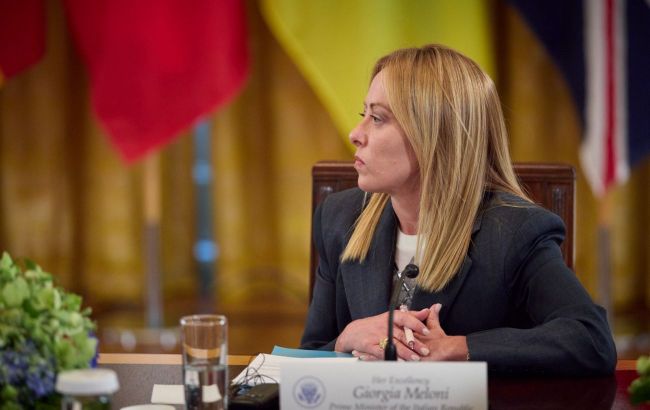 Photo: Italian Prime Minister Giorgia Meloni (Getty Images)
Four EU countries — Belgium, Bulgaria, Malta and Italy — have spoken out against using Russian assets to support Ukraine and have called for exploring alternative financing options, according to Politico.
According to the outlet, Belgium, Bulgaria, Malta and Italy, in a joint statement, urged the European Commission and the EU Council to abandon the use of frozen Russian assets to support Ukraine.
These countries insist on continuing to explore alternative mechanisms that would comply with EU legislation and international law, have predictable parameters, and minimize risks. This refers to the so-called Plan B — issuing joint EU debt to finance Ukraine in the coming years.
However, this idea faces a number of challenges: it could increase the public debt of Italy and France and requires unanimity among all EU members, allowing countries such as Hungary — which is friendly toward the Kremlin — to block the decision. The public criticism voiced by Belgium, Italy, Malta and Bulgaria reduces the chances of the European Commission securing a political agreement at the upcoming summit.
At the same time, even if Hungary and Slovakia join Belgium, Bulgaria, Malta and Italy, they would still remain in the minority. Nevertheless, the public criticism from these countries lowers the European Commission’s chances of reaching a political agreement at next week’s summit.
In Italy, the governing coalition is divided: Prime Minister Giorgia Meloni supports sanctions against Russia, while her deputy Matteo Salvini takes a pro-Russian stance and backs US plans for ending the war in Ukraine.
Frozen Russian assets
During the war in Ukraine, Western countries — primarily the EU, the United States, the United Kingdom, Canada and Japan — introduced sanctions against Russia that include freezing the financial assets of Russian state and private entities.
The European Union and individual countries are now discussing the possibility of partially using frozen Russian assets to support Ukraine, in particular through:
-
The EU’s loan program for Ukraine;
-
The issuance of joint EU debt (Plan B);
-
Temporary financial solutions based on international law and guarantees.
On 12 December, it became known that EU countries agreed to freeze Russian assets worth 210 billion euros indefinitely. This decision will no longer require renewal every six months.
In addition, the European Commission has been pushing for more than a month to provide Ukraine with a so-called reparations loan of 140 billion euros using Russian assets. Belgium, however, opposes the idea, since a large share of Russia’s frozen assets is held in the Belgian depository Euroclear.
Belgian Prime Minister Bart De Wever demands that the EU provide Euroclear with protection against risks — in particular, by ensuring the necessary resources in case Russia imposes sanctions.