Former Ukrainian intelligence general outlines 6 lessons from war for Europe


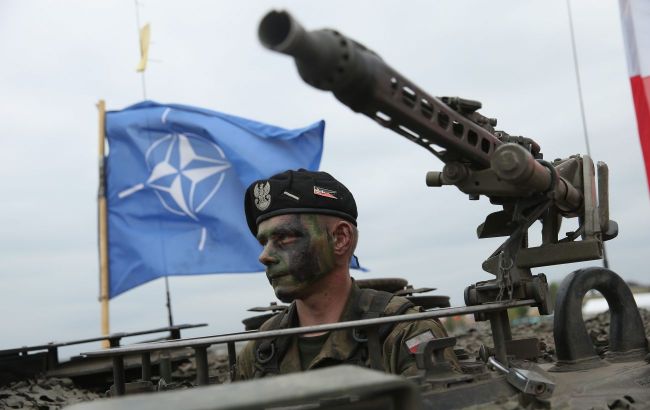 Europe should draw six lessons from the war in Ukraine, former intelligence general says (photo: Getty Images)
Modern European security should be built around intelligence capabilities rather than the sheer quantity of weapons. Ukraine's experience demonstrates the need for rapid adaptation to new threats, according to former Deputy Chief of Ukraine's Defense Intelligence (HUR), Major General Illia Pavlenko, in an op-ed for KyivPost.
The role of intelligence in modern warfare
In the realities of today's battlefield, intelligence has ceased to be a supporting function. It has become a central element of security capability, without which precision weapons, air defense systems, and the destruction of enemy logistics cannot function effectively.
According to Pavlenko, defense turns into a delayed reaction without proper intelligence data.
Six security lessons for Europe
In Pavlenko's view, Ukraine's experience makes it possible to identify fundamental lessons for a new European security architecture.
Lesson 1: The intelligence-strike system. Sensors, analytics, and strike capabilities must operate as a single organism. The advantage belongs to whoever can minimize the time between target detection and engagement.
Lesson 2: A war of adaptation. Russia is constantly learning and changing its tactics. Europe's defense procurement practices, which often take years, are a critical vulnerability. Security must therefore become a system of continuous renewal.
Lesson 3: Combat innovation. The key advantage is the speed at which technologies move from concept to battlefield application. A clear example is the effectiveness of medium-depth strikes against enemy infrastructure.
Lesson 4: Countering influence operations. Russia seeks to undermine Europe's political will. In addition, Moscow is actively recruiting citizens from Global South countries, which poses a direct threat to the EU through migration networks.
Lesson 5: Ukraine as a security contributor. Ukraine's combat experience is a practical necessity for Europe. Ukraine's integration into the Euro-Atlantic security system should not be viewed as a distant political gesture.
Lesson 6: Active deterrence. Deterring Russia requires joint efforts: a strong military, unified weapons production, and the ability to strike the enemy's war machine, logistics, and finances.
"Yes, Europe needs a new arsenal. But this arsenal is not only weapons. It is intelligence, technology, industry, resilience, political will, engagement with societies beyond Europe, and the ability to act together. Ukraine is already part of this arsenal. The only question is how quickly we can together transform this experience into a common security system that does not merely react to aggression, but stays ahead of it," Pavlenko concluded.