Flying blind: Future upgrades coming to Ukraine's long-range drones

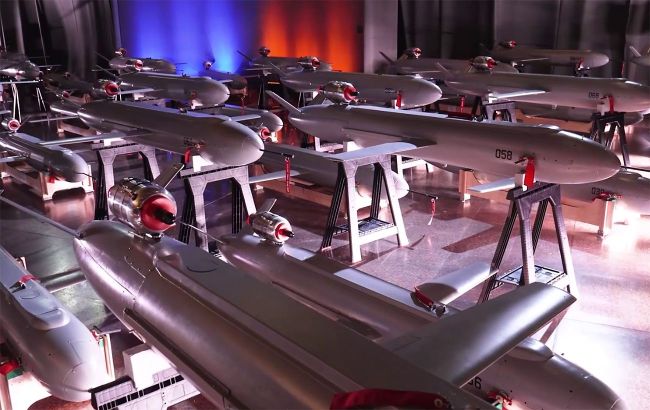 Photo: Ukrainian drones have undergone major development in recent years (video screenshot)
Over the past several years, Ukrainian long-range UAVs have evolved from experimental solutions into more mature systems that are increasingly seen as part of Ukraine’s regular defense capabilities, according to RBC-Ukraine's report.
According to experts, the changes have taken place in several areas. First, their range has increased. Second, reliability has improved. Third, production has become more streamlined and scalable. Fourth, focus on resistance to EW jamming has increased significantly. Fifth, manufacturers have adopted a more professional approach to quality, logistics, maintainability, and system upgrades.
It is also important that the deep-strike segment is no longer a niche area. Ukraine has officially said it is scaling up the production of unmanned systems, including long-range drones, while Ukraine’s National Security and Defense Council estimated the country’s deep-strike production capacity at around $25 billion as of 2026.
This means the focus is no longer just on engineering ingenuity, but also on building a new defense industry sector.
According to Oleh Krot, chairman of the board of Culver Aerospace, deep-strike drones are likely to become more autonomous, more resilient to electronic warfare and more deeply integrated into broader intelligence and strike networks over the next one to two years.
The manufacturers interviewed broadly agreed that future developments will focus on navigation in environments where GPS signals and communications are degraded, as well as wider use of artificial intelligence to assist with navigation, target recognition, mission planning and reducing operator workload.
The role of coordinated drone operations is also gradually increasing. In this approach, an individual drone is no longer treated as a standalone unit but as part of a larger strike architecture.
But the biggest change will not be in the platform itself. It will be in how the entire process is organized. Experts predict that the winners will not be those who create the "best drone" once, but those who can continuously upgrade their systems, rapidly scale production, incorporate battlefield experience and stay ahead of the enemy in the adaptation cycle.
Earlier, RBC-Ukraine reported that Ukraine’s Defense Forces carried out a successful strike on the Lukoil-Permnefteorgsintez oil refinery in Perm, Russia, as well as an enemy training ground in the Russian-occupied part of Zaporizhzhia region.
We also explained why Ukraine has started targeting Wildberries and what effect it is seeking to achieve. In addition, Ukraine’s Defense Forces recently struck one of Russia’s five largest oil refineries and a boat base in Crimea.