'Moscow burned twice': Inside Ukraine's largest-ever drone campaign against Russia

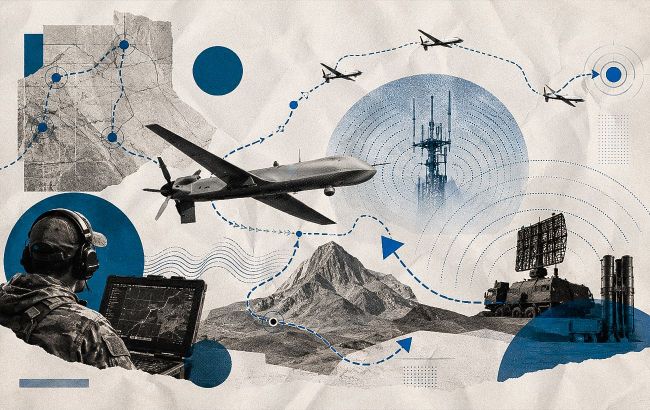 Photo: What's behind Ukraine's record-breaking drone strikes (RBC-Ukraine collage)
Ukraine's Defense Forces are expanding long-range drone strikes deep behind Russian lines every year, setting fire to key air bases, oil refineries and logistics hubs. The campaign culminated in a 40-day operation aimed at destroying critical enemy infrastructure.
RBC-Ukraine spoke with military personnel and manufacturers of long-range drones to learn how Ukraine's deep-strike system works today and how it is expected to evolve in the coming years.
Key points:
- Flight routes are planned before launch. Military planners take into account range, platform limitations, navigation conditions and operational security factors.
- The main difference between deep-strike drones and shorter-range UAVs is fuel capacity. Simply put, the more fuel a drone carries, the farther it can fly.
- Ukrainian drones struck 697 targets in Russia during the first half of 2026. The campaign disabled a record 43% of Russia's oil refining capacity.
- Over the next one to two years, deep-strike drones are expected to become more autonomous. They are also likely to become more resistant to electronic warfare and more closely integrated into the broader intelligence network.
Deep-strike capabilities are expanding
Ukraine's deep-strike capabilities have grown significantly in recent years. Open-source data, including findings from OSINT communities, point to an expanding range and scale of Ukrainian strikes against military, logistics, industrial and energy facilities inside Russia.
According to Ukraine's National Security and Defense Council (RNBO), the country deployed six times more long-range drones in 2025 than it did in 2024.
Overall, deep-strike drones have become a tool of strategic pressure. They allow Ukraine to target not only the front line but also the enemy's logistics, infrastructure, warehouses, production facilities, and military sites far behind the battlefield. In recent years, Ukraine has demonstrated that such systems can become one of the key elements of deterrence.
In comments to RBC-Ukraine, the 1st Separate Unmanned Systems Center of the Unmanned Systems Forces said that deep-strike assets hit 697 targets in Russia during the first half of 2026 alone, disabling a record 43% of the country's oil refining capacity.
Since the start of the year, the number of strikes deep inside enemy territory has increased by 1,150%, reflecting a systematic and planned expansion of Ukraine's capabilities.
"We do not disclose specific plans or future targets, of course. But the effort is systematic, and every next step is part of our broader strategy," the center said.
According to its representatives, targets are selected based on strategic priorities. The current focus is on the fuel sector, the defense industry, and the logistics networks that support them.
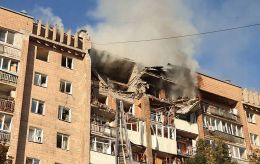
"In June, we struck 11 oil refineries and more than eight defense-industrial enterprises. There were only a few days when nothing was burning in the enemy's strategic rear. Moscow burned twice in June," the military said.
The range of Ukrainian strikes is also expanding step by step. In July, the 1st Separate Unmanned Systems Center, working together with other units of Ukraine's Defense Forces, carried out one of the most painful strikes for Russia, targeting the country's largest oil refinery in Omsk.
Omsk lies about 2,400 kilometers away in a straight line, but accounting for route deviations and maneuvering, the Ukrainian drones covered as much as 3,000 kilometers, extending their strike reach deep into Siberia.
"Expanding the scale of operations is part of a broader plan to enhance our capabilities. We have more assets, conduct more precise reconnaissance, and have shortened the preparation cycle. Everything is carefully calculated," the 1st Separate Unmanned Systems Center said.
What helps deep-strike drones fly long distances
According to Oleh Krot, chairman of the board of Culver Aerospace, the defining feature of long-range drones is that they are designed not around a short mission, but around a long and complex flight profile.
"Deep-strike drones are engineered from the outset to cover vast distances, operate for extended periods and complete missions in a challenging environment," Krot told RBC-Ukraine.
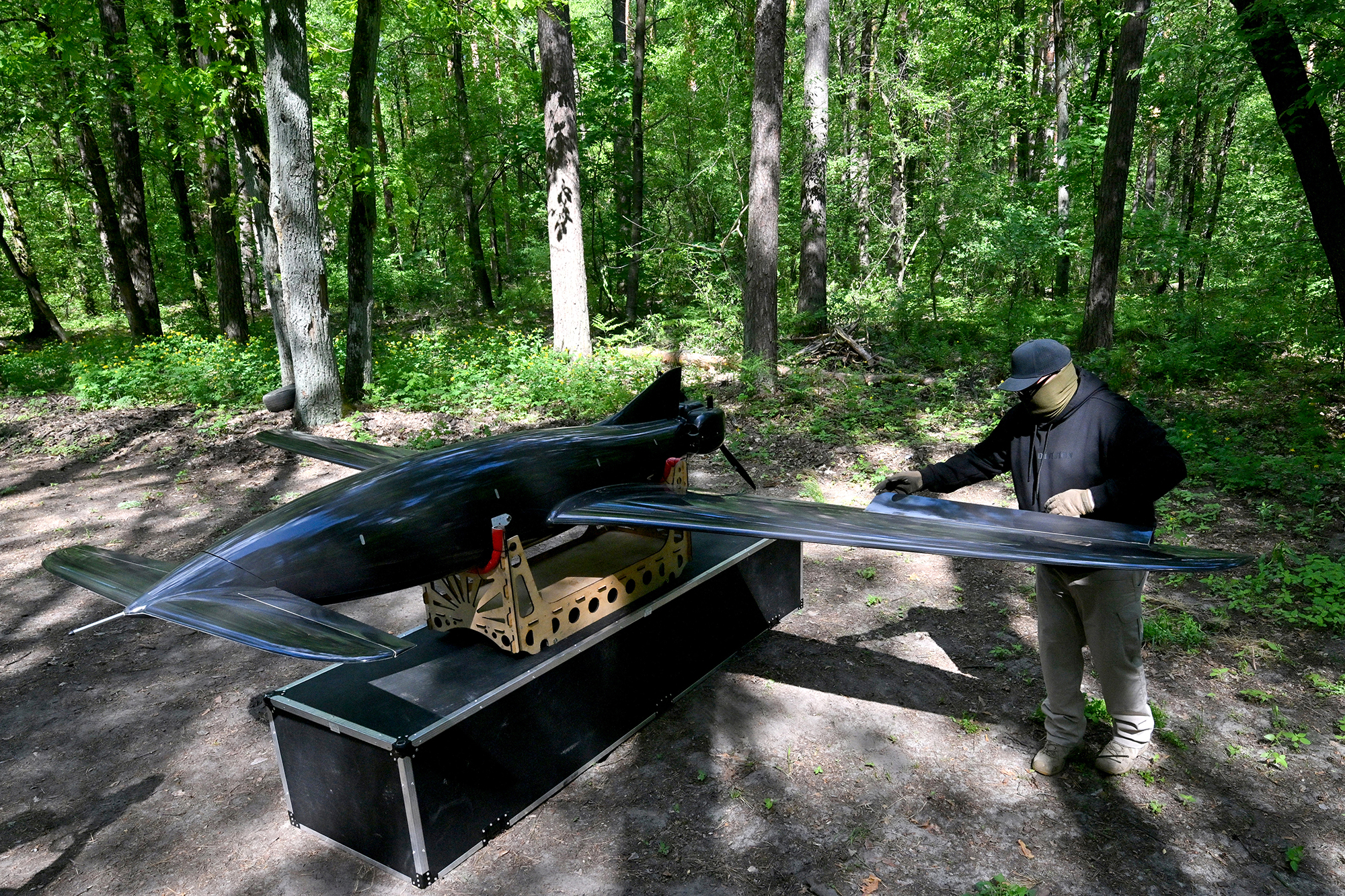
Photo: Ukraine's deep-strike drones have dramatically expanded the scale of their attacks in recent years (Getty Images)
For shorter-range drones, the key priorities are usually simplicity, rapid deployment, affordability, maneuverability, operator convenience and effectiveness in the tactical zone.
Deep-strike systems, however, are built around a different set of requirements. Energy efficiency, aerodynamics, engine stability, onboard electronics reliability, navigation resilience, manufacturing quality, predictable performance over long distances and the ability to operate in contested environments all become critical factors.
In other words, they represent a different engineering challenge. A small tactical drone can be highly effective at short range, but a deep-strike platform must remain a stable and reliable system for hours while operating in complex conditions, with limited energy resources and under the influence of numerous external factors.
Developers of the Bars long-range drone told RBC-Ukraine that the main difference between deep-strike systems and shorter-range UAVs lies in fuel capacity and battery storage. Simply put, the greater the fuel and power reserves, the farther the drone can travel.
DG Industry also told RBC-Ukraine that most modern drones are designed for a single specific mission and therefore tend to have a narrow specialization. Its Shpatel drone, which can fly hundreds of kilometers in one direction, was instead developed from the outset as a universal platform that can be adapted to a unit's operational needs.
The same aircraft can function as a strike drone, engaging targets under manual control, using pre-programmed coordinates or updated coordinates provided during a mission. It can also serve as a decoy to overload enemy air-defense systems or act as a communications relay. This versatility allows a single platform to perform multiple tasks without requiring separate systems for each role.
Developers interviewed by RBC-Ukraine emphasized that the cost and availability of drones are also crucial factors in modern warfare. The large-scale deployment of long-range platforms not only increases operational effectiveness but also forces the enemy to expend far more expensive air-defense assets against comparatively cheap targets. As a result, success today depends not only on the capabilities of an individual drone, but also on the ability to manufacture and deploy such systems at scale.
How flight routes are planned and how drones outsmart electronic warfare
Manufacturers of deep-strike drones agree that the process of programming flight routes depends on the platform type, mission requirements and the specific system being used. In general, however, deep-strike missions require extensive pre-mission planning.
The flight path, mission logic and operational parameters are prepared before launch, taking into account the target, range, platform limitations, navigation conditions and security considerations.
Manual control is more common for tactical systems, where operators make decisions in real time. For long-range platforms, however, this approach has natural limitations. Instead, greater emphasis is placed on autonomy, mission-planning quality, navigation reliability and the platform's ability to complete its mission without constant operator involvement.
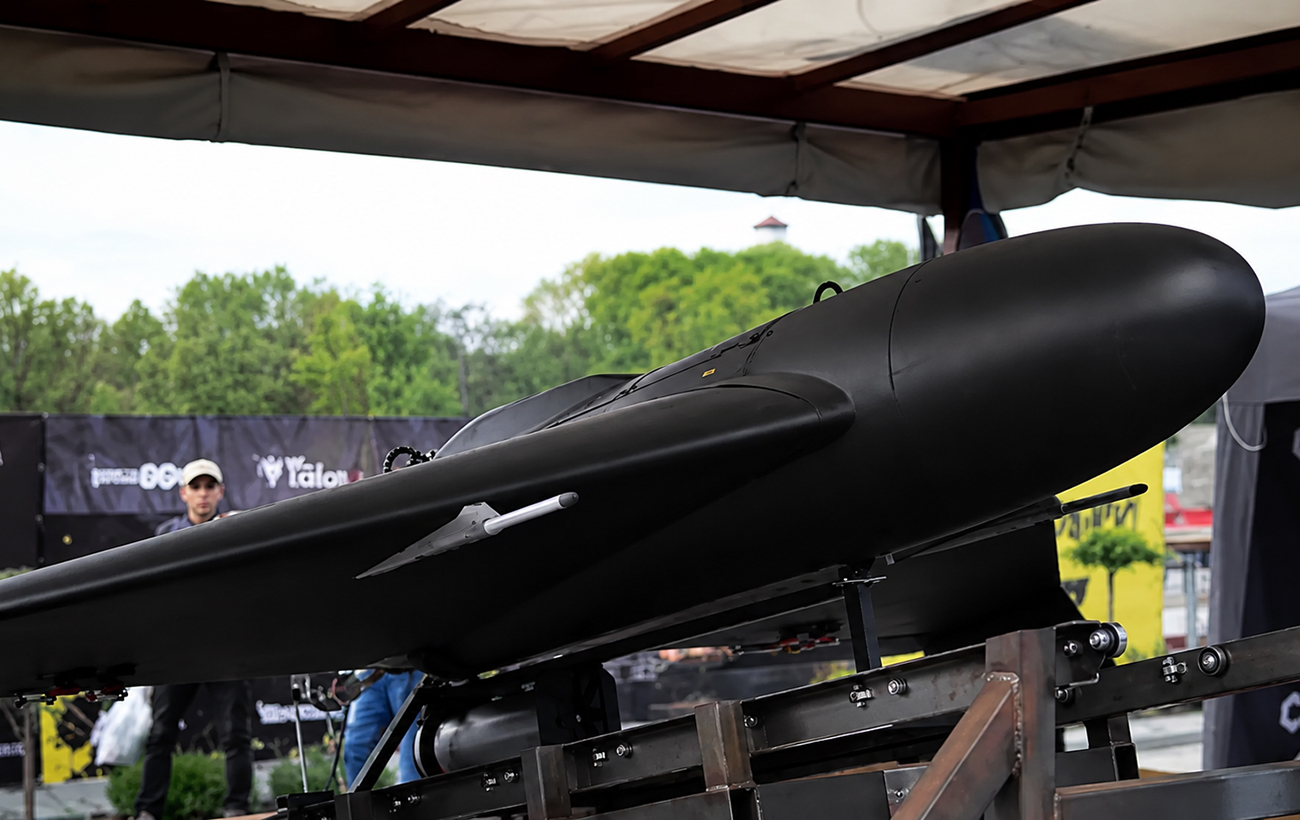
Photo: drone flight routes are planned in advance (video screenshot)
Overall, most long-range drones today incorporate multiple route-planning solutions, and the final decision on flight paths typically rests with the military. The role of manufacturers is to provide effective tools and capabilities for mission planning.
Naturally, the drone makers interviewed did not disclose specific technical methods used to counter electronic warfare, as such information is considered sensitive.
At the conceptual level, however, overcoming electronic warfare is not about a single "magic" technology. Rather, it involves a combination of navigation resilience, sound system architecture, autonomy, high-quality mission planning, redundancy in critical components, and continuous platform upgrades.
"The war has shown that electronic warfare and drones are evolving in a constant race of adaptation. One side finds a way to reduce the effectiveness of a system, while the other changes its approach. As a result, any advantage is temporary. The edge belongs to whoever learns faster, implements changes more quickly and better integrates combat experience into its systems," said Oleh Krot, chairman of the board of Culver Aerospace.
Ukrainian manufacturers largely rely on modern communications systems and continuously adapt them to battlefield conditions. Solutions that were effective just a few months ago may already require adjustments today.
"We are currently seeing growing demand for UAVs equipped with satellite communication links, so we have adapted our drones for that mode of operation. This allows missions to be carried out even in environments where electronic warfare systems are actively deployed, meaning their impact is not currently critical for our platform," DG Industry said.
Comprehensive testing is key to success
According to Oleh Krot, chairman of the board of Culver Aerospace, testing both deep-strike systems and the company's Behemoth mid-range strike platform is a multi-layered process. It begins not with flight tests, but with engineering assessments of components, ground testing, inspections of electronics, engines and software logic, as well as evaluations of manufacturing quality and overall system stability.
Flight testing follows in stages, focusing on the platform's basic behavior, stability, range, endurance and the performance of its control, navigation and communications systems. More demanding scenarios are then introduced. In wartime conditions, it is not enough to prove that a platform can fly; developers must understand how it performs in an environment where the enemy is constantly adapting.
Developers emphasize that feedback from military operators is a critical part of the process. In Ukraine, the cycle of "combat use - analysis - engineering modification - new iteration" is far shorter than in traditional defense industries. This, they say, is one of the main reasons behind the rapid pace of Ukrainian innovation.
DG Industry noted that drone testing begins long before the first flight. All systems are initially evaluated in laboratory conditions before the platform moves on to flight trials at specialized testing ranges.
Manufacturers stress that the journey from prototype to operational system is a lengthy one. It is not enough to ensure that all systems function reliably; developers must also refine aerodynamics, evaluate performance under different conditions, and verify that the platform meets all operational requirements. Designs that appear perfect on paper often reveal areas for improvement once testing begins.
The developers interviewed by RBC-Ukraine agreed that test flights sometimes proceed without any issues, but that is not always the most valuable outcome. The greatest lessons are often learned when weaknesses are identified and analyzed to understand why problems occurred.
Each test provides new insights and helps improve the system. As a result, military units receive platforms that have already been thoroughly tested and refined rather than experimental prototypes.
Confirming the strike
One of the key elements of deep-strike missions is battle damage assessment and target confirmation. As a rule, the primary methods used to verify mission effectiveness are objective monitoring and OSINT-based tools.
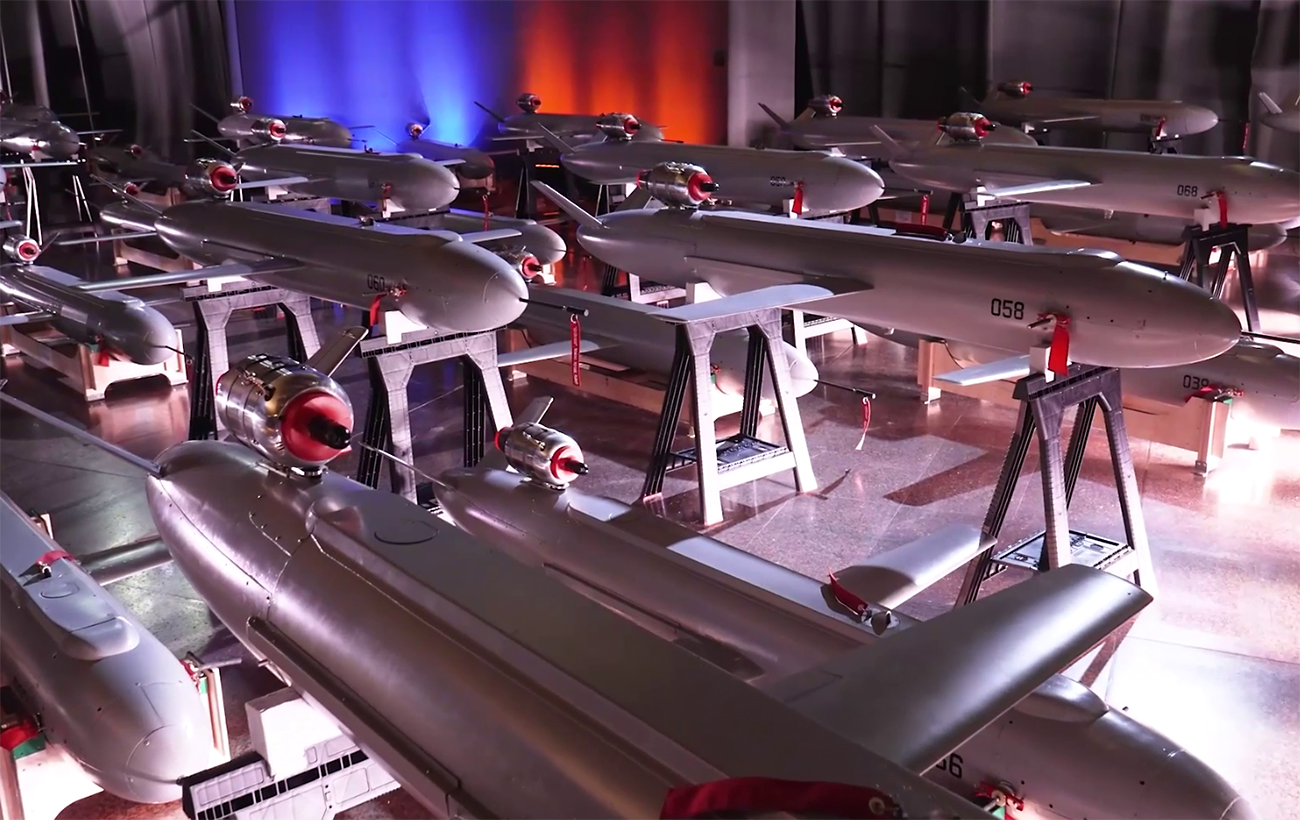
Photo: drone strike confirmations are verified through several independent methods (video screenshot)
Drone manufacturers say that confirming strike results always involves a combination of sources. These may include reports from military units, intelligence data, open-source information, photos and videos, satellite imagery, enemy statements, secondary indicators of damage and follow-up assessments of the target.
At the same time, manufacturers stress that they are not always the parties responsible for publicly confirming specific combat operations. Such matters generally fall within the remit of the military, intelligence agencies and government authorities.
For their part, drone makers routinely analyze the technical performance of their systems, gather feedback and refine their products. However, they are not always able to publicly link a specific platform to a specific operation.
This is not only a matter of communications but also of security. Public confirmation can reveal unnecessary details about tactics, capabilities, and decision-making processes.
What comes next
The evolution of deep-strike drones has been remarkably rapid in recent years. Put simply, Ukraine's long-range UAVs have progressed from largely experimental and often bespoke solutions to more mature systems that are increasingly viewed as part of the country's regular defense capabilities.
This transformation has occurred across several areas. First, range has increased. Second, reliability has improved. Third, production has become more scalable and serial in nature. Fourth, there is now a much stronger focus on resilience against electronic warfare. Fifth, manufacturers have adopted a more professional approach to quality control, logistics, maintainability, and system upgrades.
Another important development is that the deep-strike segment is no longer a niche capability. Ukraine has openly discussed scaling up the production of unmanned systems, including long-range drones, while the National Security and Defense Council (NSDC) estimated Ukraine's deep-strike manufacturing capacity at roughly $25 billion as of 2026. As a result, the sector is no longer defined solely by engineering ingenuity but is increasingly taking shape as a new branch of the defense industry.
According to Oleh Krot, chairman of the board of Culver Aerospace, deep-strike drones are likely to become more autonomous, more resilient to electronic warfare and more deeply integrated into broader intelligence and strike networks over the next one to two years.
The manufacturers interviewed broadly agreed that future developments will focus on navigation in environments where GPS signals and communications are degraded, as well as wider use of artificial intelligence to assist with navigation, target recognition, mission planning and reducing operator workload.
The role of coordinated drone operations is also growing. Increasingly, individual drones are no longer viewed as standalone systems but as components of a larger strike architecture.
The most significant change, however, is unlikely to be the platform itself. Instead, it will be the organization behind it. According to industry experts, success will belong not to those who create the "best drone" once, but to those who can continuously upgrade their systems, rapidly scale production, incorporate battlefield lessons and stay ahead of the enemy in the adaptation cycle.
"The modernization process never stops. What was effective and flying a month ago is barely flying today. We are not just tracking new technologies and solutions from around the world — we are actively hunting for them. The integration of innovations is a round-the-clock process," one of the deep-strike drone manufacturers interviewed by RBC-Ukraine said.
Quick Q&A
– Are Ukraine's Defense Forces expanding their long-range strike campaign against targets deep inside Russia?
– Yes. According to the National Security and Defense Council (RNBO), Ukraine deployed six times more long-range drones in 2025 than it did in 2024.
– What are the key characteristics of long-range drones?
– For deep-strike systems, the most important factors are energy efficiency, aerodynamics, engine stability, onboard electronics reliability, navigation resilience and manufacturing quality.
– What does the testing process for long-range drones involve?
– Testing begins long before the first flight. All systems are initially evaluated in laboratory conditions, after which the platform undergoes flight trials at specialized testing ranges.
– How are deep-strike drones expected to evolve in the future?
– Over the next one to two years, deep-strike drones are expected to become more autonomous, more resilient to electronic warfare, and more closely integrated into broader intelligence and strike networks.