Fire Point shows its future anti-ballistic missile for first time: Test footage

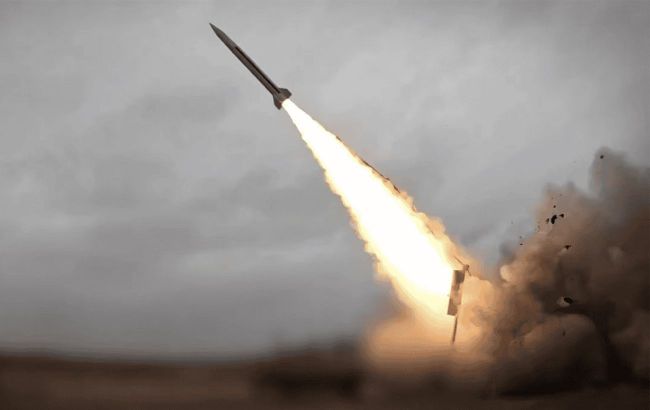 Illustrative photo: Fire Point has tested the FP-7.X interceptor missile (video screenshot)
Fire Point has conducted the first test of the FP-7.X missile, which will form the basis of the FREYJA anti-ballistic system, according to a statement by the company’s Chief Technology Officer, Iryna Terekh, on Facebook.
"Recently, we carried out an extremely important test: a fully controlled maneuvering flight of the FP-7.X missile, which will form the basis of the future FREYJA anti-ballistic interceptor," she said.
Terekh emphasized that efforts are currently underway to ensure Ukraine can independently close its own airspace.
In addition, Terekh noted that each successful test of a new missile is a step toward the country’s technological sovereignty.
Fire Point has conducted the first test of the FP-7.X missile, which will form the basis of the FREYJA anti-ballistic system pic.twitter.com/A8L2kKGD0E
— RBC-Ukraine (@NewsUkraineRBC) June 3, 2026
Fire Point’s Chief Designer Denys Shtilierman published the specifications of the FP-7.X on Twitter (X).
In particular, the munition is made of composite materials and is capable of reaching speeds of 1,500 to 2,000 meters per second. Its length is 7.25 meters, the outer diameter is 1.15 meters, while the fuselage diameter reaches 0.53 meters.
The missile is equipped with a semi-active infrared homing seeker, the development of which is planned in cooperation with the German company Diehl Defence, known for the IRIS-T systems.
Shtilierman also previously noted that Ukraine’s FP-7 and FP-9 ballistic missiles are intended to serve as an analogue to the American ATACMS, while being twice as cost-effective.
It is also noted that the Air Force reported a severe shortage of missiles for the Patriot, NASAMS, and IRIS-T air defence systems. Some units are left with almost no ammunition, while Air Force personnel are reportedly forced to request as few as 5–10 interceptors at a time.