Fire at Primorsk oil terminal flares up again, satellite images show

 Photo: An oil terminal in Russia was attacked several times during the week (Getty Images)
A fire at an oil terminal in the Russian port of Primorsk (Leningrad region) has been burning for five days. On the night of March 27, the blaze intensified after another drone attack, according to Schemes (Radio Liberty).
What happened overnight on March 27
According to Planet Labs satellite imagery, the fire intensified again at the Primorsk oil terminal overnight on March 27. The blaze, which has been burning since March 23, flared up again after another drone strike.
The images show flames spreading to new sections of the port’s infrastructure, with thick smoke rising over the terminal.
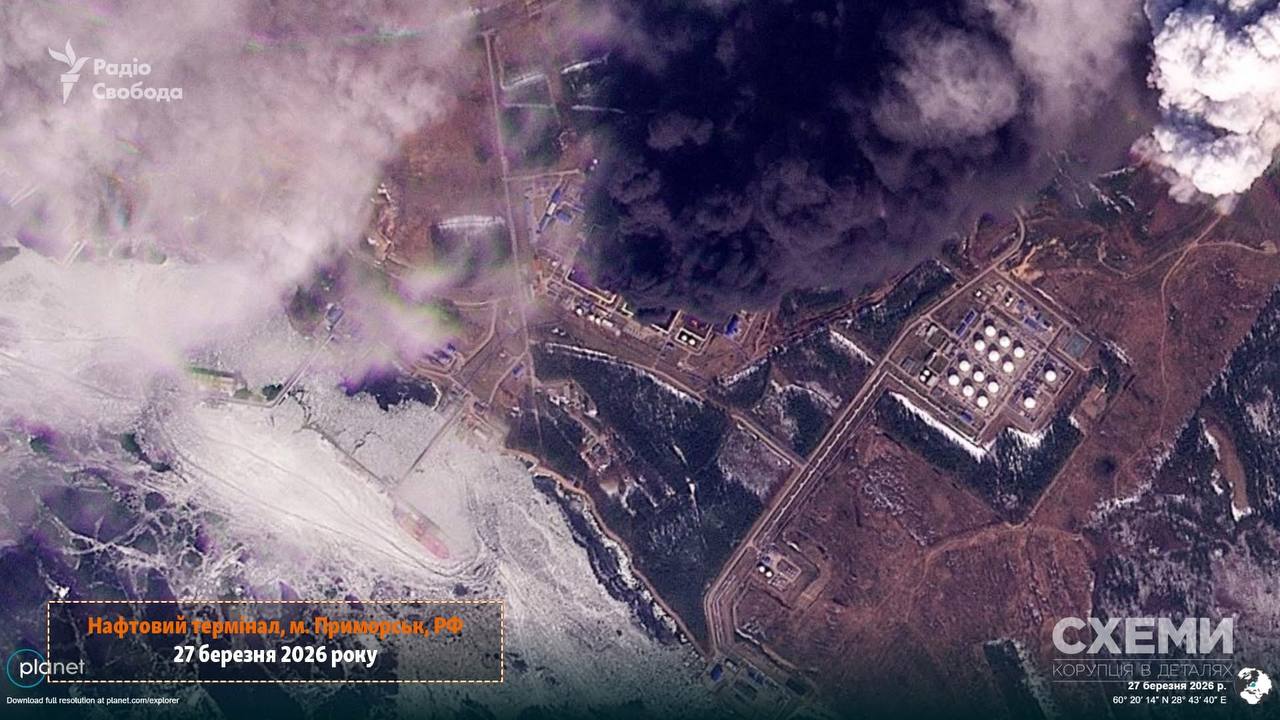
Photo: fire at the oil terminal in Primorsk (Planet Labs, Radio Liberty)
Previous strike and aftermath
On the night of March 23, drones of the Security Service of Ukraine (Alpha special operations unit), together with other Defense Forces units, struck the oil terminal in Primorsk. The attack sparked a large-scale fire that is still ongoing.
The port of Primorsk is Russia’s largest oil port on the Baltic Sea and a key export hub. A significant share of oil supplies to foreign markets passes through it, including via the so-called shadow fleet. In 2025 alone, more than 46.6 million tonnes of oil were handled through the terminal.
Following the initial strike, fuel shipments from the terminal were temporarily halted. According to Bloomberg, the port has partially resumed operations.
This is not the only strike on Russian facilities in the region in recent days. On the night of March 26, Ukraine’s Defense Forces struck the Kirishi oil refinery in the Leningrad region. The refinery is one of the largest fuel suppliers in northwestern Russia.
In addition, Ukrainian drones targeted a unique FSB combat icebreaker used to support navigation for Russia’s shadow fleet in the Baltic Sea — a key tool for bypassing oil sanctions.
Ukrainian forces also hit the Valdai radar system in temporarily occupied Crimea, near Hvardiiske. Notably, this system was specifically designed to detect and counter small drones, which Ukraine has been using to systematically strike Russian targets.