Explosions force flamingos to flee as war in Ukraine disrupts bird migration

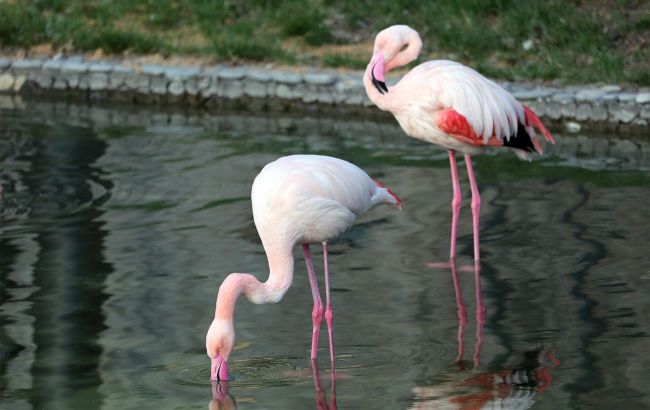 Photo: Pink flamingos (Getty Images)
Russia's full-scale war is affecting not only people. Due to explosions, missile strikes, and the constant noise of drones, thousands of birds are dying in the Black Sea region, while pink flamingos have been unable to successfully breed for two years in a row, according to Ivan Rusev, Doctor of Biological Sciences and head of the research department at the Tuzly Estuaries National Nature Park.
Key points:
- Collecting evidence. Environmentalists and scientists are trying to minimize their presence near birds to avoid causing additional stress and are currently collecting data to assess the real scale of population declines caused by the war.
- Changing migration routes. A key migration route from Africa runs through the Tuzly Estuaries National Park. Explosions force migratory birds to change their paths, causing them to lose energy and often fail to reach their breeding grounds.
- Impact on flamingos. Unique pink flamingos, which successfully raised around 200 chicks in 2023, have been unable to nest for two years in a row because they become frightened and abandon their eggs.
- Mass deaths. Russian missile strikes and drone crashes in the Black Sea region are causing catastrophic consequences. There are documented cases when thousands of birds died at once after attacks.
Thousands of birds are dying because of explosions
According to the scientist, the war has hit the inhabitants of the estuary zone particularly hard, as the park includes 13 estuaries.
Explosions from ballistic missiles, including Iskander missiles, as well as falling Russian drones, have devastating effects on birds.
"We have documented cases when thousands of birds died after missile strikes," Rusev said.
Flamingos abandon nests because of Shahed drones
The situation with pink flamingos, which settled in the Tuzly Estuaries shortly before the start of the full-scale invasion, is causing particular concern.
In 2023, the colony successfully raised around 200 chicks. Scientists managed to ring 18 of them and even track their wintering locations.
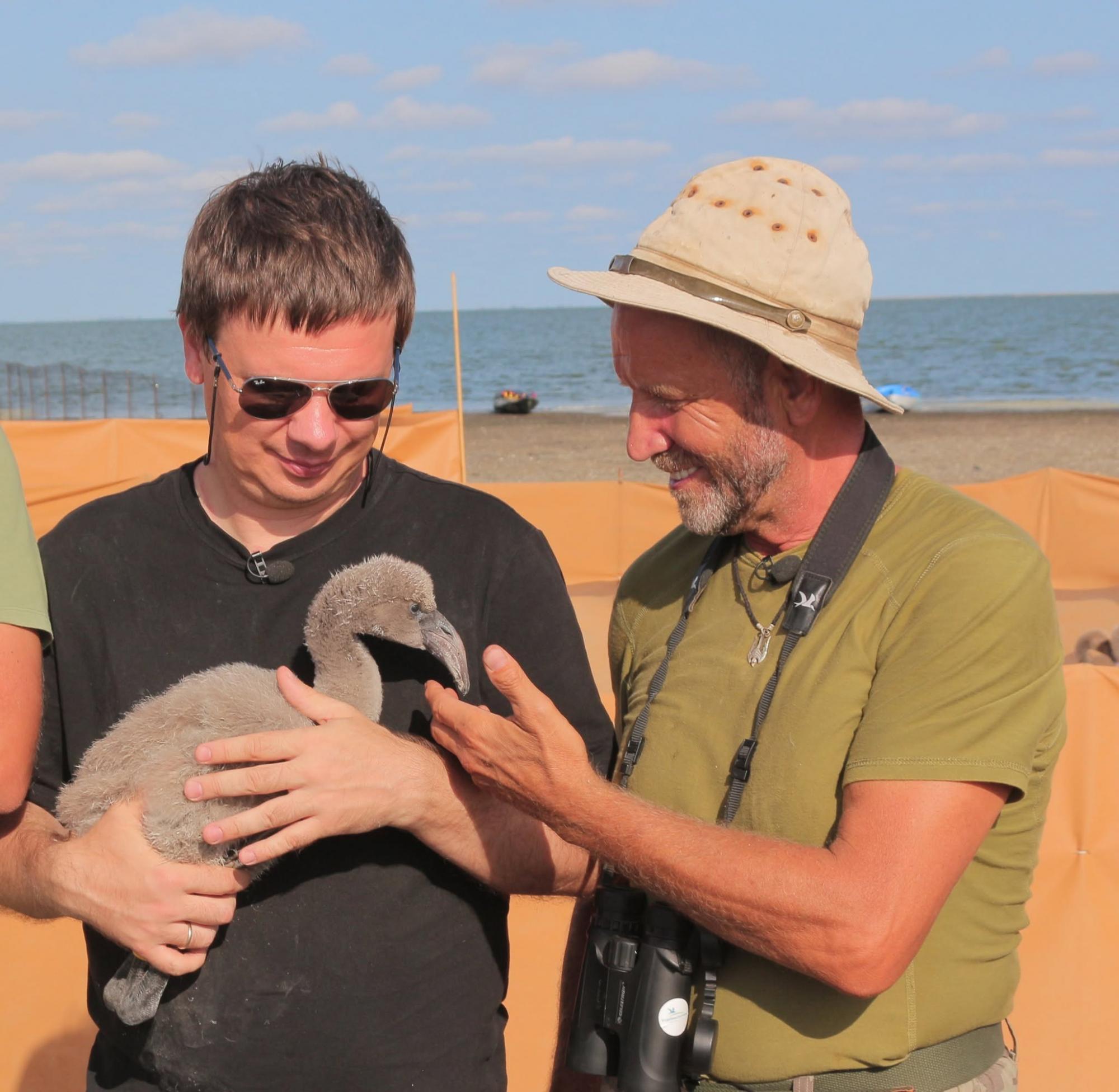
Flamingo ringing at the Tuzly Estuaries National Nature Park in September 2023 (photo: facebook.com/rusevivan)
However, over the next two years, the situation changed dramatically.
"In 2024 and 2025, the birds were unable to nest. Because of the intense noise and constant flights of Shahed drones, they become frightened, abandon their nests and eggs, which are immediately destroyed by gulls," the biologist explained.
According to him, this year, flamingos are trying to establish colonies again, but the outcome remains at risk because of the ongoing hostilities. Scientists themselves are trying to visit nesting areas as rarely as possible in order not to create additional stress for the birds.
War changes migration routes
Rusev emphasized that the consequences of the war are affecting not only local birds but also migratory species.
One of the key migration routes from Africa to the tundra passes through the Tuzly Estuaries National Nature Park. For many species, this area serves as a resting place and a source of energy replenishment thanks to the unique estuary ecosystem.
However, due to explosions and constant noise, birds are forced to change their usual routes.
"If birds are frightened by the war, forced to change their route and lose energy, they simply do not reach their nesting grounds. This leads to lower reproductive rates and an overall decline in populations," the scientist said.
According to Rusev, experts are currently collecting data that will help assess how much the war has reduced the numbers of different bird species.
Earlier, we reported that in the summer of 2024, pink flamingos were forced to search for new safe areas in the Tuzly Estuaries National Nature Park in the Odesa region after their nesting site was flooded.