European Commission President names those responsible for drone incidents over Baltic region

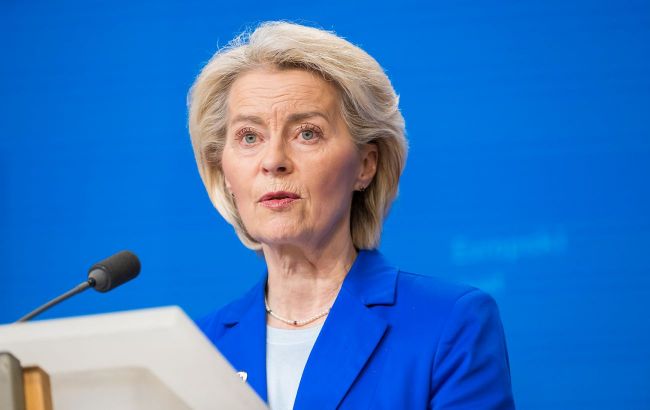 Photo: Ursula von der Leyen (Getty Images)
European Commission President Ursula von der Leyen said during a speech in Vilnius that drone incidents in the Baltic states are part of Russia’s deliberate strategy to destabilize democratic societies, LRT reports.
Russia uses drones to pressure Europe
European Commission President Ursula von der Leyen said during a press conference in Vilnius that drone incidents in the Baltic states are not accidental.
According to her, this is a carefully planned Russian strategy aimed at undermining the stability of democratic countries in the region.
She emphasized that the European Union views these actions as part of a broader hybrid pressure tactic.
EU response and support for the Baltic states
The head of the European Commission stated that despite attempts at destabilization, Russia is not achieving its objectives.
She separately highlighted the resilience of Lithuania, Latvia, and Estonia, and expressed full support from the EU.
Von der Leyen recalled that the Baltic states are already receiving additional assistance under European security programs, including funding and strengthened defense capabilities.
Strengthening defense and investment in air defense
According to the Commission President, the EU is actively investing in counter-drone systems, modernization of air defense, and protection of critical infrastructure.
She specifically mentioned the SAFE program, under which Lithuania has already signed a corresponding plan, while Latvia and Estonia are preparing similar agreements.
Overall, the Baltic states could receive around €12 billion in additional support.
In addition, €1.5 billion from the Cohesion Fund has been allocated to improve defense readiness and border control.
New warning systems and coordination with NATO
Von der Leyen emphasized the need to create a more unified early warning system and to strengthen cross-border information sharing.
According to her, particular attention should be given to integrating national systems with the EU’s Copernicus and Galileo space programs.
She also announced plans to carry out a joint comprehensive assessment with NATO of counter-drone capabilities in the region, in order to identify weak points and speed up the elimination of threats.
Lithuania’s position: 'Solidarity is not enough'
Lithuanian President Gitanas Nausėda said that the growing number of airspace violations requires not only political statements from the EU, but concrete action.
According to him, the EU’s eastern border is under pressure from drones, cyberattacks, and threats to critical infrastructure.
He stressed that the Baltic states expect practical security solutions, including modernization of air defense systems and early response mechanisms.
Situation in Kaliningrad and the risk of regional escalation
Nausėda also commented on reports of warnings in Russia’s Kaliningrad region, saying he could not assess their nature.
He stressed that the territory of the Baltic states cannot be used for attacks against neighboring countries.
He also noted that the development of Ukrainian long-range drones is affecting the regional situation and increasing tensions, influencing perceptions of security inside Russia.
A NATO fighter jet patrolling Baltic airspace reportedly destroyed a drone over Estonian territory.
Following a series of drone incidents near NATO borders, Ukraine is considering sending its specialists to the Baltic states to strengthen air defense systems.