Europe between war and peace as EU leaders accuse Russia of new attacks — WSJ

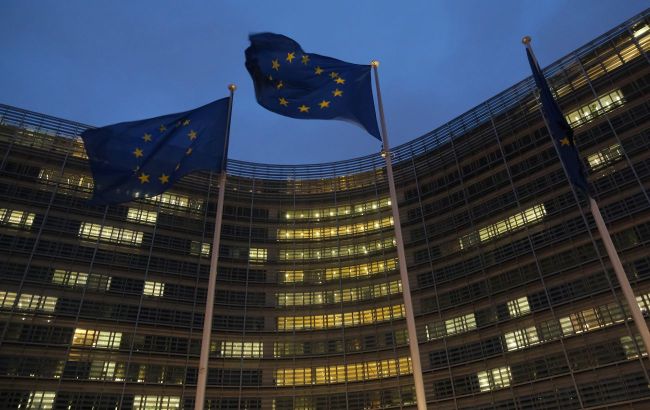 Photo: Europe caught between war and peace (Getty Images)
Europe is currently somewhere between war and peace. In recent weeks, headlines have been filled with reports of drones mysteriously appearing over airports and halting flights in EU countries, according to The Wall Street Journal.
Germany records an average of three drone intrusions per day over military facilities, defense industry facilities, and critical infrastructure.
Drone intrusions as part of hybrid warfare
Such incidents are part of an intensified campaign that, according to European leaders, Russia is waging against the continent because it is supporting Ukraine. The campaign includes sabotage, cyberattacks, and disinformation.
For Russia and other opponents of the West, including China, Iran, and North Korea, small-scale subversive actions can yield big dividends, as Moscow is stuck in a war against Ukraine and cannot engage in open combat with NATO.
Former CIA senior official Dave Pitts said that their adversaries had calculated that they could hide behind ambiguity and denial to violate sovereignty, ignore national laws and international norms, and engage in activities such as political pressure, sabotage, and even murder without provoking an armed response
Drones after maritime incidents
The drone incursions followed a series of ambiguous maritime incidents last year in which commercial vessels linked to Russia and China damaged underwater cables and pipelines in European waterways. No clear connection to Moscow or Beijing has been established.
In January, NATO launched the Baltic Sea patrol mission, and since then, no similar damage has been reported. Similarly, suspicious fires and explosions have occurred along railways and at civilian infrastructure facilities.
Enhanced security response
Western governments have long suspected Russia of waging a hybrid war to destabilize and undermine support for Ukraine. Germany and Belgium have sent military teams to counter the drones.
Belgian Defense Minister Theo Francken noted that drones are deliberately mapping the infrastructure of military bases.
German Defense Minister Boris Pistorius suggested that the increase in incursions could be linked to the EU's initiative to use frozen Russian assets to finance the Ukrainian army.
Threat to air travel and population
Most drones do not pose a direct physical threat to the population, but they can seriously affect flight safety near airports.
Passenger planes are not certified for collisions with drones, and even a small UAV can pierce the cockpit windshield or fuel tank. Pilot Moritz Bürger said that earlier this year, he nearly collided with an unknown drone while approaching Zurich Airport.
Technical and legal difficulties
Detecting drones in European airspace is difficult due to their small size and low flight altitude. This requires various sensors: video cameras, radio receivers, and acoustic sensors, which are often expensive to purchase and operate.
Shooting down drones is difficult and legally risky, especially in densely populated areas.
In Germany, the military is responsible for intercepting drones over military zones, while the police are responsible for airports. However, even within airports, responsibility is divided between different agencies.
Drones in Europe
Recently, a number of European countries, including Belgium, Germany, Denmark, and the Netherlands, have seen an increasing number of cases of drones appearing over critical infrastructure facilities.
The Wall Street Journal wrote that in 2025, the number of incidents involving the unauthorized use of drones in Germany rose sharply, with more than a thousand cases recorded since the beginning of the year. The investigation is ongoing, but the authorities do not rule out the possibility of Russian involvement.
Against this backdrop, Ukraine announced plans to open defense production offices in Berlin and Copenhagen by the end of the year. Ukrainian President Volodymyr Zelenskyy explained that these cities were chosen because of their close cooperation with Denmark and Germany in the field of joint arms production.
Earlier, Ukraine announced its readiness to assist its partners in the production of drones, using its own combat experience.