EU wants to restrict veto rights for new member states due to Orbán’s actions – The Guardian

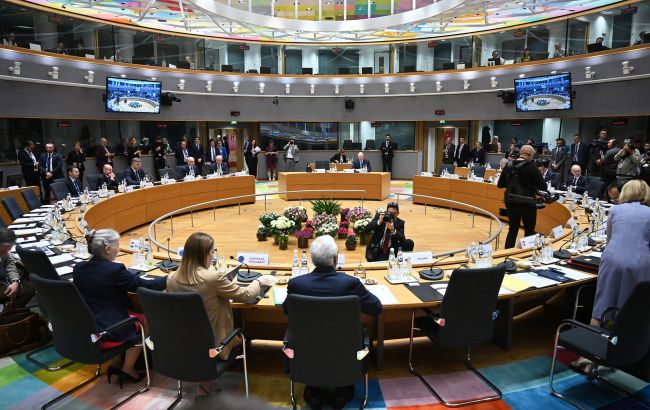 Photo: a meeting of European Union leaders (Getty Images)
The EU is discussing the possibility of temporarily stripping new member states of veto rights in order to avoid decision-making deadlock after the Union’s future enlargement, The Guardian informs.
According to the outlet, the European Commission and EU member states are considering an option under which new members of the Union — such as Moldova and Western Balkan countries — would not automatically have veto rights for a certain period in areas such as foreign policy and other fields where decisions are taken unanimously.
This includes, in particular, the ability to block sanctions, international decisions, or tax-related changes.
The idea has become especially relevant after the experience with Hungary. In Brussels, officials still recall how Viktor Orbán’s government blocked a number of EU decisions, including those related to aid for Ukraine.
According to the outlet, the temporary restriction of veto rights could first be applied to Montenegro, which is currently the closest to EU accession among nine official candidate countries.
This month, a special technical group has already held its first meeting on preparing Montenegro’s EU accession treaty, indicating that negotiations are entering their final stage after 14 years of talks.
One EU diplomat said that delaying veto rights is one of the "constructive solutions" being considered as part of a process of "thinking creatively" about EU enlargement.
"There is a debate on how to ensure that a larger enlargement would be beneficial for both the candidate countries and the EU itself. The ideas relating to internal reforms and different features of the accession treaties are all part of this," another diplomat added.
However, EU officials acknowledge that the idea is legally controversial. For this reason, limiting veto rights is being considered only as a temporary mechanism to avoid creating "second-class members."
At the same time, there are concerns in Brussels that enlargement without internal reforms could paralyze the EU’s functioning.
In Germany, there is already an open discussion about the need to change the EU’s decision-making system. German Foreign Minister Johann Wadephul previously stated that an EU of 35 countries would not be able to function under current rules.
Among candidate countries, Ukraine is seen as a special case due to the scale of the war, the enormous reconstruction costs, and its geopolitical importance for the EU.
According to EU estimates, Ukraine could technically complete the accession process in about four years, although the final decision will depend not only on reforms but also on the political situation and a possible end to the war.
At the same time, discussions are ongoing in Europe about other models of integrating new countries.
In particular, German Chancellor Friedrich Merz has proposed "associated membership" for Ukraine as an intermediate step toward full accession.
Such a format would allow Ukraine to participate in EU institutions and meetings without voting rights.
President Volodymyr Zelenskyy has already rejected this idea, stating that Ukraine should receive full and equal membership in the European Union.