EU to test 'NATO substitute': Brussels preparing defence plan without US assistance

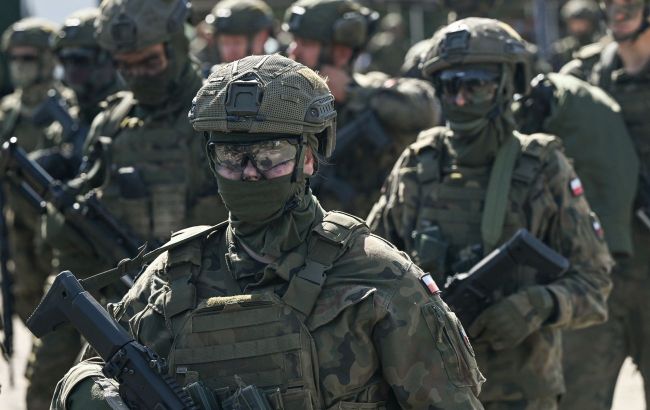 Photo: The EU will hold exercises under Article 42.7 (Getty Images)
The European Union will hold its first large-scale exercises on activating the mutual assistance mechanism in the event of armed aggression against one of its member states, Bloomberg informs.
Details of the drills and the assistance mechanism
As the outlet writes, according to a senior EU official, the exercises will simulate the decision-making process in a scenario where a member state requests military support from the rest of the bloc.
The simulation will first take place at the level of ambassadors in Brussels, and later during a meeting of defence ministers in Cyprus in May. The issue is also planned to be discussed at an informal summit of leaders next week.
The purpose of the exercises is to test Article 42.7 of the EU Treaty, which obliges member states to provide assistance by "all means in their power" in the event of an attack on the territory of one of them.
This wording is considered legally stricter than Article 5 of the NATO Charter, which only requires allies to take actions they "deem necessary."
Reasons for strengthening EU defence
The need to implement defence guarantees has become more relevant amid growing tensions in transatlantic relations. In particular, this includes threats by US President Donald Trump to withdraw from NATO and his statements regarding Greenland.
Cyprus, which is not a NATO member, has shown particular interest in the effectiveness of this mechanism. The issue became especially acute for the country after an Iranian drone attacked a British military base on the island in early May.
Talk of a European army
In recent months, discussions about Europe’s autonomous defence capabilities have intensified significantly. In particular, the Wall Street Journal reported that European countries have begun secretly developing a plan B in case the US withdraws from NATO, in order to be able to deter Russian aggression without support from American forces.
In addition, Spanish Foreign Minister José Manuel Albares has directly stated that the EU should move towards creating its own army and deeper defence integration in order to take security matters into its own hands.
At the same time, the key obstacle remains the pace of rearmament. NATO Secretary General Mark Rutte and European Commission President Ursula von der Leyen stressed during talks in Brussels the need to urgently accelerate weapons production in Europe, as current rates are too slow for existing threats.