ECB backs EU plan to freeze Russian assets indefinitely — Reuters

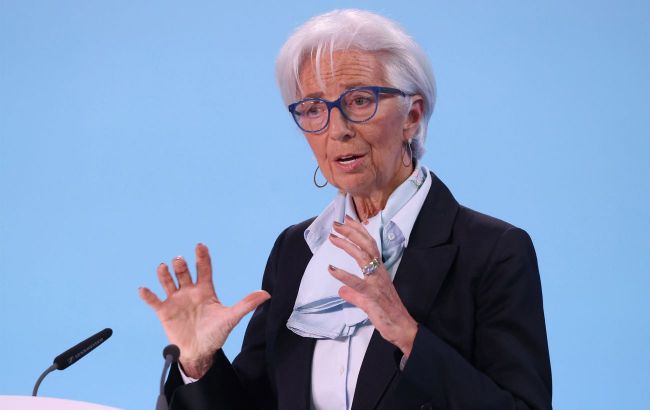 Photo: European Central Bank President Christine Lagarde (Getty Images)
The European Union's proposal to freeze the Russian regime's assets indefinitely is the closest to the requirements of international law in this matter, according to European Central Bank President Christine Lagarde.
EU leaders have been discussing options for using Russia's frozen assets to support Ukraine for a long time. However, international law prohibits the confiscation of another country's sovereign assets. Therefore, the EU is forced to consider other options, including an indefinite freeze on assets.
"The scheme that has been put in place and which is going to be debated at the next European Council (meeting) is ... the closest I have seen to something that is in compliance with the international law principles. It's our duty as Europeans to continue to support, defend and act in favour of Ukraine," Lagarde says, commenting on the new idea.
At the same time, Lagarde is not directly involved in this process, as the ECB has no connection to the frozen Russian funds. However, this does not prevent her from constantly expressing concern about the use of Russian assets and referring to compliance with international law - otherwise, she says, the global reputation of the euro will allegedly be jeopardized.
Moreover, Lagarde says that the EU should explain to its members what is happening and promise that it will not engage in the practice of confiscating sovereign assets simply because it suits its interests.
"It's a very, very exceptional case, and it does not remove the title of Russia to the assets," she says.
After months of attempts to secure a loan for Ukraine using Russian assets, European Union countries now want to fast-track legislation to freeze these assets, worth €210 billion, indefinitely. The reason is to prevent a possible veto by Hungarian Prime Minister Viktor Orbán.
The European Commission had previously proposed granting Ukraine a reparations loan, which would be financed by frozen Russian assets. Unanimous support from EU countries is required for adoption, but the initiative is being blocked by Belgium, where most of these assets are concentrated. The country allegedly fears legal risks, although the EU suspects that Belgium is actually appropriating income from Russia's frozen assets.
On December 8, a joint statement by the G7 finance ministers was published. The bloc was ready to consider confiscating all frozen Russian assets to influence the achievement of a just peace in Ukraine.