Donbas and wartime elections: What Ukraine peace plan is actually about

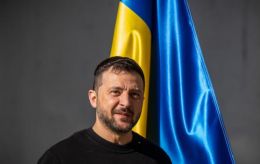
 Ukrainian President Volodymyr Zelenskyy and US President Donald Trump (photo: Getty Images)
The peace plan remains the most discussed diplomatic document, while, in parallel, a debate is unfolding over elections in Ukraine during the war. At the same time, Western media are actively reporting on pressure from Washington on Kyiv over territorial concessions.
RBC-Ukraine has gathered the latest information on the US peace plan, as well as the positions of Ukraine and the United States on territories and elections.
Elections in Ukraine during the war
Against the backdrop of discussions on the peace plan, US President Donald Trump once again stated that Ukraine should hold a presidential election. He has repeated this claim twice within a rather short period.
In an interview with Politico on December 9, Trump said that Russia is "obviously in a stronger position than Ukraine" in negotiations and advised Zelenskyy to agree to the American peace proposal.
In his latest remarks to journalists, the head of the White House expressed the view that supposedly 82% of Ukrainians demand an agreement that would bring the war to an end.
Trump said that Zelenskyy "has to be realistic" and questioned how much longer it would take for Ukraine to hold elections, adding that, in his view, 82% of Ukrainians were demanding an agreement.
The US president suggested that the Ukrainian authorities "are using the war to avoid elections." The Ukrainian leader responded to his American counterpart's calls. Zelenskyy stated that he is "ready for elections," but that security must be ensured and legislation amended.
The head of state asked members of parliament to draft legislative changes to enable elections in Ukraine during martial law.
First Deputy Speaker of the Verkhovna Rada (Ukraine's parliament) Oleksandr Korniyenko noted that work on the law is already underway and that parliament is ready "to develop a legal framework." However, the security component still needs to be provided by partners.
Without security guarantees from partners, including the US and the EU, organizing voting for both military and civilian voters in frontline areas will be impossible.
The Central Election Commission clarifies that at least six months are needed to prepare for elections.
Among the problematic issues are also the large number of internally displaced persons and the conditions for voting abroad by citizens.
Donbas and territorial issues
One of the most challenging aspects of the peace plan remains the territorial questions. Russia insists on the complete withdrawal of Ukrainian forces from the Donetsk and Luhansk regions. Kyiv rejects transferring Ukrainian territories to Russia in exchange for "peace."
Zelenskyy emphasizes that these issues must be discussed at the level of national leaders to reach the safest and most diplomatically justified solution.
The United States is seeking a compromise, while the Financial Times reports that the American side is proposing specific settlement models that are far from favorable to Ukraine.
Senior Ukrainian officials told the publication that the latest version of the US peace plan does not require the withdrawal of Russian troops from the future eastern border of the demilitarized zone.
Trump's special envoy, Steve Witkoff, proposed that Kyiv hand over the remaining 25% of the eastern Donetsk region to Moscow, viewing this as a path to a fair peace. Trump believes that Ukraine has "no leverage" and risks losing even more territory in 2026 if it refuses what he considers reasonable concessions.
For their part, Zelenskyy and European experts believe that giving up territory without a fight would create a foothold for the Russians, who would resume aggression with renewed force after any freeze.
Gaining full control over Donbas would mean that Russia captures the "fortress belt" of cities — Pokrovsk, Kostiantynivka, Druzhkivka, Kramatorsk, and Sloviansk —which remain a defensive bastion against Russian forces in eastern Ukraine.
Three key documents of the peace plan
The initial peace plan consisted of 28 points and proposed the creation of a supposedly "neutral, demilitarized buffer zone" following the withdrawal of Ukrainian troops from the Donetsk region. The plan stipulates that this zone would become internationally recognized Russian territory, and Russian troops would not enter it.
During a visit to Kyiv, US Army Minister Dan Driscoll stated that the United States is ready to provide Ukraine with security guarantees and create the most advanced demilitarized zone along the frontline, similar to the Korean Demilitarized Zone.
Zelenskyy considers such a zone a path toward a frozen conflict and notes that the issue of security guarantees remains unresolved.
At present, Ukraine and its allies highlight three primary documents being developed by Washington and Kyiv:
- Peace plan (20 points) – a framework document that is constantly evolving and reflects the interests of Ukraine, Europe, and the world.
- Security guarantees – a document between Ukraine, the United States, and the Coalition of the Willing, defining security measures for the country.
- Reconstruction plan – outlines economic and infrastructure recovery for Ukraine after the war or a ceasefire.
Overall, the main points of the peace plan, as known from public statements, include:
- Territorial issues, particularly regarding the Donetsk region;
- Safety of nuclear facilities (Zaporizhzhia Nuclear Power Plant);
- Defining the line of separation and border control;
- Reparations and Ukraine's reconstruction;
- Guarantees from the US and the EU;
- Return of children and prisoners.
Who is working on the peace plan
US President's special envoy Steve Witkoff and Trump's son-in-law, Jared Kushner, have become the main, and currently the only, American representatives in negotiations with Russia.
Witkoff has already met in person with Russian President Vladimir Putin six times this year, while Jared Kushner joined the envoy's team only recently, at least publicly.
The Ukrainian negotiating team is now headed by National Security and Defense Council Secretary Rustem Umerov, following the resignation of Presidential Office head Andriy Yermak.
On the European side, which is discussing security guarantees with Kyiv in the event of a ceasefire, the leaders of the so-called Coalition of the Willing are:
- French President Emmanuel Macron;
- German Chancellor Friedrich Merz;
- UK Prime Minister Keir Starmer.
The Russian team includes both Putin's political advisers and the Kremlin's financial and economic representatives. Among them are Kremlin aide Yuri Ushakov and Kirill Dmitriev, head of the Russian Direct Investment Fund.
The US delegation brought the peace plan framework for discussion with Putin after the document underwent changes demanded by Kyiv. The Kremlin leader stated that the US plan could become the "basis" for a final peace settlement in Ukraine, while again emphasizing his maximalist demands.
Ukraine, in turn, has provided the United States with updated proposals for further alignment. Their content has not been disclosed. However, Axios reports that Ukraine's response to the US peace plan includes new ideas for resolving contentious issues such as territories and the Zaporizhzhia Nuclear Power Plant.
US and Ukrainian senior military officials are expected to hold a virtual meeting today to continue discussing specific elements of the peace plan.
Meanwhile, Zelenskyy continues discussing the plan with European allies. In particular, the issue is set to be addressed today during an online meeting of the Coalition of the Willing.
Meeting at the leadership level
The President of Ukraine emphasizes that the sensitive issues of the plan must be discussed at the level of national leaders, including with Trump. However, there is still no confirmation of a meeting from the American leader.
Western media reports that the United States is rushing to agree, calling Christmas (December 25) a potential deadline. Sources of RBC-Ukraine confirm a sense of urgency in Washington, but note that no official deadline has been announced so far.
Russia's position
Russia is actively insisting on territorial concessions from Ukraine, particularly regarding Donbas. According to the Kremlin, the changes made to the initial 28-point US peace plan are disadvantageous for Russia.
Initially, it effectively outlined conditions for Ukraine's capitulation — limiting the size of the Armed Forces, concessions on its territories, and even amnesty for Russian war criminals.
At a press conference in Bishkek on November 27, Putin stated that hostilities in Ukraine would cease once the Ukrainian Armed Forces leave "the territories they occupy." The president spoke about Donbas and the so-called Novorossiya, likely referring to Luhansk, Donetsk, Kherson, Zaporizhzhia, Crimea, and Sevastopol.
Russia also firmly opposes Ukraine's path toward NATO membership. Today, Russian Foreign Minister Sergey Lavrov stated that Kyiv "must return to the non-aligned, neutral, and non-nuclear foundations of its statehood."
He also reported that Moscow had submitted additional proposals to Washington regarding collective so-called security guarantees, without specifying what they entail.
What else does the media report
The United States, for its part, is considering ways to reintegrate Russia into the global economy and has already shared related plans with Europe, The Wall Street Journal reports, citing American and European officials.
The documents mention investments by American companies in key sectors of the Russian economy, including rare-earth metal extraction. The plan also envisions assistance in restoring flows of Russian energy supplies to Europe and the rest of the world, which contradicts Europe's current policy of phasing out Russian gas.
The United States also describes a mechanism by which American companies could gain access to roughly $200 billion in frozen Russian assets and invest them in Ukrainian projects. Among the ideas is the construction of a new data center powered by the Zaporizhzhia Nuclear Power Plant, which remains under Russian military control.
Sources: Axios, WSJ, Politico, and the Financial Times.