'Digital GULAG' in Russia: FSB implements large-scale internet shutdowns modeled on China and Iran

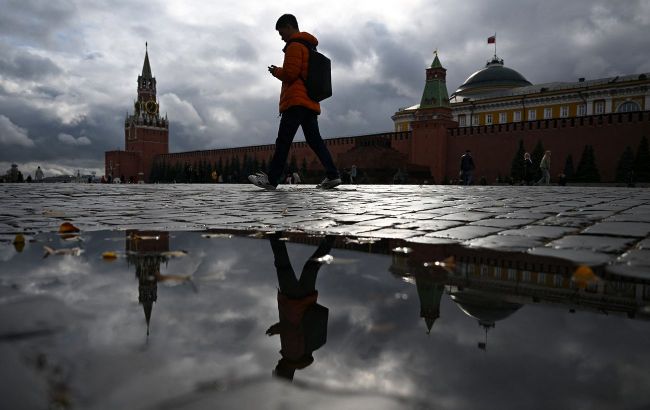 Illustrative photo: Mobile connections and internet are already disappearing in Moscow (Getty Images)
Sources cited by Reuters said the aggressor state had studied the experience of China, which operates behind the so-called Great Firewall, and Iran, where the internet is frequently shut down in response to public protests.
Russian officials have reportedly been tasked with finding ways to block large segments of the internet — both mobile and fixed — while simultaneously controlling online communications.
Blocking because of the West
The agency’s sources say the Kremlin considers blocking messengers and cutting internet access "critically necessary" to strengthen security and ensure national unity. The reasoning is the belief that the West is allegedly trying to sow discord in society.
A former Kremlin official told the Financial Times that decisions to block and shut down most likely originate from the Federal Security Service. In March, 67 regions reported mobile internet outages, while in 72 regions authorities introduced whitelists of websites that were given the green light to operate.
'Digital GULAG' in Moscow
This spring, even the capital of the aggressor state faced a "digital GULAG" — within the Sadovoye Koltso (a major, circular 16-kilometer ring road surrounding central Moscow - ed.), both mobile connections and internet disappeared. As a result, Moscow began sliding "back into the Stone Age."
In 2017, the Russian President instructed the creation of a "separate internet" for Russia. This involves a system of root domain name servers (DNS) duplicating the existing system, designed to be independent of international control and to protect Russians from "targeted influences."
Sovereign Runet
A year later, the Kremlin passed a law on the "sovereign Runet," significantly expanding the powers of Roskomnadzor (Russian federal executive body responsible for censoring and monitoring media, telecommunications, and internet content) to manage internet traffic in the aggressor state.
A source close to the Kremlin told the Financial Times that internet shutdowns were harming businesses, with Moscow alone losing around 1 billion rubles (about $10.5 million) per day, but for the FSB, economic losses hardly mattered, as security was considered far more important than any business losses.
Additionally, on February 20, 2026, Vladimir Putin signed a law requiring operators to cut off internet and mobile connections at the request of the FSB.
The Kremlin has already set a date to block the messenger Telegram in Russia. Starting April 1, 2026, the service will no longer operate in the country.
Moreover, the first so-called "national" messenger, Max, was launched in Russia on September 12, 2025. It will be pre-installed on all phones sold in stores, and Russians are being required to switch to it from other platforms.