Deripaska-linked plant in Ireland supplies material to Russian defense sector

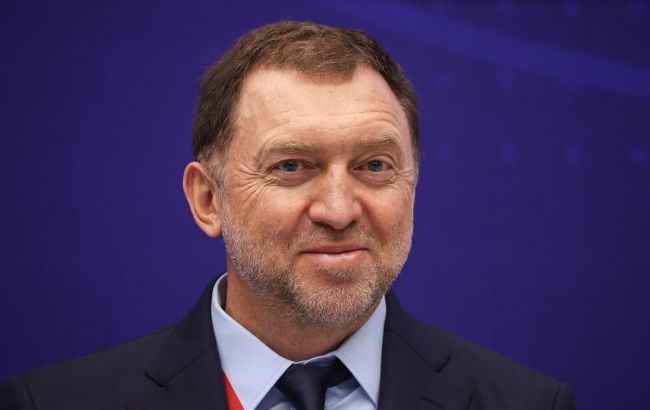 Russian oligarch Oleg Deripaska (photo: Getty Images)
Irish plant Aughinish Alumina, owned by Russian company Rusal, is suspected of supplying alumina to Russian factories producing weapons for war against Ukraine, The Guardian reports.
What kind of plant and who owns it
Aughinish Alumina is located in western Ireland. The enterprise has been part of Rusal's structure since 2006 and is the largest producer of alumina in Europe, providing about 30% of the EU's demand for this raw material.
About a quarter of Rusal's shares are indirectly owned by Oleg Deripaska, a Russian billionaire who is under sanctions from the United Kingdom, the EU, and the United States.
Rusal itself has not been placed under sanctions. The data comes from a leak of documents obtained by international media groups.
How supplies increased after the invasion
After Russia's full-scale invasion of Ukraine, supplies of alumina from Aughinish to Russian smelters increased sharply.
According to the Observatory of Economic Complexity (OEC):
- In 2023, Ireland exported $243 million worth of alumina to Russia;
- In 2024, this figure increased by 55% to $376 million.
In 2024 alone, nearly 500 thousand tons of alumina worth about $200 million were shipped from Ireland to Krasnoyarsk. This is about two-thirds of all aluminum oxide imported by Rusal's Krasnoyarsk plant that year.
Where the supply chain ends
Alumina is processed into aluminum at a plant in Krasnoyarsk. Then the aluminum is sold through a Rusal trading firm to an intermediary company, Aluminium Sales Company (ASK). According to leaked documents, in 2024, ASK paid Rusal about $300 million.
Among ASK's clients are dozens of sanctioned defense enterprises. In particular, the largest buyer in 2024 was the Sverdlov plant in the city of Dzerzhinsk, which produces missile casings and explosives.
According to the EU and Ukrainian intelligence, it is the only significant producer of the explosives RDX and HMX in Russia. In October 2024, Ukrainian forces struck it.
In total, companies linked to defense contracts paid $337 million for aluminum from February 2022 to April 2025.
Does this violate sanctions?
Formally – no. Alumina is not included in EU-sanctioned goods, so its sale to Russia is not prohibited.
"Defense supply chains are inherently multi-tier and cross-border," said Professor Aristides Matopoulos of Cranfield University.
He adds that each node in the chain may appear fully compliant. At the same time, this allows strategic materials to reach end users who are under sanctions.
What the company and government say
"We operate in strict compliance with all applicable EU laws, including sanctions, export control measures, and trade regulations," an Aughinish representative said.
The company also noted that alumina and aluminum are basic commodities that meet broad societal needs. They are essential for civilian industry.
A representative of the Irish government said that the plant is not subject to EU sanctions and has not been proposed for inclusion on sanctions lists. At the same time, he confirmed that Ireland "remains unequivocal in its continuing support for Ukraine."
Recently, the United States allowed operations with Russian oil on sanctioned tankers. It is now possible to sell, transport, and unload Russian oil. However, the permission does not apply to transactions involving Iran.
At the same time, in 2025, the European Union purchased nearly 2 billion euros' worth of metal from Russia. The largest share of imports consisted of semi-finished steel products.