Council of Europe official reveals how Ukrainian refugees being pushed out of EU


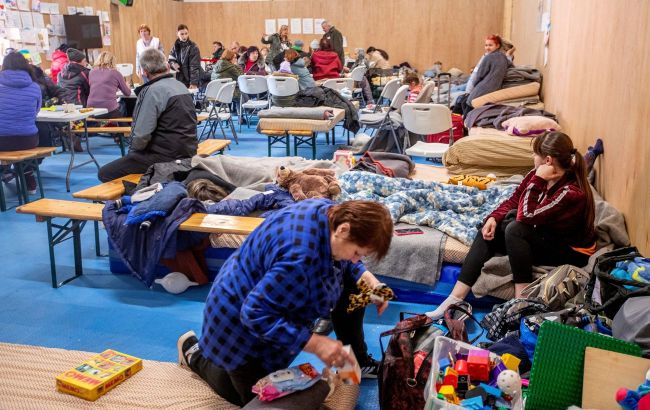 Photo: In some places, there is hatred toward Ukrainians (Getty Images)
There is a political trend in European countries to push Ukrainian refugees back home. However, it is still possible to rectify this situation, according to Council of Europe Commissioner for Human Rights Michael O'Flaherty.
According to him, he has spoken with Ukrainians and has seen various methods used to squeeze people out of the European Union. One of them is financial pressure.
"I certainly see tendencies. I've travelled around Europe in the last few months speaking with Ukrainians in multiple countries, and I've heard many stories of, as you put it, "squeezing". I've seen cutbacks to social welfare payments to an extent that generates real hardship for impacted individuals. I've seen a reduction in accommodation capacity, which is fine if you can afford to go out there and rent an apartment. But for those like pensioners who don't have the resources, it's hugely problematic," the official says.
He adds that he also sees a rise in hatred toward Ukrainians. This isn’t happening everywhere and isn’t a widespread phenomenon, but it is a reality.
"I see Ukrainians caught up in the whole anti-migrant rhetoric of the extreme right, which wants to blame migrants for everything that goes wrong in society. It's populist nonsense, and it's got to be stamped out. This is very dangerous stuff," the commissioner says.
Michael O’Flaherty suggests that, perhaps, at the start of the full-scale war, some countries provided very generous support to Ukrainians, which sparked discontent among residents.
However, the official believes that the situation can still be rectified and that it is not necessary to let things escalate to the point of evicting Ukrainians who still need protection. This is especially true in a year when Russian attacks on civilians have been the most intense since the start of the war.
Ukrainian refugees in Europe
The EU plans to extend temporary protection for refugees beyond March 2027. However, changes may lie ahead for Ukrainians.
In particular, the EU Council is discussing the introduction of restrictions on men of draft age who are coming to Europe for the first time. At the same time, these rules will not apply to those who already have protection status.
Czechia also wants to revoke the temporary protection status for Ukrainian refugees. This debate has arisen due to alleged dissatisfaction among local citizens and political disputes regarding the refugees’ role in the economy.
In some Polish cities, Ukrainians have begun to be denied temporary protection status (PESEL UKR) en masse. Instead, they are being assigned NUE status, which designates them as economic migrants and does not provide for any special benefits.