China overtakes Russia in arms sales to post-Soviet states

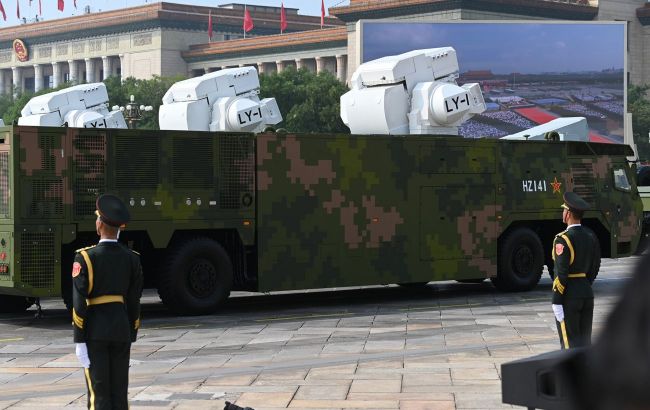 Photo: China pushes Russia out of the Central Asian arms market (Getty Images)
China pushes Russia out
After the collapse of the Soviet Union, Russia remained the main arms supplier to Central Asian countries for many years. China only began gradually expanding defense cooperation with them in the late 2010s, according to the outlet.
However, after February 2022, the former Soviet republics sought to break their dependence on Russia. China seized the opportunity.
Beijing is selling them:
- drones,
- transport aircraft,
- armored vehicles,
- air defense systems.
Which countries buy weapons from China?
Turkmenistan has purchased long- and medium-range air defense systems, including the HQ-9 and HQ-12, while Uzbekistan has acquired the FD-2000, an equivalent of the HQ-9.
Uzbekistan and Kazakhstan want to introduce more Chinese military equipment into their air forces:
- Uzbekistan has received four Chengdu J-10CE multirole fighter jets and may have agreed to purchase another 20;
- Kazakhstan already operates eight Y-8F-200 military transport aircraft.
Purchasing air defense systems and fighter jets creates long-term ties with a supplier that can provide missiles, spare parts, engines, software, modernization services and personnel training for years or even decades.
Although Kazakhstan, Kyrgyzstan and Tajikistan are members of the Collective Security Treaty Organization (CSTO), a military alliance that also includes Russia, Tajikistan has even displayed Chinese military equipment at military parades in Dushanbe, the outlet reports.
China is also financing the construction and development of security facilities along the Tajik-Afghan border to protect its transport corridors and investments in the economies of Central Asian countries.
Regional states are also purchasing Chinese Wing Loong and CH-3A combat drones.
According to the Stockholm International Peace Research Institute (SIPRI), Russia’s total arms exports fell by 64% in 2021–2025 compared with 2016–2020. Its share of global arms exports dropped from 21% to 6.8%.
Earlier, RBC-Ukraine reported that new jet-powered versions of Shahed drones used by Russia in massive attacks on Ukraine can reach speeds of up to 500 km/h. Their emergence was made possible to a significant extent by China.
It was also reported that in June, the Chinese government publicly called on Kyiv and Moscow to return to the negotiating table.