British intelligence warns of new hidden threat from Russia

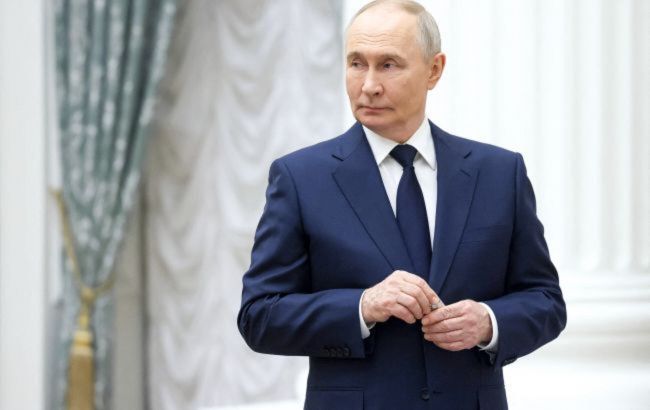 Photo: Vladimir Putin, Russian president (Getty Images)
Western intelligence services are recording an expansion of covert threats from Moscow. These do not involve direct military confrontation but rather systematic destabilization through specific methods of influence, according to a publication by The Independent.
The new head of Britain’s MI6, Blaise Metreweli, has warned of a complex and evolving threat posed by Russia.
According to her assessment, the Kremlin is deliberately cultivating what she described as an "export of chaos," pushing instability beyond its borders.
As noted, Vladimir Putin is consciously dismantling long-standing unwritten rules of conflict, ushering in an era of uncertainty.
'Grey zone' tactics
The publication emphasizes that the threat does not consist of open military strikes but rather "grey zone" actions, covert operations that are difficult to directly attribute to a state sponsor.
"We are all familiar with planned sabotage, assassinations, hacking, cybercrime, and drone attacks. These concepts are well known and firmly embedded in public consciousness," the article says.
Reliance on intermediaries
Security experts point to a new element of this strategy: the active use of private individuals, companies, and informal networks operating covertly in Russia’s interests.
One example cited is Jan Marsalek, the former chief operating officer of Wirecard, who media reports say cooperated with Russia’s GRU for nearly a decade.
Recruiting operatives
The case of Dylan Earl is linked to the arson attack on a warehouse in east London storing humanitarian aid for Ukraine. He was reportedly recruited online by structures connected to the Wagner Group.
Europe's readiness
The outlet stresses that the scale of this covert network enables damage to vulnerable targets without direct accountability.
"When we think about Russian aggression and attempts to sow division among Western allies, we need to broaden our understanding of how far the Kremlin is willing to go across all areas of life to cause disruption and spread anxiety," the publication writes.
With the war in Ukraine approaching its fifth year, analysts assess that such activity will only intensify, and European countries should factor this risk into their security planning.
Separately, Ukraine has reiterated the inadmissibility of Iran’s support for Russian aggression, pointing to systemic repression inside Iran and warning that such actions undermine international security and human rights. Kyiv has urged the international community to apply stronger, coordinated pressure on Iranian authorities.
Units of the Alpha have inflicted more than $5.5 billion in losses on Russian military equipment since the start of the full-scale invasion, an outcome of sustained operations against key targets of the occupying forces.