Black Sea dolphins are going blind off Ukraine's Odesa coast due to military sonars

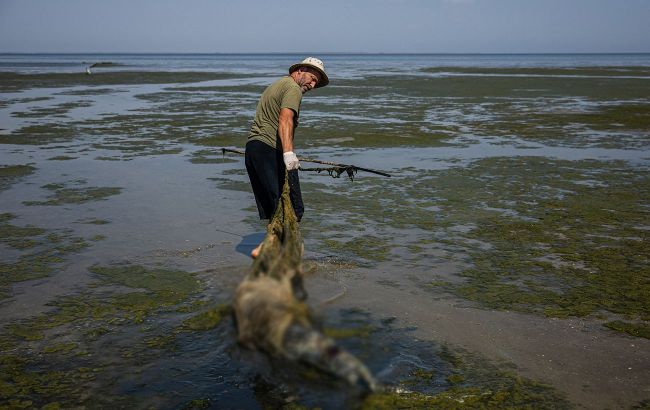 Ivan Rusev documents dolphin deaths caused by the war (photo: Getty Images)
Mass dolphin deaths continue to be recorded off Ukraine's Odesa coast. According to scientists at the Tuzly Estuaries National Nature Park, around 20,000 dolphins have died in the first half of 2026 alone, with the total death toll since Russia's full-scale invasion now exceeding 100,000, according to Ivan Rusev, Doctor of Biological Sciences and head of the research department at Tuzly Estuaries National Nature Park.
Key points:
- Building evidence: Scientists are documenting every case for future international court proceedings and Ukraine's ecocide investigation under Article 441 of the Criminal Code, seeking reparations from Russia.
- A "poisoned chain" effect: Unable to hunt, weakened dolphins burn their own fat reserves, releasing accumulated toxins into their bodies, leading to self-poisoning and making them vulnerable to deadly viral infections.
- Why they are dying: The main causes include the destruction of dolphins' echolocation systems by Russian military sonars, acoustic injuries from explosions that can trigger decompression sickness, and severe chemical pollution in the Black Sea.
- Scale of the tragedy: The total number of dolphin deaths since the start of the full-scale invasion may have surpassed 100,000.
Mass dolphin deaths
Tuzly Estuaries National Nature Park remains the only institution that has been systematically documenting the environmental consequences of the war since the first days of Russia's full-scale invasion.
"Over the past 55 days alone, we have recorded 71 dead dolphins within the national park. And these are only the animals that washed ashore," Rusev said.
He stressed that around 95% of dolphin carcasses sink, while access to many coastal areas remains restricted, meaning the actual death toll is likely much higher. According to the latest estimates, more than 100,000 dolphins may have died during the four and a half years of full-scale war.
Park staff is currently documenting every dead dolphin they find, while a criminal investigation into ecocide under Article 441 is underway. The collected evidence is expected to be used in future international court cases to seek reparations from Russia.
Military sonars leave dolphins blind
The greatest threat to Black Sea cetaceans has been the use of military sonars. Russian submarines and naval vessels have created enormous underwater noise, particularly in the northwestern part of the Black Sea.
During their seasonal spring migration, dolphins entering these areas have their echolocation systems disrupted. As a result, they effectively become blind, losing their ability to navigate.
The chain reaction leading to death
- Loss of echolocation: Dolphins can no longer locate fish, their only food source.
- Starvation: The animals are forced to survive by burning their fat reserves.
- Self-poisoning: Toxic chemicals accumulated in their fat over the years of marine pollution are released into their bodies.
- Immune system collapse: Their weakened bodies become highly vulnerable to morbilliviruses, infections that would normally not be fatal.
Explosions and decompression sickness
War at sea means constant acoustic and physical stress. Explosions during combat operations and the liberation of occupied territories have devastating consequences for dolphins.
"Water conducts sound much better than air, so the blast wave affects animals far more powerfully. A powerful explosion can instantly force a dolphin to the surface. When it ascends too quickly from depth, it develops what is known as decompression sickness," Ivan Rusev explained.
The sudden change in pressure causes nitrogen to be released into the bloodstream, ruptures capillaries, and results in excruciating pain that can even trigger a heart attack.
Another threat comes from drifting sea mines that periodically detonate, killing everything nearby, as well as phosphorus munitions, which can cause severe burns underwater.
A toxic cocktail in the Black Sea
The Black Sea has accumulated an unprecedented level of toxins caused by the war:
- Man-made disasters: The destruction of the Kakhovka Dam released around 10,000 tonnes of fuel, lubricants, and heavy metals into the sea.
- Sunken vessels: Wreckage from Russian warships, including the cruiser Moskva, as well as sanctioned barges destroyed during the war.
- Pollution spills: Fuel leaks from Russian tankers in the Kerch Strait and sunflower oil spills in Ukraine's Odesa region earlier this spring.
Because dolphins sit at the top of the marine food chain, they ultimately become the final recipients of all these toxic substances.
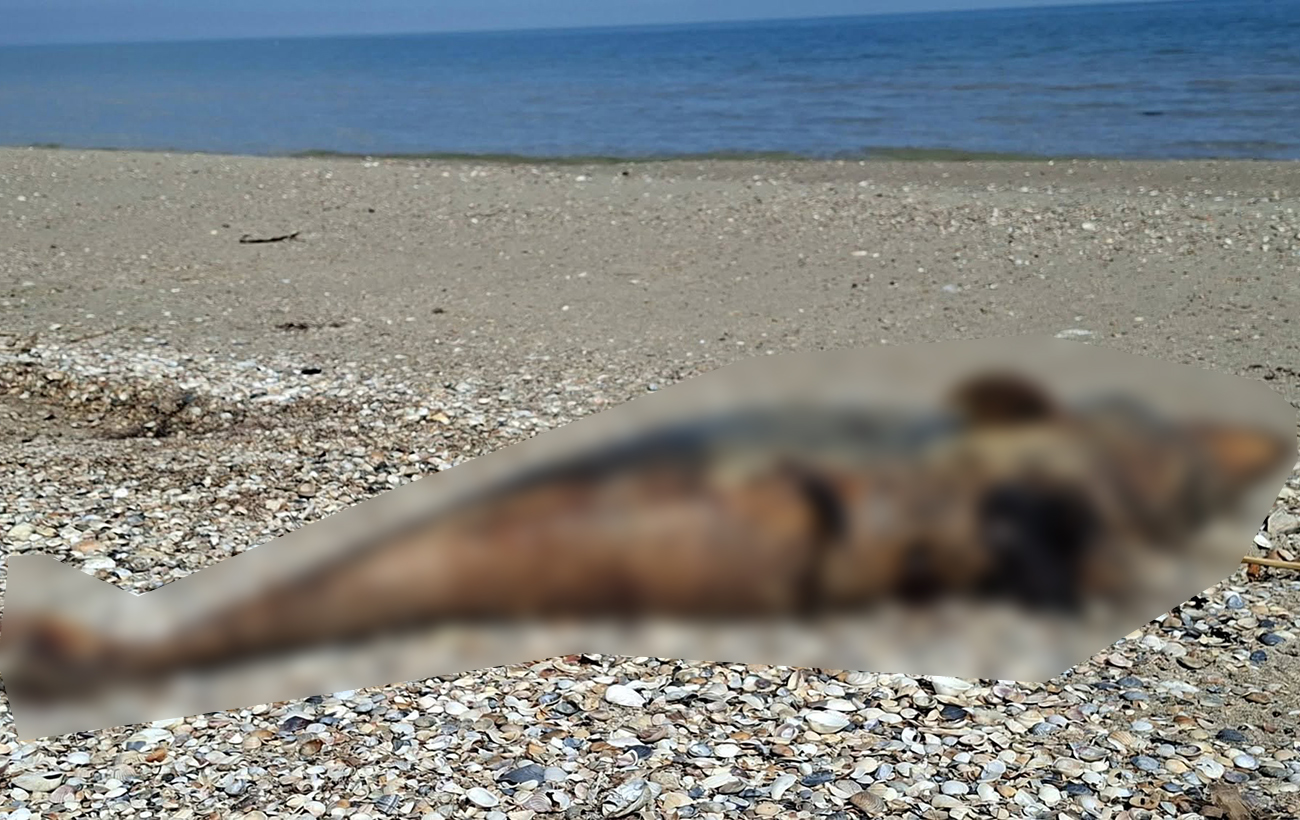 Up to 100,000 dolphins may have died since Russia's full-scale invasion (photo: facebook.com/ivan.rusev)
Why documenting the deaths matters
The work carried out by scientists along the coast is about more than environmental monitoring — it is also about building evidence for future international court cases. Every dead dolphin found serves as proof of the devastating environmental impact of the war.
Black Sea cetacean populations have never faced such immense pressure, and their survival is now more uncertain than ever.
"Severe chemical pollution could spread as far as the Bosporus Strait, affecting the entire Black Sea. The risks are extremely high. We could lose a unique ecosystem. Without dolphins, the Black Sea will no longer be a 'living' sea — it will begin to degrade, and life within it will gradually disappear," Rusev said.
Read also that in December 2025, two Russian oil tankers were involved in an accident in the Kerch Strait, releasing several thousand tonnes of fuel oil into the sea. By early January, more than 30 dead dolphins had already been found in the Kerch Strait.