Armenian Prime Minister's party scores landslide victory in election

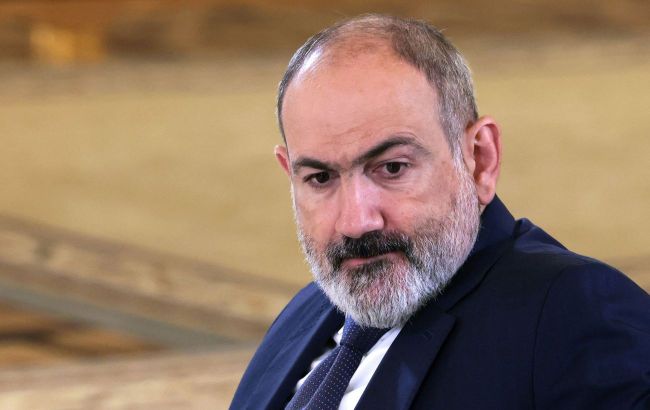 Photo: Armenian Prime Minister Nikol Pashinyan (Getty Images)
Armenian Prime Minister Nikol Pashinyan declared his party’s victory in the June 7 parliamentary elections. The opposition does not recognize the results and has already accused the authorities of manipulating the vote count, according to Radio Free Europe/Radio Liberty.
What Pashinyan says
"I want to emphasize that the Civil Contract party received votes from a larger number of citizens of the Republic of Armenia, a vote of confidence from more citizens compared to 2021," Pashinyan states.
According to him, the party has enough votes to form a government on its own.
What opposition says
Samvel Karapetyan, leader of the opposition Strong Armenia bloc, called the announced results shameful.
"Seeing that their results are falling every minute, they have stopped counts, and we don’t even know what will be presented in the morning," Karapetyan says.
Preliminary final results
Four parties cleared the threshold:
- Civil Contract (Pashinyan) – 49.81% (727,160 votes)
- Strong Armenia (Karapetyan) – 23.29% (340,062 votes)
- Armenia bloc (Kocharyan) – 9.94% (145,097 votes)
- Prosperous Armenia – 4% (58,368 votes)
All other parties failed to clear the electoral threshold.
Will Pashinyan be able to form a government on his own?
Civil Contract received 49.81%, which fell short of 50%. According to the Electoral Code, 54% is required to form a stable majority.
Armenia's Electoral Code provides for a stable majority mechanism: if the frontrunner does not secure the required number of seats and cannot form a coalition, they are awarded bonus seats in parliament through a second round of voting.
The first official election results in Armenia differed drastically from the exit polls: pollsters had Pashinyan at up to 70%, while the Central Election Commission reported significantly lower figures.
Earlier, RBC-Ukraine analyzed how the Kremlin launched a hybrid campaign against Pashinyan ahead of the election, ranging from a ban on imports of Armenian cognac and vegetables to threats to triple gas prices.