Alexa Spatium, STING, P1-SUN, ZIRKA: Systems Ukraine uses against jet-powered Shaheds


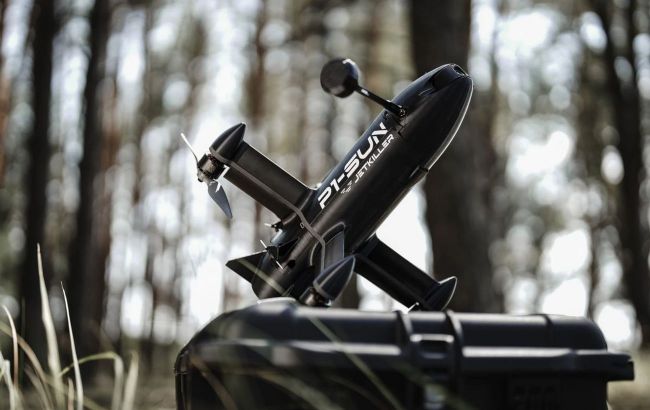 Photo: P1-SUN interceptor drone (SkyFall)
Russia has been continuously attacking Kyiv and the surrounding region with jet-powered attack drones for several days in a row. Ukraine has already tested four types of high-speed interceptors designed to counter this threat.
RBC-Ukraine has compiled information on four Ukrainian developments designed to combat high-speed jet-powered drones.
Key points:
- Alexa Spatium – a high-speed jet-powered drone with a turbojet engine and interchangeable warheads, capable of destroying the Geran-3, Geran-4, and Geran-5.
- P1-SUN Jetkiller – a modified SkyFall drone with a top speed of up to 370 km/h that has undergone combat testing, destroying more than a dozen jet-powered targets.
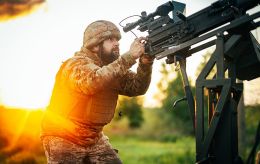
- STING – an interceptor developed by the Wild Hornets, with a top speed of up to 280 km/h and a flight ceiling of 7,000 meters. It is already being used by pilots of the Alpha Special Operations Center of the Security Service of Ukraine.
-
ZIRKA – an interceptor with a top speed of up to 340 km/h and an automated target detection and guidance system, developed by NOCTIS with support from Vyriy Industries.
Alexa Spatium
In August 2026, the Ministry of Defense announced that the Defense Forces’ arsenal had been expanded with the Alexa Spatium, a high-speed jet-powered interceptor drone. The manufacturer was not disclosed; it is only known to have been developed by Ukrainian engineers. The drone can destroy small aerial, ground and surface targets in real combat conditions.
These include Russia’s jet-powered Geran-3, Geran-4 and Geran-5 drones.
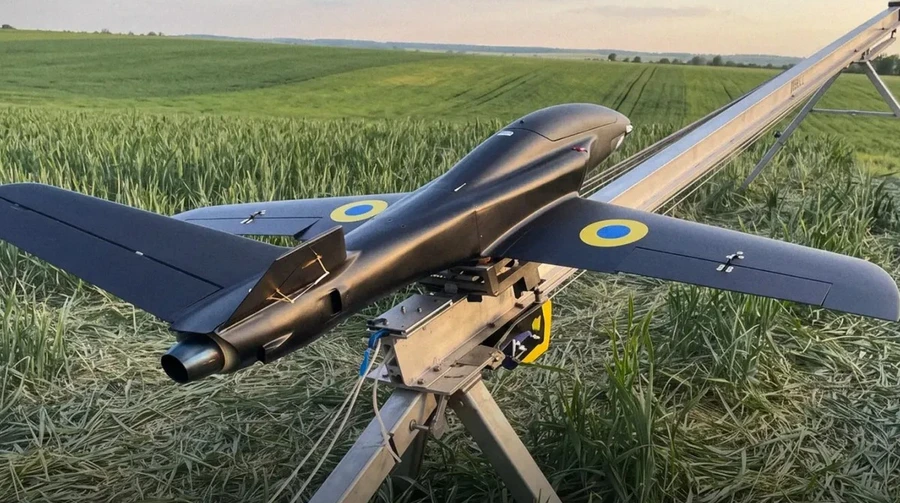
Photo: Alexa Spatium (Ministry of Defense)
Alexa Spatium is equipped with a powerful turbojet engine and can operate across a wide range of altitudes, from low to medium flight levels. It also supports interchangeable warheads, including high-explosive fragmentation, shaped-charge, and thermobaric warheads.
The Ministry of Defense said the drone measures approximately 1.5 by 1.7 meters and can be launched from a mobile catapult within minutes. Its durable composite construction allows it to perform sharp maneuvers without losing control.
In addition, a drone that fails to complete its mission can return to the launch site and be used again.
STING
The Wild Hornets, the drone manufacturer, shared footage in late August of STING interceptors shooting down jet-powered Shaheds during the ongoing attacks on Kyiv.
STING can reach a top speed of up to 280 km/h, with a flight ceiling of 7,000 meters. The Wild Hornets reported a record altitude of 7,000 meters on August 18. Shortly before that, pilots from the Alpha Special Operations Center of the Security Service of Ukraine used STING to shoot down a Shahed at an altitude of 6,955 meters.
One of the latest examples is a jet-powered Shahed shot down by the Merzotnyky crew of the 435th Separate Unmanned Systems Unit. Last week, they shot down two more jet-powered Shaheds.
P1-SUN Jetkiller
Ukrainian company SkyFall unveiled its new high-speed P1-SUN Jetkiller interceptor drone at the Farnborough Airshow. It was designed to counter Russian Shaheds equipped with jet engines, which can reach speeds of up to 500 km/h.
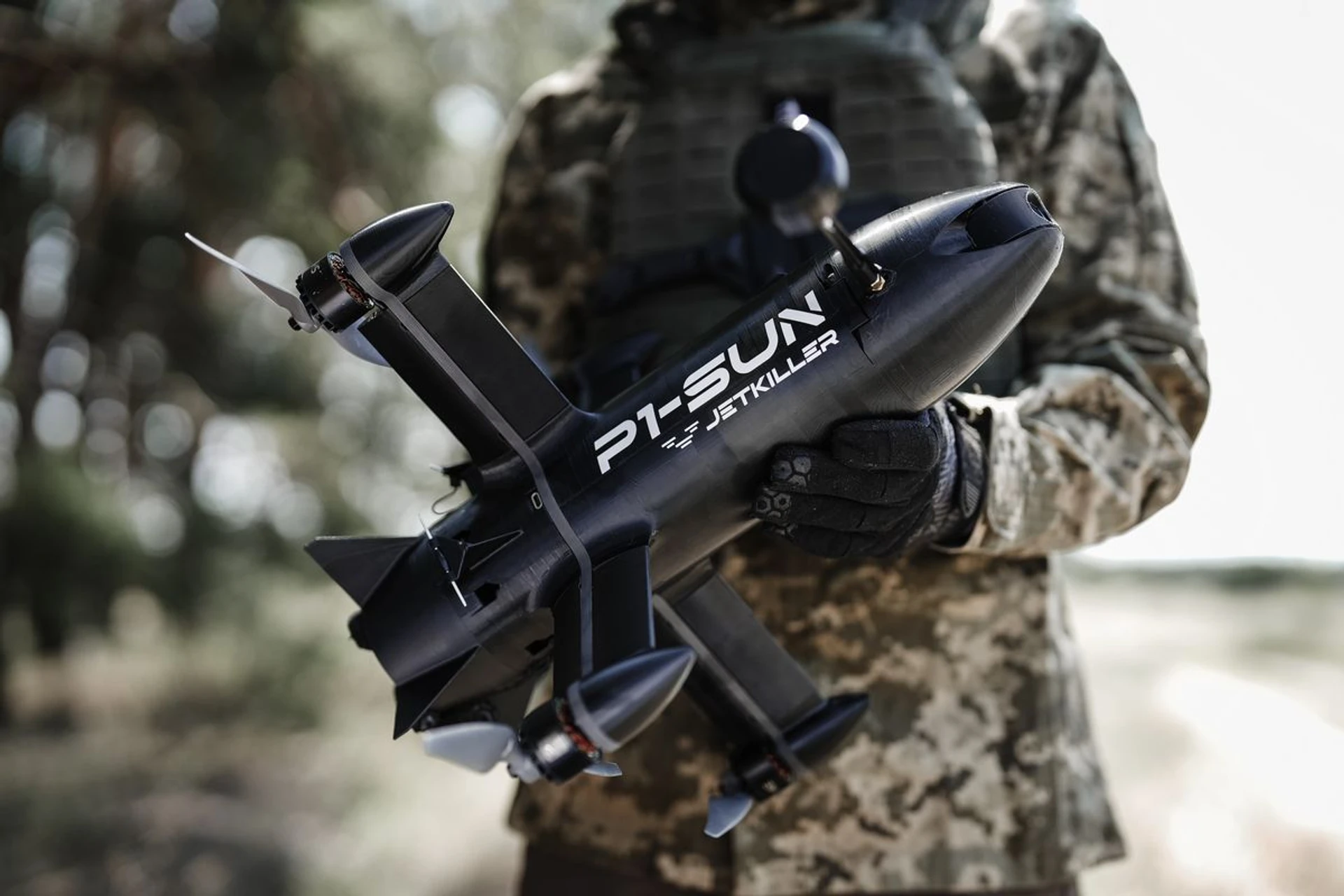
Photo: P1-SUN Jetkiller (SkyFall)
Development of the modified version began several months ago in response to the emergence of high-speed Shaheds. The new Jetkiller can reach speeds of up to 370 km/h, compared with 310 km/h for the previous model, and has already undergone combat testing, destroying more than a dozen jet-powered targets. The company planned to begin mass production in August this year.
ZIRKA
With its detection and automatic guidance system and a top speed of up to 340 km/h, the ZIRKA interceptor can destroy fast and maneuverable targets, including Geran-4 jet-powered drones, one of the jet-powered Shahed variants.
The automated system handles target detection and tracking, while the operator only needs to adjust the speed to ensure a smoother approach to the target.
The drone was developed by NOCTIS with support from Vyriy Industries, while its technical requirements were developed in cooperation with the Darknode unit, which has real-world combat experience in destroying enemy UAVs.
The drone is equipped with a mini-computer running artificial intelligence algorithms trained on data from real-world interceptions. The system independently analyzes the video feed and detects the target. Once the operator confirms the lock, the drone automatically tracks and homes in on the target, adjusting its flight path dozens of times per second.
Russia has been attacking the capital and the Kyiv region with jet-powered Shaheds for several days in a row. Against this backdrop, President Volodymyr Zelenskyy said the interception rate for jet-powered Shaheds needs to be raised above 90% this fall. Meanwhile, Defense Minister Yevhenii Khmara said Ukraine has already tested four potential interceptors to counter jet-powered drones and plans to scale up their production to thousands of units.
On the evening of August 28, Russia launched a drone strike on warehouses in Kyiv region's Bucha district, causing a massive fire and subsequent ammunition explosions in the village of Myla. The death toll rose to 37, including Dmytrovska community head Taras Didych. Residential buildings and a nursing home were also damaged.