Ukraine's evolving missile and artillery war, from ATACMS to Bohdana howitzer


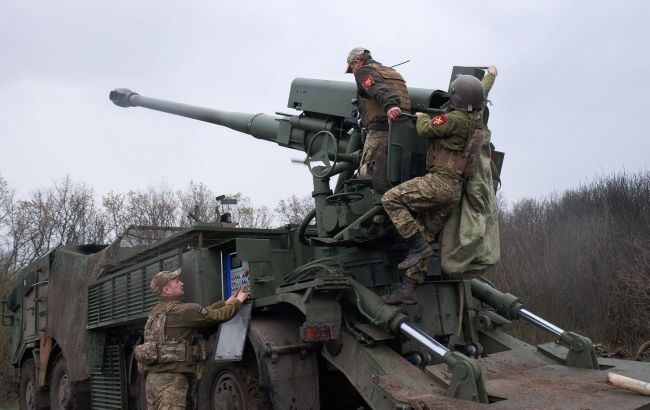 Missile Forces and Artillery change their tactics and expand arsenal during the war (Photo: Bohdana howitzer, RBC-Ukraine/Vitalii Nosach)
How the use of artillery is changing during the Russian-Ukrainian war and what new weapons have already appeared, and are yet to appear, in Ukraine's army was discussed in an interview with Colonel Andrii Zhuravlov, Deputy Chief of Staff of the Missile Forces and Artillery Command of the Ukrainian Ground Forces.
Missile Forces and Artillery are what the West calls the "king of battle", and what Ukrainians often refer to as the "gods of war." The Missile Forces and Artillery branch is responsible for delivering firepower against the enemy at various ranges.
"Today, the Missile Forces and Artillery are a formidable, technologically equipped force that has become a key factor of success on the battlefield in the war against the Russian aggressor. It is a combination of time-tested towed howitzers, self-propelled systems on tracked and wheeled chassis, multiple launch rocket systems, and missile complexes,” Zhuravlov explains.
The Missile Forces and Artillery component is present not only within the Ground Forces, but also in the Air Assault Forces, the Navy, the Marine Corps, and other branches. Every combined-arms brigade includes an artillery component — an artillery unit responsible exclusively for artillery missions. The Missile Forces and Artillery are equipped with missile systems, tube artillery, multiple launch rocket systems, mortars, and artillery reconnaissance assets.

Andrii Zhuravlov (photo: RBC-Ukraine)
"This is precise and rapid fire that supports our units directly on the line of contact, providing fire support to our infantry — during offensive operations, defensive actions, and assault missions alike," the colonel says.
Foreign weapons in the Missile Forces and Artillery
After the start of the full-scale invasion, partner countries gradually began supplying the Missile Forces and Artillery (MFA) with a wide range of Western weapons to support Ukraine's defense. According to Zhuravlov, the most widespread foreign artillery systems currently in Ukraine's arsenal are the US-made towed M777 howitzers and the M109 tracked self-propelled howitzers in all variants (A3, A4, A5, A6).
"The M777 guns are actively used across all axes of combat. They offer high accuracy, effectiveness, and long range. They are easier to conceal, simpler to provide with protective shelters, and less visible to drones. That’s why we can state that, overall, towed guns have higher survivability," explains the officer.
Among Western tracked self-propelled howitzers in service with Ukrainian artillery units are the Krab, PzH 2000, and the M109A6 Paladin. Wheeled self-propelled systems include the CAESAR and Archer. Self-propelled systems, Zhuravlov noted, offer better mobility and the ability to change positions more quickly. At the same time, tracked platforms have superior cross-country capability, which is especially important under current conditions—weather and rough terrain—and this is also a distinct advantage.
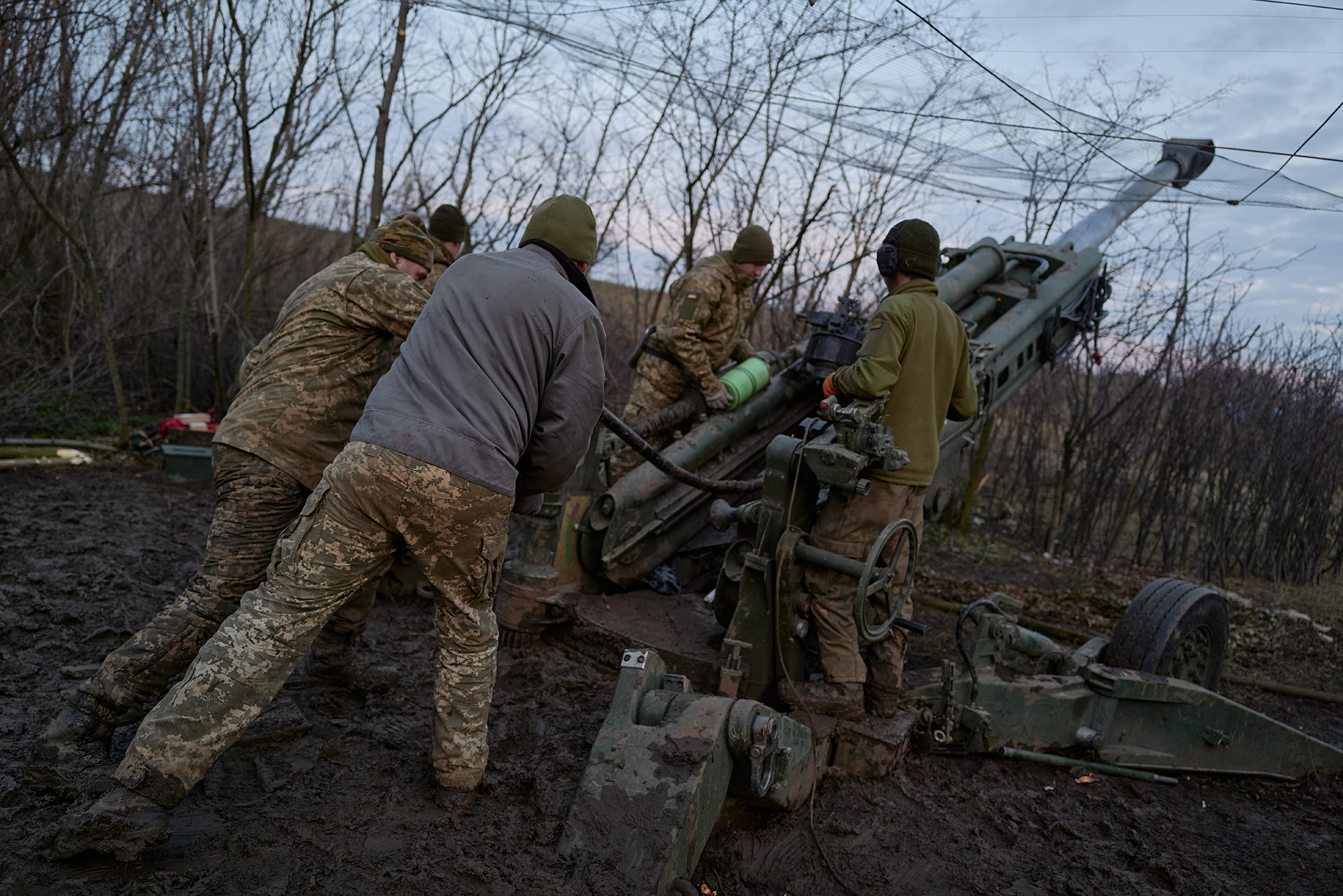
A towed M777 howitzer in use by the Armed Forces of Ukraine near Bakhmut in 2022 (photo: Getty Images)
In mid-2022, the United States also began supplying Ukraine with multiple launch rocket systems—by now well known to everyone—the M142 HIMARS and the M270 MLRS, which at the time became a real game changer on the battlefield.
"These modern MLRS enabled precise strikes against targets at considerable distances. They appeared on the battlefield in the summer of 2022 and became a serious threat to the enemy. Their arrival forced the adversary to move command posts, logistics units, and depots farther away from the front line," Zhuravlov says.
During the first year and a half of the war, Ukraine received only 227-mm GMLRS guided rockets for these systems, capable of striking targets at ranges of up to 80 kilometers. Around the second half of 2023, the United States also began sending the Armed Forces of Ukraine ATACMS tactical ballistic missiles, which extended the range of fire—initially the 165-km version, and in 2024, variants with ranges of up to 300 kilometers.
"ATACMS is a high-precision missile. We don't use them in the quantities we would like. Understanding both their effectiveness and the tasks we need to accomplish, we employ these missiles sparingly," Zhuravlov adds.
In addition, artillery units are receiving high-precision munitions from partners, which, according to the colonel, fundamentally change the nature of artillery warfare. These include Copperhead and Excalibur rounds.
"With Excalibur, the concept is one shot—one target. Unfortunately, the enemy learns quickly and has found certain countermeasures, making it harder for us to use these rounds. But overall, precision munitions mean resource savings, reduced exposure, and maximum effect in combat," the officer explains.
Another significant advantage of the MFA has been the establishment of an artillery reconnaissance network enabled by radar systems provided by partners—AN/TPQ-50, AN/TPQ-36, AN/TPQ-37, and ARTHUR. These allow for the relatively rapid detection of enemy artillery units firing and enable counterfire.
"Today, UAVs, counter-battery radars, and other reconnaissance assets operate in conjunction with artillery batteries, transmitting target coordinates in real time. This makes it possible to respond instantly to changes on the battlefield and to control fire effectively over tens of kilometers," Zhuravlov explains.
Ukrainian-made weapons in the Missile Forces and Artillery
The war has forced Ukraine to scale up its own defense production rapidly. In 2023, domestically produced Bohdana artillery systems began entering service with the MFA. In addition, according to Zhuravlov, Ukrainian-made 82 mm and 120 mm mortars are being supplied to artillery units, along with UAVs specifically designed for artillery formations to conduct reconnaissance and adjust fire—SHARK, ACS-3, and Leleka.
"Work is also ongoing to modernize our counter-battery radar and our signals intelligence station. If we compare the Ukrainian Zoopark-3 radar with analogous systems provided by partners, it outperforms them in some parameters and lags in others. But we are continuously working to improve it," the officer says.
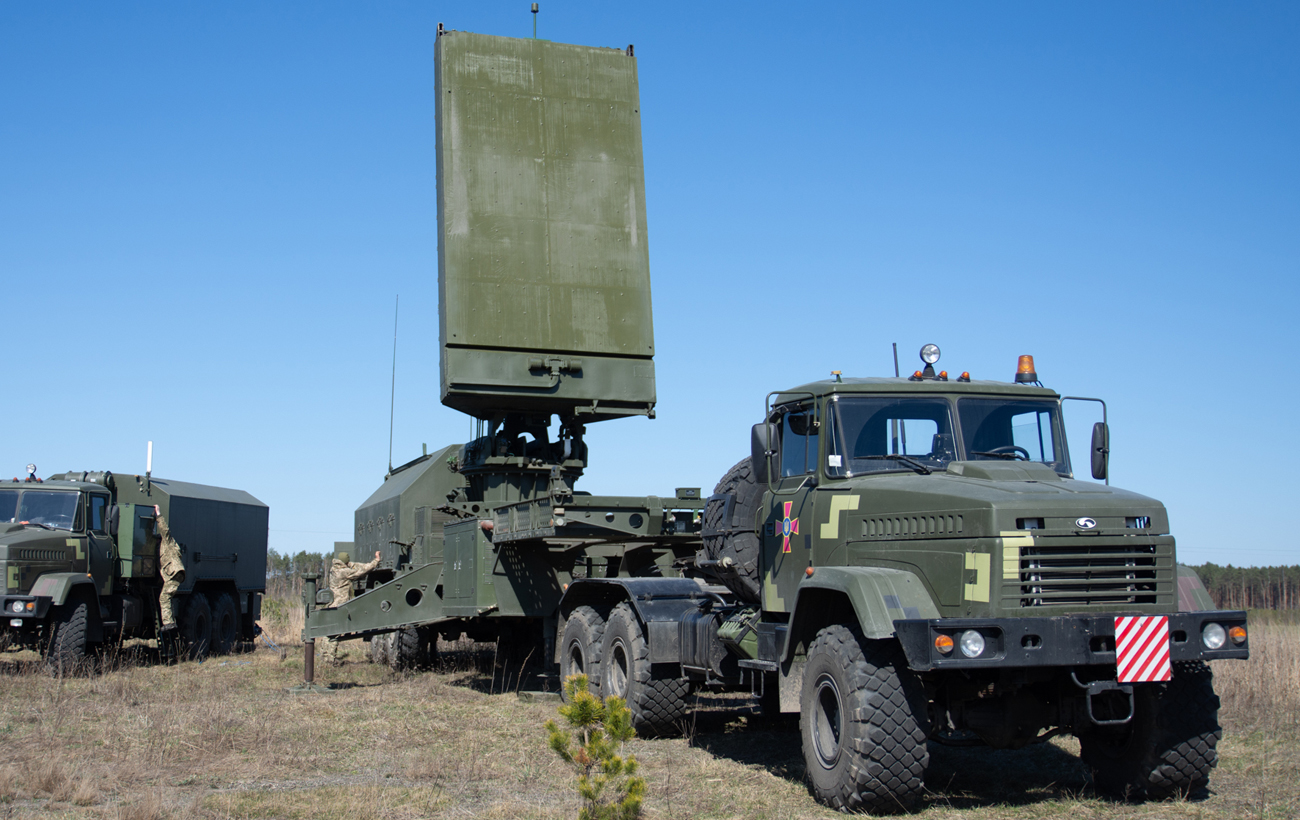
Zoopark-3 radar (photo: Ukroboronprom)
A counter-battery radar is a radar system that detects enemy artillery units. When the adversary opens fire, the radar tracks the artillery shell along its flight trajectory during reconnaissance and automatically calculates the probable point of origin. In other words, it provides our troops with the coordinates of Russian artillery, Zhuravlov explains.
Another area of domestic production is artillery ammunition. According to the serviceman, Ukrainian enterprises are currently producing shells of almost all calibers, including 155 mm. However, domestic output is still insufficient to meet the needs of Ukraine’s Defense Forces independently, he adds.
Weapons set to enter service with Ukraine’s Armed Forces: guns, missiles, and more
Among the promising weapons expected to enter service with Ukraine’s Missile Forces and Artillery (MFA) are the 155mm towed Marta howitzer with a 39-caliber barrel, as well as a 105mm towed gun. Both are currently undergoing testing, the source said.
"At the moment, we are also seeing very active development in missile weapons. Improvements are ongoing to our Sapsan operational-tactical missile system, the Vilkha multiple launch rocket system, and the Neptune complex with the so-called long-range missile, which is now going through all stages of testing. These are all prospective systems," Zhuravlov says.
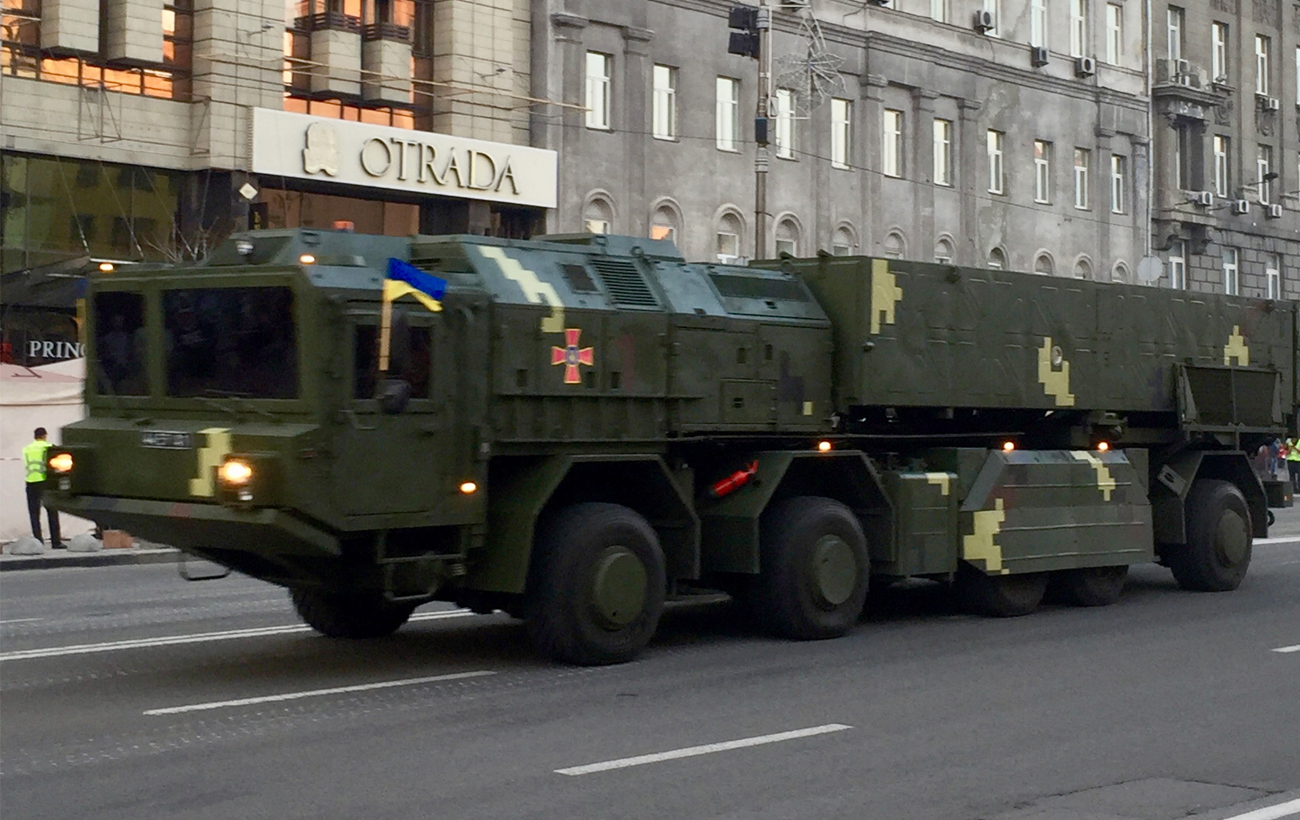
Sapsan operational-tactical missile system (photo: Wikipedia)
Another interesting project still in development is a multifunctional missile system. According to the source, the idea is to create a single, universal platform capable of launching different types of munitions — including rocket projectiles similar to GMLRS for HIMARS, as well as missiles for various purposes.
Other promising developments include a Ukrainian analogue of the AN/TPQ-36 counter-battery radar; a laser-designator UAV that will guide precision-guided munitions to their targets; and a UAV equipped with a synthetic aperture system designed to conduct reconnaissance in poor weather conditions — fog, heavy cloud cover, and rain. Tests are also currently underway for the high-precision Barvinok-K munition.
At the same time, work continues upgrading the Missile Forces and Artillery's information and communications system, Kropyva-D. According to Zhuravlov, it is now being configured so that data collected by reconnaissance assets — UAVs, radar systems, radio-technical or optical intelligence — is processed and the resulting target coordinates are transmitted directly to a gun within minutes. This is intended to significantly shorten reaction time once the fire is opened.
"For example, a reconnaissance UAV transmits data about a detected target to the server — that should take a second. The data is processed on the server and immediately sent to the gun. As a result, the gun is aimed and ready to fire in literally two minutes. The gun commander presses 'fire,' and the gun shoots. The 'detect-to-destroy' command-and-control cycle is reduced to nearly two minutes," explained the deputy chief of staff of the MFA Command.
Today's high-tech warfare requires near-constant adaptation and the construction of systems capable of changing rapidly, the interlocutor emphasizes.
Special Bohdana
The Missile Forces and Artillery is not only a customer but also provides full oversight of the entire production process and conducts testing of the weapons and equipment that are delivered to artillery and missile units.
"If we order the Bohdana, we work through the documentation, study the manufacturer's capabilities, and organize testing. We oversee the process all the way through its adoption into service. Once it is accepted, we study how it is used, analyze its performance, and can ask the manufacturer to make changes to improve the system," Zhuravlov explains, describing the MFA's role in weapons production.
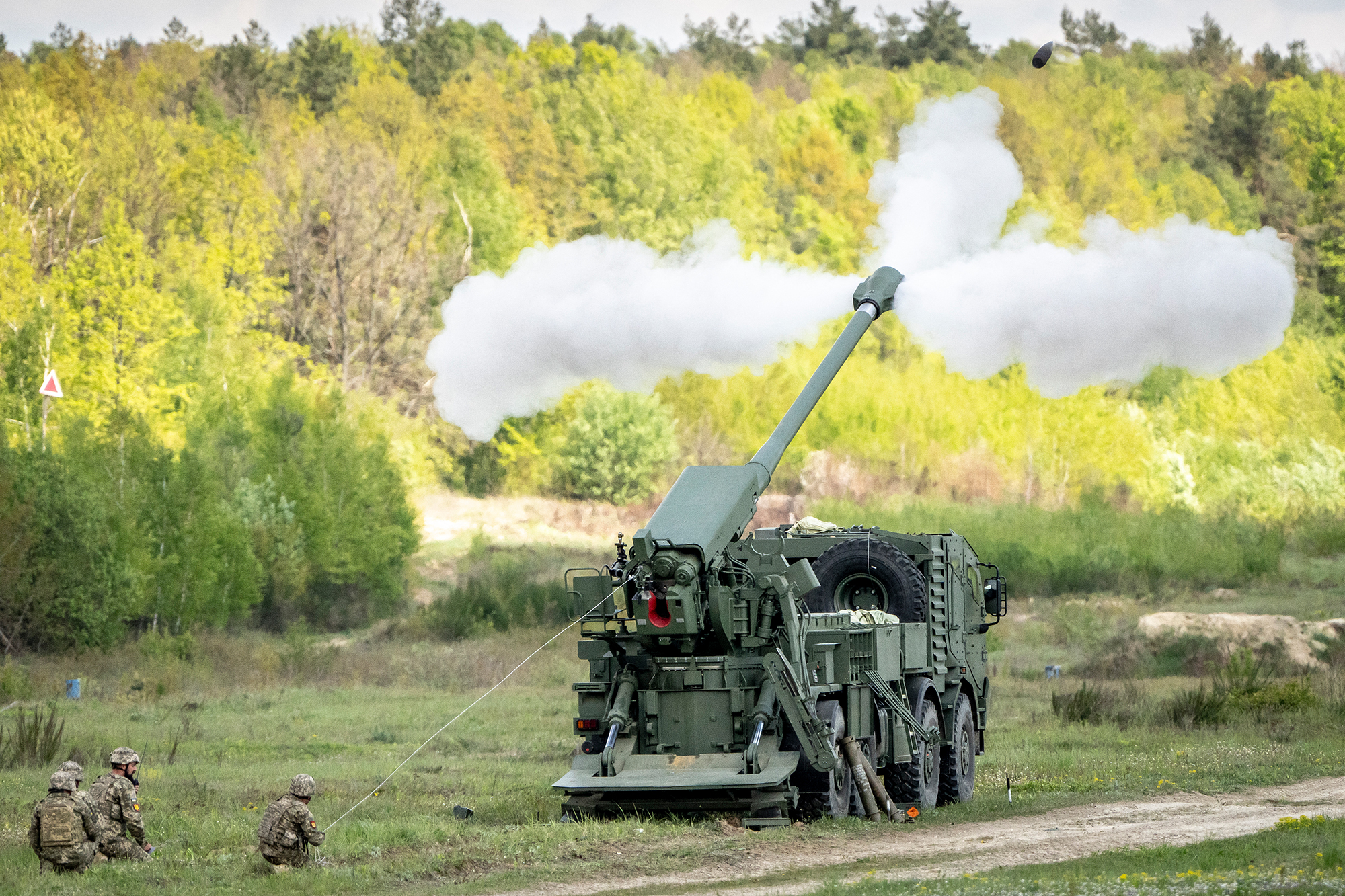
Self-propelled artillery system Bohdana’(photo: Getty Images)
Today, the Ukrainian-made Bohdana is already approaching the French CAESAR in terms of performance, the source notes. However, while CAESAR took about seven years to develop and underwent extensive testing in various climatic conditions, at the start of Russia’s full-scale invasion in 2022, the Bohdana was still only at an early stage of development.
It was only in 2022 that the MFA began active testing of the system. Improvements have continued ever since: today, there is not only a self-propelled version of the Bohdana, but also a towed gun, whose trials were conducted earlier this year.
"As of now, the manufacturer has already developed and tested an automated fire control and aiming system that speeds up gun laying. Testing of an automatic loader is also underway. The company is currently working on a third artillery system with a shorter barrel, 39 calibers. The current Bohdana has a 52-caliber barrel," Zhuravlov said.
The Ukrainian Bohdana has several advantages over foreign counterparts. First and foremost, it can use a wide range of ammunition, which simplifies logistics. Second, the gun has a fairly large barrel life reserve, the officer adds.
"And today, it is probably one of the most reliable artillery systems in terms of endurance. Its technical readiness at the front consistently reaches 80%. That means it has the highest survivability," Zhuravlov says.
According to him, as of October 2025, domestically produced 155mm Bohdanas—both self-propelled and towed—account for about 40% of all artillery systems currently used on the front.
How the AFU's artillery fleet will change
According to Zhuravlov, the Armed Forces of Ukraine, specifically the Missile Forces and Artillery, currently operate around 30 different models of artillery systems. These include Soviet-era systems, modern Ukrainian-made Bohdana howitzers, and foreign platforms.
"We are the only country today that uses such a wide range of artillery systems and ammunition. And in practice, this is very difficult to manage. Having such a diverse fleet of systems complicates logistics, because these systems cannot replace one another during repairs. Each artillery system has its own chassis, its own sighting equipment, and so on," the source explains.
In addition, a certain number of artillery systems are currently undergoing repairs. Since some of them have to be sent abroad, repairs can take six months, and sometimes even up to a year.
One way or another, changes to and replacement of the artillery fleet will happen gradually. In the short term, among the systems the Missile Forces and Artillery would like to keep in service are Bohdana howitzers in various modifications, CAESAR, PzH 2000, RCH 155, M777, Archer, and other systems that prove themselves effective in combat operations.
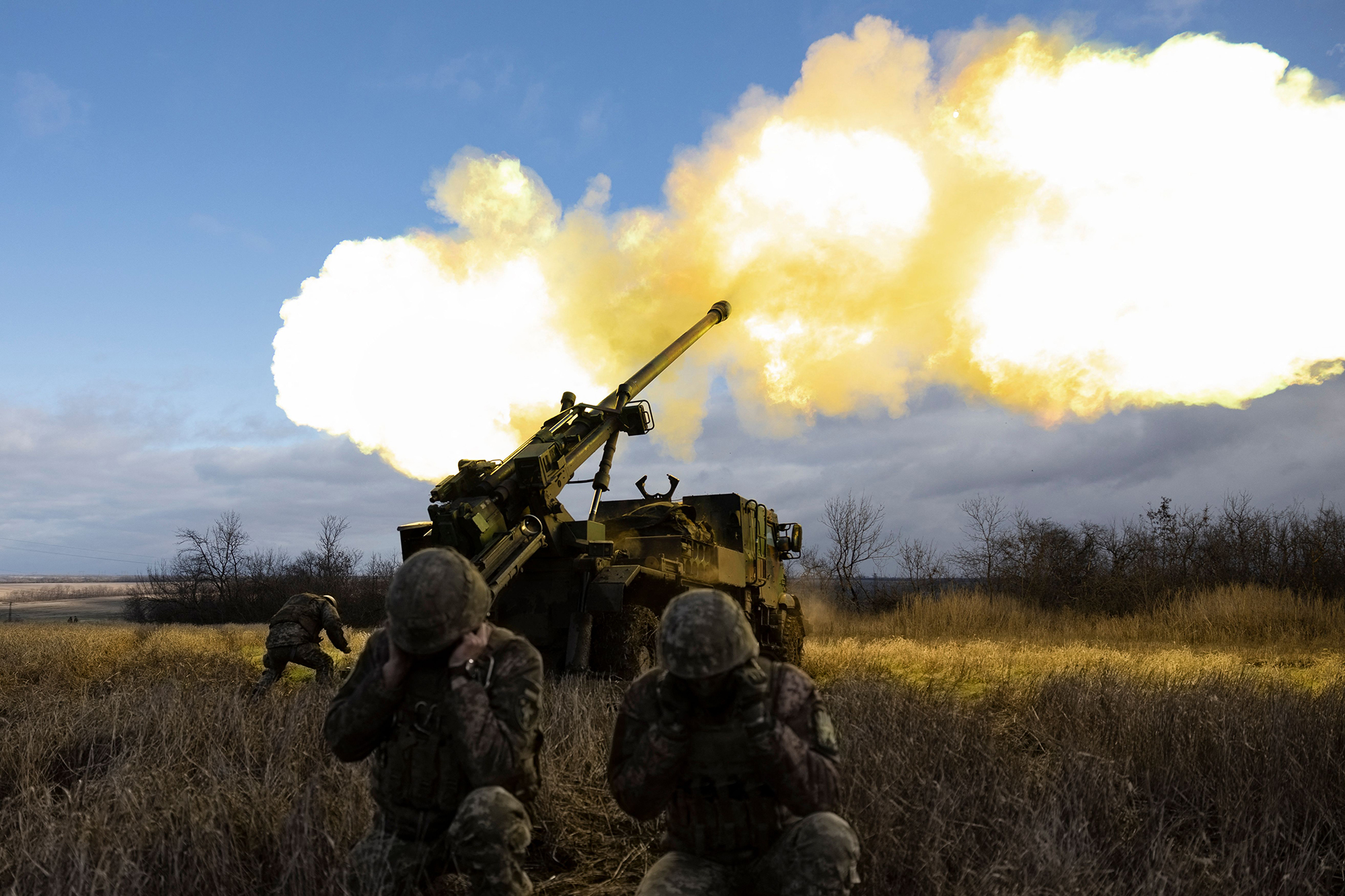
CAESAR (photo: GettyImages)
"Perhaps in the medium term we will end up with just one artillery system—the Bohdana—but in different variants. After all, Bohdana is our own production. The manufacturer provides technical support for the systems in service and organizes repairs of weapons that have broken down," Zhuravlov adds.
How the use of MFA is evolving in war: Realities and challenges
The combat use of Missile Forces and Artillery has been transforming since the start of the full-scale war. These changes are driven by a range of factors and conditions that have emerged on the battlefield. Analyzing these factors makes it possible to trace the shift from traditional approaches to modern forms and methods of employing MFA within military formations, explains Zhuravlov.
One such factor is the exhaustion of Soviet-era artillery resources. Its intensive use since 2022 accelerated wear on barrels and mechanisms in Soviet-designed systems that were in service with the Armed Forces of Ukraine at that time. Simultaneously, within just a few months of the full-scale invasion, Ukraine faced a chronic shortage of 122 mm and 152 mm ammunition. This forced the search for foreign or domestic alternatives and, consequently, the shift toward using 155 mm rounds.
"The depletion of 152 mm and 122 mm ammunition became one of the key factors influencing changes in approaches to the combat use of MFA. The shortage of shells led to reduced firing intensity and a shift from massed fire to precision strikes on priority targets," the military officer says.
A third factor is the expanded use of reconnaissance drones and strike UAVs on the front lines. The rapid increase in their deployment has significantly enhanced situational awareness, target detection speed, and fire adjustment accuracy, enabling strikes against enemy rear positions.
"Although UAVs have increased the effectiveness of MFA, they have also made it more vulnerable to enemy counter-battery actions. Our units now face threats from FPV drones and fiber-optic UAVs," explains the deputy chief of staff of the MFA Command.
.jpg)
The depletion of 152 mm and 122 mm ammunition was a key factor influencing changes in MFA combat employment (photo: Ministry of Defense of Ukraine)
A fourth factor is the deployment of electronic warfare systems on both sides. According to the source, these systems have complicated the use of reconnaissance UAVs and significantly reduced the effectiveness of precision weapons—from Excalibur and Vulcano shells to GMLRS rockets.
"The fifth factor is the emergence of precision-guided missiles and artillery shells. This has shifted priorities—targeted strikes on critical logistics nodes, air defense, and electronic warfare systems have become the most effective way to achieve desired effects. It also places new demands on reconnaissance and revises the criteria for target selection," Zhuravlov adds.
Changes in enemy tactics also affect the combat use of MFA: instead of large-scale assaults with armored vehicles, the enemy increasingly conducts small-group assaults without using weapons or equipment at all. In the absence of a continuous, stable frontline, these assault groups (reconnaissance sabotage groups) sometimes strike Ukrainian mortar units.
"If coordination with general military units is weak, engaging enemy forces that have penetrated our lines can pose a risk to our own units. In such cases, it becomes necessary to increase the distance from firing positions to the frontline to protect our troops from UAV strikes. This, in turn, reduces the depth of enemy targeting," Zhuravlov says.
According to him, the traditional approach to fire strikes proved insufficiently adapted to the battlefield conditions that emerged after 2022. Decision-making speed for target engagement was too slow. The ability to rapidly redistribute fire assets was limited. Reconnaissance integration was weak. All of this forced the Armed Forces of Ukraine to adopt a concept of combined fire support according to NATO standards.
"Combined fire support includes strike UAV units, artillery units, and rocket forces. In 2023, the structure of Combined Fire Support Centers was introduced to plan and coordinate the use of all assets within combined fire support. That means, at every level—tactical, operational, and strategic—there are centers coordinating target engagement," Zhuravlov clarifies.
Role of the Missile Forces and Artillery in the future
The combat experience of the Armed Forces of Ukraine confirms that the key factor in countering the enemy is the speed of the reconnaissance–strike cycle. The shorter the time between target detection and engagement, the more effective artillery becomes. The MFA aims to minimize this time in the future.
"In other words, after a very short interval, we are already delivering salvos from artillery batteries against the enemy. We are talking about the future, but even now we are achieving five to seven minutes, and sometimes two minutes, depending on where the artillery piece is located. If it is already in a firing position and ready for use, it takes very little time. If it is moving out from cover, it may take longer," the serviceman adds.
Another goal the MFA is working toward is increasing range and improving accuracy through the introduction of guided and precision munitions and programmable fuzes. Plans also include improving logistics: ammunition and supplies will be delivered to positions by ground-based robotic systems.
"Artillery systems themselves will probably change, their coordination will improve, protection will become more reliable, and engagement ranges will increase. There will be more automation. The overall fleet of artillery systems will shrink. Effective reconnaissance–strike complexes will be created. But the tasks of artillery will not change," Zhuravlov says.
Missile forces are capable of delivering a missile with a warhead weighing up to one ton to a target, whereas no UAV can deliver such a quantity of explosives. At this stage, the MFA will retain a leading role in high-intensity combat operations.
"Artillery was, is, and will remain one of the main means of firepower against the enemy. But our future lies in synergy with unmanned aerial vehicles and automated command-and-control systems,” the officer concludes.