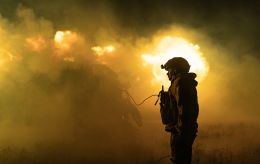
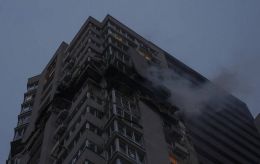
Some air defenses stand empty as next attack looms. Interview with Air Force colonel Yurii Ihnat


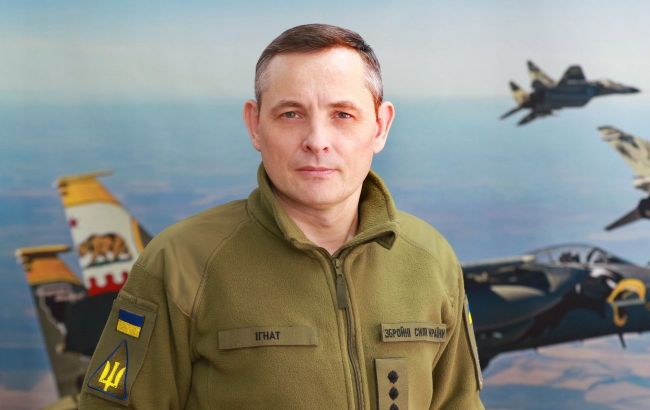 Yurii Ihnat, head of the Communications Department of the Air Force Command (photo: provided by the Ukrainian Air Force Command)
Russia has been systematically attacking Ukraine’s energy sector since the start of the autumn. To that end, Moscow has introduced a new strike pattern and is employing a wide range of weapons. In an interview with RBC-Ukraine, Colonel Yurii Ihnat, Head of the Communications Department of the Ukrainian Air Force Command, discussed Russian attacks, the modernization of Shahed drones, and the challenges and successes of Ukraine’s air defense.
Read also: Zelenskyy identifies cities where drone protection will be strengthened
Key points:
-
Russia has changed its strike structure: individual cities can be hit simultaneously by dozens of missiles and up to 500 UAVs from multiple directions.
-
Even “successful” air defense does not prevent destruction: if 80% of targets are intercepted, the remaining 20% still devastate energy facilities and infrastructure.
-
One major challenge is a shortage of air defense missiles: some systems are occasionally left without interceptors while awaiting a new attack.
-
Ballistic missiles have become a more difficult target: their numbers have increased, they now maneuver, and only Patriot systems can intercept them.
-
Shahed drones are now one of the main threats: they are launched in the hundreds, with some equipped with electronic warfare protection or control channels.
-
Russia’s new missiles are more of a signal to the West: Zircon and Oreshnik are tools of demonstrative pressure.
US President Donald Trump said on January 29 that he had asked the leader of the aggressor country, Vladimir Putin, to suspend strikes on Ukraine’s energy system amid severe frost. Putin allegedly agreed to do so for one week. Ukraine decided to act in a reciprocal manner.
However, the timeframe of this so-called truce remains unclear. President Volodymyr Zelenskyy explained that the countdown of the “energy truce” began on the night of January 30. The Russians, meanwhile, claim they agreed not to strike only until February 1 — meaning it was effectively not even a week-long pause, especially since Moscow was shelling Ukraine’s energy infrastructure as early as the beginning of last week.
Since autumn, the enemy has been systematically striking Ukraine’s CHP plants, thermal power stations, and substations, carefully preparing these attacks. Ukraine’s air defense is operating at the limit of its capabilities and often faces a shortage of resources to repel such strikes.
Russian attacks on Ukraine’s energy sector
In an interview with RBC-Ukraine, Yurii Ihnat noted that there were indeed no massive attacks over the past week. Over the last seven days (as of yesterday), Russia launched slightly fewer attack drones, significantly fewer missiles — only two — but almost the same number of guided aerial bombs (KABs). However, according to Ihnat, the enemy has not changed its intentions.
"They want, during the autumn–winter period, once again in the course of this war, to force Ukraine to remain without heat and electricity. The aggressor claims that this supposedly affects military targets and our defense industry, but in reality we see ordinary civilians suffering — especially those who cannot afford expensive generators, batteries, home power stations, and the like. Children, pensioners, and low-income people are suffering," said the head of the Communications Department of the Air Force Command of the Armed Forces of Ukraine.
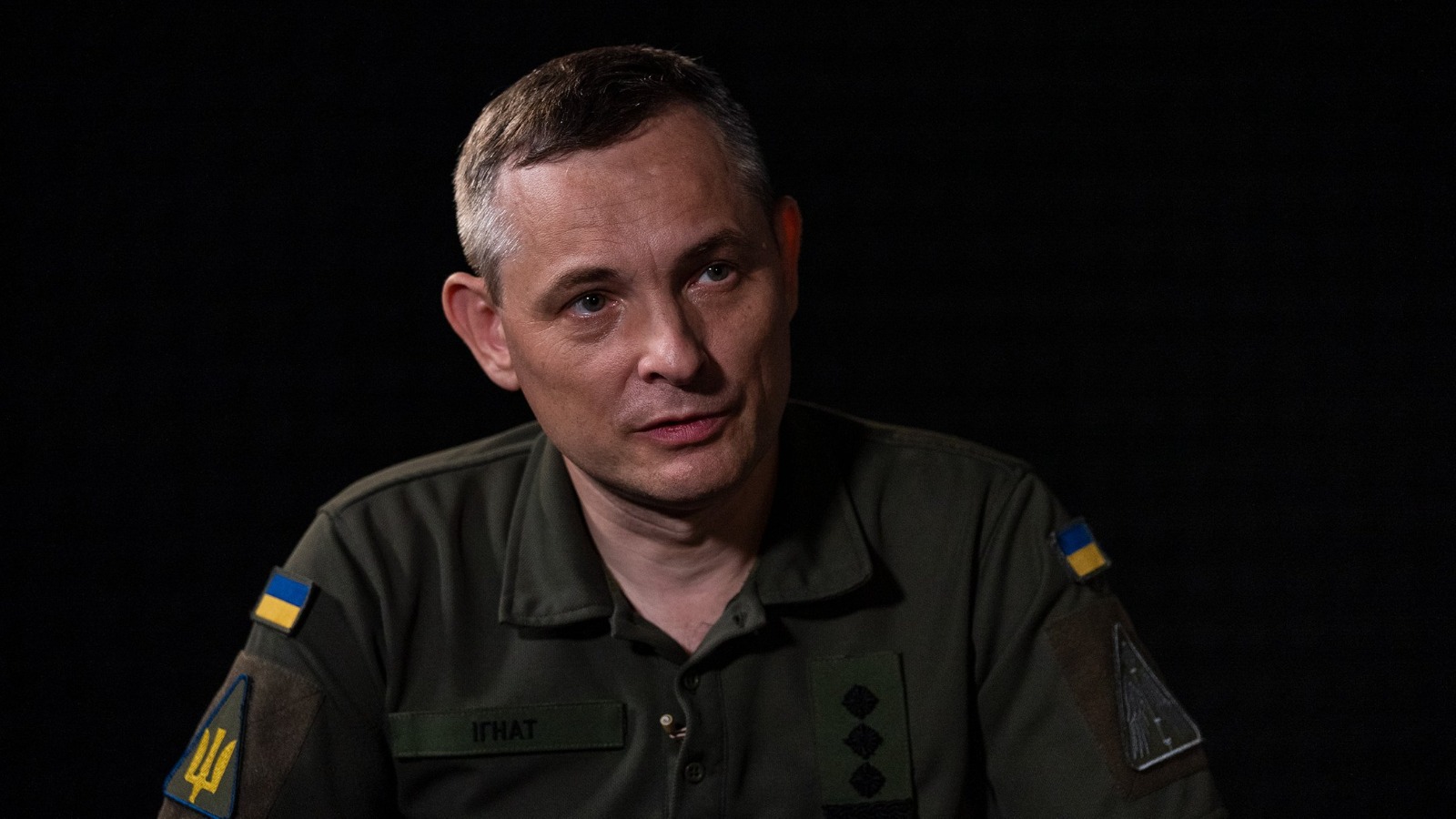
Yurii Ihnat (photo: provided by the Air Force Command of the Armed Forces of Ukraine)
According to him, the enemy strikes the energy sector using various types of missiles. In 2025, the use of ballistic missiles increased significantly compared to cruise missiles. This is because only the Patriot system is capable of intercepting ballistic missiles.
"When they attack the Kyiv region and Kyiv itself, we often see dozens of missiles of various types and up to five hundred drones. Can you imagine how difficult it is to cover even a well-protected city against such a number of enemy aerial attack assets? No matter what, something still gets through. Even if 80 percent of targets are shot down, the remaining 20 percent cause enormous damage. This can be a hit on a CHP plant, another critical infrastructure facility, or an enterprise," Ihnat added.
Russia’s strike tactics
Ihnat noted that during attacks on Ukraine’s power grid in 2022–2024, Russia primarily used missiles such as Kalibr, Kh-101, Kh-555, Kh-55SM, and Iskander-K. These are all cruise missiles with relatively long ranges. For the Iskander-K, the range is approximately 600 kilometers, whereas for the Kh-101 and Kalibr it exceeds 1,000 kilometers.
"How do the current attacks differ from previous years? The enemy has significantly increased the number of strike UAVs. Every night, we see more than 100 Shaheds, Italmas, Gerbera drones, and other types flying deep into the country. In addition, Molniya and Lancet drones are used in frontline areas. During massive attacks, the number reaches 500 or more," Ihnat said.
All of this combined seriously affects the ability to repel such strikes, he explained — especially when an attack is localized and focused on a single region, such as Dnipro, Odesa, or Kyiv.
"To repel such attacks, we have to use everything we have: surface-to-air missile systems, aviation, electronic warfare, mobile fire groups, as well as interceptor drones, which are being widely discussed today. This is an innovative and rational way to shoot down enemy drones," said the head of the Air Force Communications Department.
Read also: SpaceX moves to block Russian use of Starlink in drone attacks
According to him, in previous years, combined strikes involved more missiles; now there are significantly more drones, and starting in 2025, there has been an increase specifically in ballistic missiles. Using Kyiv as an example, the Russians attack it from multiple directions.
"From the south, cruise missiles like Kalibr usually fly in from the Black Sea; from the east, Kh-101s launched by strategic aviation; and from the north, they strike with ballistic missiles from the Bryansk, Kursk, and Belgorod regions. Plus UAVs. That is the difference from attacks in previous years — the enemy simultaneously, intensively, and with a large number of assets attacks a single city or region," Ihnat explained.
Challenges in Ukraine’s air defense against Russian ballistic missiles
Ihnat described the operating conditions of air defense systems during massive attacks on the capital involving ballistic missiles, cruise missiles, and Shahed-type strike UAVs. Taking the Patriot system as an example — the only system capable of intercepting ballistic missiles — its radar during an attack looks in one direction. Patriot must intercept those ballistic missiles, which can number ten or more.
"At the same time, from another direction, cruise missiles and Shaheds are flying toward it 'down the collar.' That’s why protecting large cities requires more than one system, and the Patriot itself also needs protection," he explained.
He emphasized that high-level coordination among all military command bodies and units is critically important. When ground-based air defense systems are operating, Ukrainian aircraft and helicopters cannot operate in the same airspace.
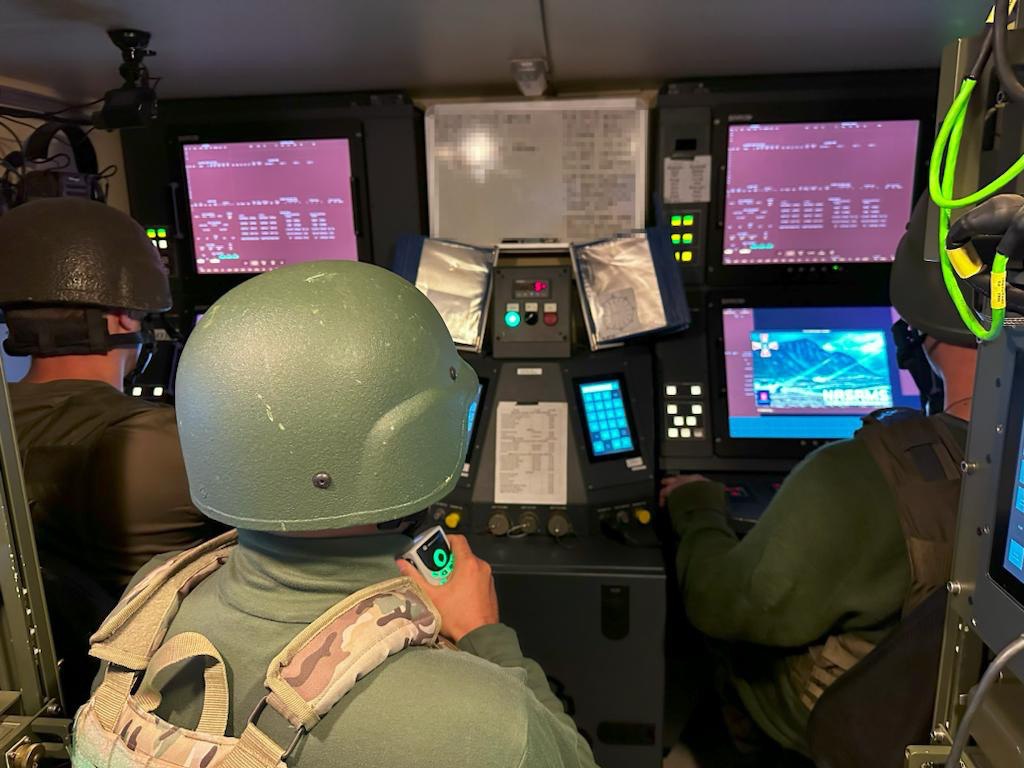
Air defense forces monitoring targets (photo: provided by the Ukrainian Air Force Command)
"They can intercept enemy missiles or UAVs farther away, in other regions, or on the approaches, to avoid friendly fire," Ihnat added.
Sometimes air defense systems such as NASAMS or IRIS-T simply do not have time to reload during powerful attacks — primarily due to a lack of interceptor missiles.
"Although our personnel work quickly and have learned to master these systems rapidly, the issue is different — having something to reload with. It has been stated many times, and the President of Ukraine has repeatedly drawn partners’ attention to the fact that sometimes some air defense systems stand empty, while the next attack still has to be repelled. Indeed, before one such attack, we were supplied with weapons just a day before. And the Defense Forces repelled that massive strike quite successfully thanks to missiles for F-16s, NASAMS, IRIS-T, and Patriot," Ihnat explained.
He added that Ukrainian air defense units have faced situations of severe shortages of interceptor missiles.
"I won’t reveal a secret: for example, a NASAMS system may be deployed with only two missiles in the launcher instead of six. That’s because missiles had to be distributed as widely as possible among other launchers to cover a larger area," Ihnat said.
Another problem in countering Russian Iskander-M ballistic missiles is their maneuvering during attacks. They descend toward the target almost vertically at high speed while simultaneously undergoing specific oscillations. According to Ihnat, although personnel operate the Patriot system, it automatically calculates the interception point between the Patriot interceptor and the enemy missile. Patriot can engage ballistic missiles within a 25-kilometer radius and cruise missiles or aircraft at distances of up to 150 kilometers, provided there is radar visibility.
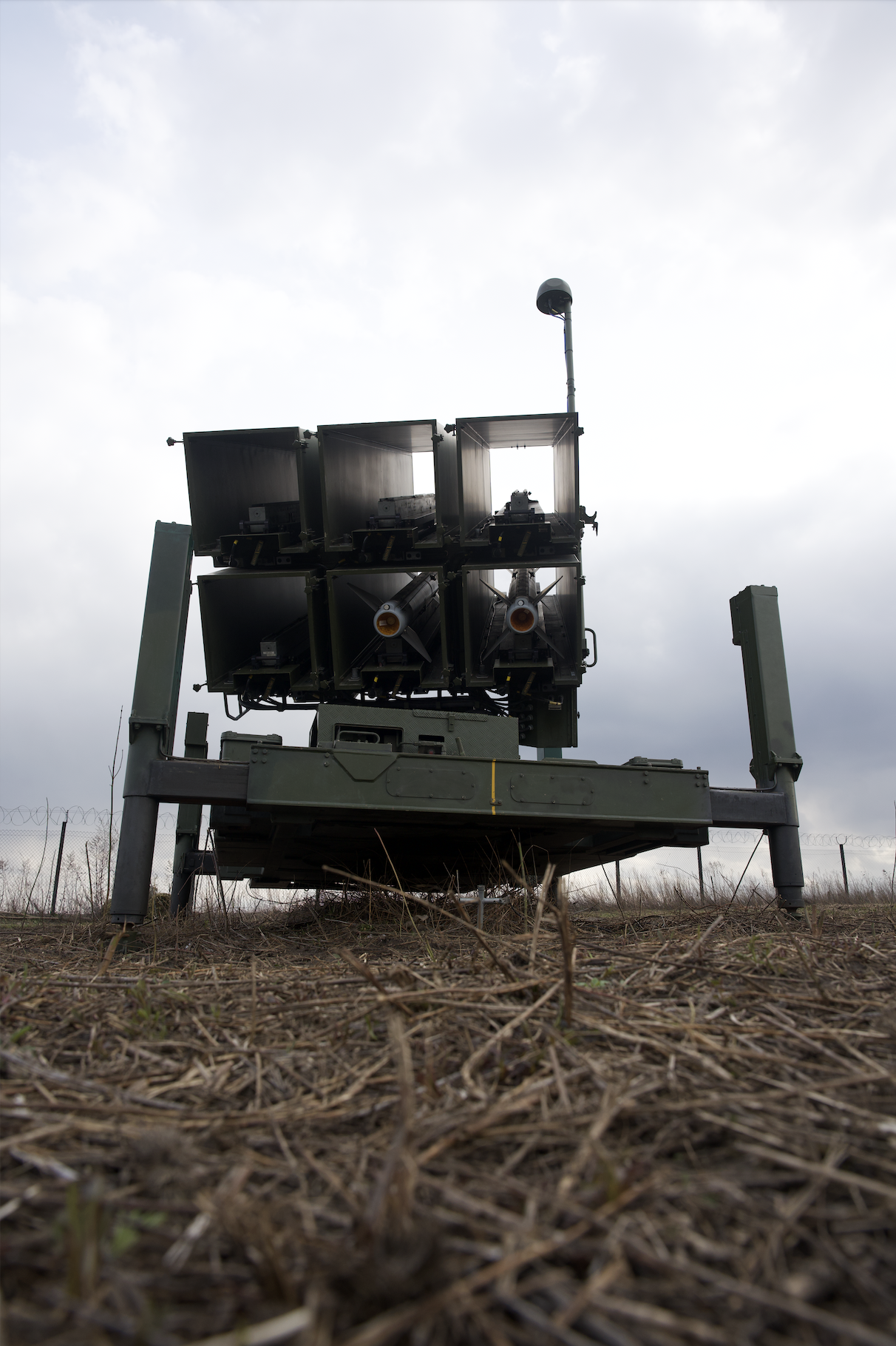
NASAMS air defense system equipped with only two missiles (photo: provided by the Air Force Command of the Armed Forces of Ukraine)
"And during the few seconds when the missile enters the Patriot engagement zone, the system must detect the target and calculate the intercept point. But when the Iskander-M performs so-called oscillations and maneuvers, it becomes difficult for the system to determine that intercept point. This creates certain challenges. These issues were raised with partners more than a year ago to improve the system, because the Russians are not standing still," Ihnat noted.
Nevertheless, Ukraine continues to shoot down Iskander-Ms as well as S-300 and S-400 missiles. The enemy can also use these, together with Iskanders, to save more expensive missiles and expend surplus S-300 interceptors instead.
In addition, the enemy has been using Kh-22 and Kh-32 missiles, which also approach targets on a ballistic trajectory. According to Ihnat, these missiles have been used more frequently against the south — oil platforms in the Black Sea, Snake Island, and coastal areas with port infrastructure.
"Recently, as many as 12 such missiles were launched at Kyiv. Each carries a warhead weighing about one ton. Nine were intercepted. This is an unprecedented case that truly deserves attention and gratitude to our warriors who intercepted these missiles. Incidentally, before this case, out of more than 400 such missiles launched over the entire period, only three had been intercepted, Ihnat concluded.
On new Russian missiles and "signals to the West"
The Oreshnik missile, as the Russians call it, is a medium-range ballistic missile. It is a modernization of the Soviet Rubezh missile.
The enemy has already used it to strike Dnipro and later Lviv. First and foremost, these strikes are a signal to Western partners — another kind of scare tactic from Putin, Ihnat believes.
"Lviv is geographically very close to NATO borders, and the Russians are showing that they have such a weapon that is ‘impossible to shoot down,’ that is ‘effective and accurate,’ that has six blocks with six warheads each, and that if there were a special warhead there — that would be it. Essentially, this is the message they are sending primarily to Western countries in order to influence them, to achieve their goals in the war against Ukraine and to push us into making concessions to the aggressor in the negotiation process, in particular," the source explains.
Another so-called new Russian missile, the Zircon, is an anti-ship missile. Overall, only a small number of such missiles have been launched, the head of the Communications Department of the Air Force Command of the Armed Forces of Ukraine уточнює. The Zircon climbs to a very high altitude — over 40 kilometers — and attacks along a ballistic trajectory, like the Kh-22 missiles already mentioned.
"They also use it in a way I would even call strange, because they launch it from occupied Crimea either at the Kharkiv region, or the Kyiv region, or the Vinnytsia region.
Such missiles—Zircons—have also already been intercepted by our air defense. Of course, to intercept it, the Patriot system must be in the right place at the right time," Ihnat added.
Modernization of Shaheds/Gerans and drones in Poland
In addition to missiles themselves, the enemy is paying more attention to modernizing unmanned aerial vehicles, especially Shahed-type drones, which have already undergone a certain evolution. Today, one of the most serious problems for Ukraine is precisely Shaheds, which fly in the hundreds and no longer only at night but also during daylight hours, Ihnat explains.
"And not only somewhere closer to the front line — UAVs, including jet-powered drones, often appear over the capital as well. They either fly high, so as to be out of reach of our mobile fire groups, and they are also engaged by interceptor drones, or sometimes they fly quite low, using the terrain, for example, the Kyiv Sea, the reservoir," the source says.
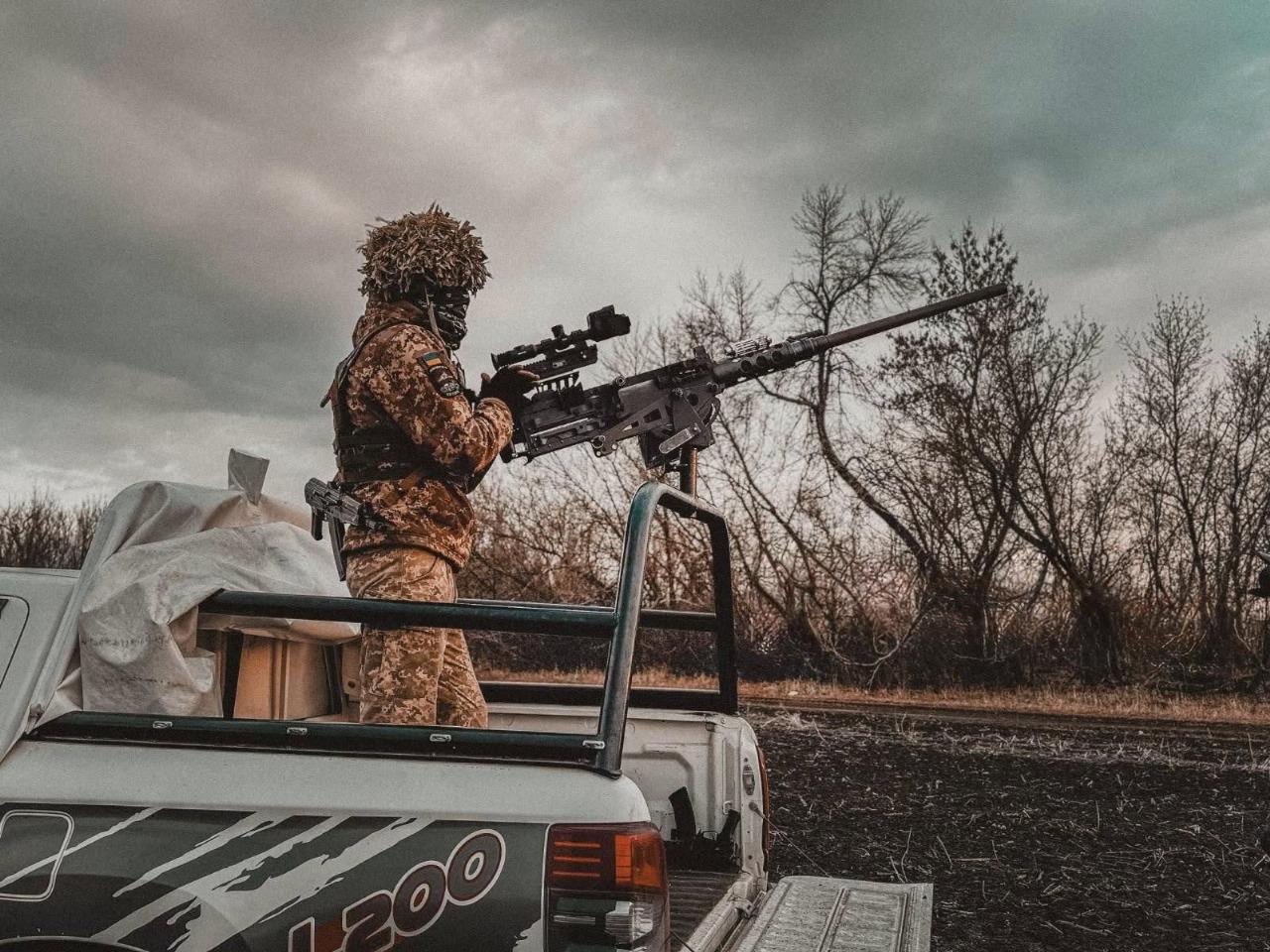
Mobile fire groups in action (photo: provided by the Ukrainian Air Force Command)
During an attack, the enemy plans the use of Shaheds based on various intelligence data — from its own satellite, possibly satellites of Russia’s partner countries, and from agent intelligence. It builds routes so that as few of its UAVs as possible are shot down en route.
"They also analyze weather conditions during the attack and other factors. In this way, the enemy determines how the UAVs will fly— whether higher or lower. Mobile fire groups, of course, have a limited operating radius. A heavy machine gun is effective up to approximately 1 km in altitude. With MANPADS, the engagement range is up to 4 km, but the effective range is just over 2 km. When a drone climbs even higher, intercepting it becomes extremely difficult," explained the head of the Communications Department of the Air Force Command.
He added that the Russians have not only bought Iranian developments but are also trying to significantly modernize them. This refers to high-speed, jet-powered UAVs — such drones have already been recorded by the Air Force during attacks. In addition, previously Shaheds flew with simple guidance to a target — by coordinates — and most still do.
"But there are drones — not used on a massive scale — that today are significantly modernized. They are difficult to affect with electronic warfare, because they have additional protection. They may have control channels, including SIM cards, modems, and even Starlink — there was such a case recently. I remember that the first Shahed with Starlink was found about six months ago. Ukrainian authorities are now actively looking for countermeasures, including together with partners," Ihnat noted.
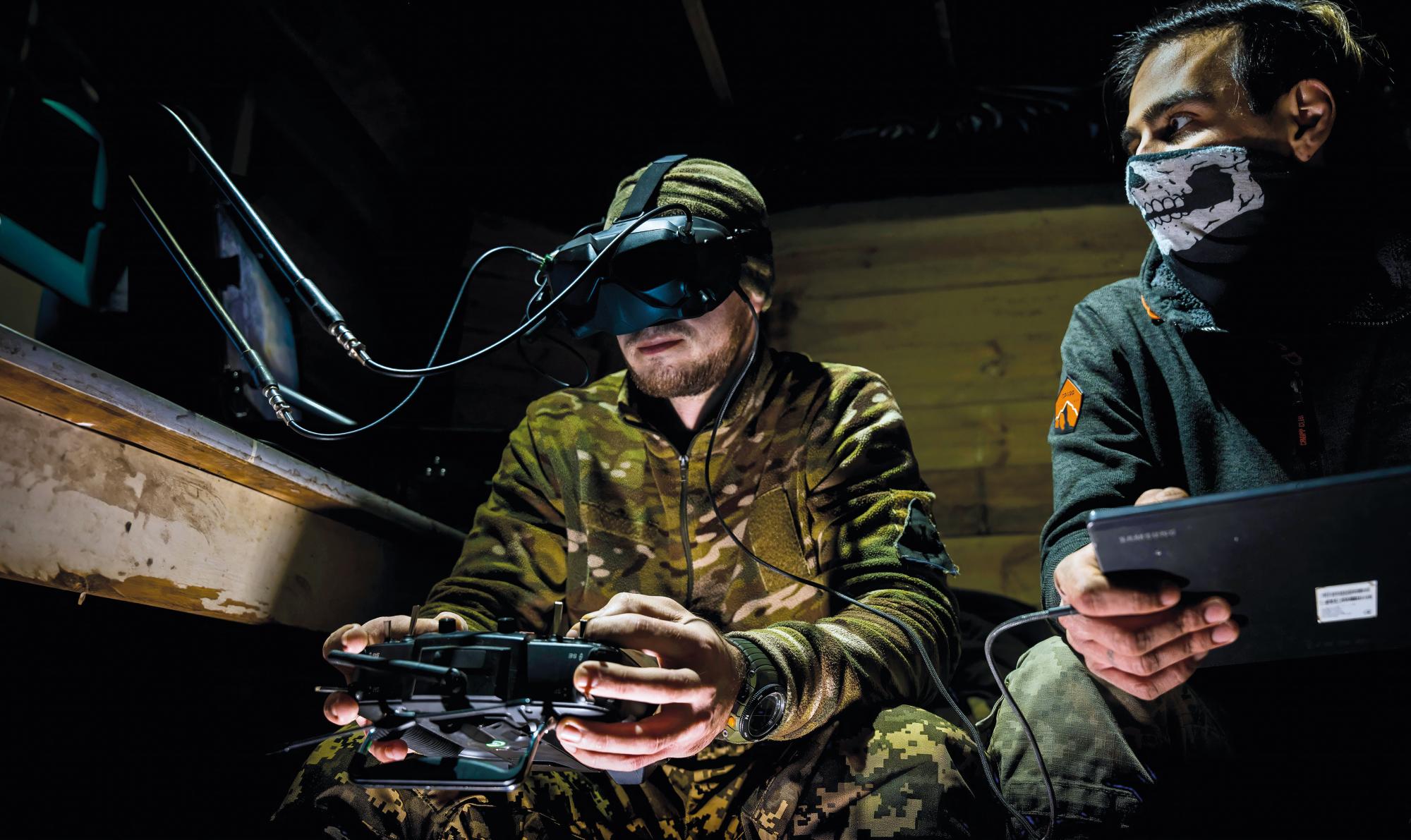
Ukraine seeks to close its airspace as much as possible with anti-aircraft UAVs (photo: provided by the Air Force Command of the Armed Forces of Ukraine)
According to him, a control channel in a UAV allows Russians to steer such drones. And for protection against electronic warfare, additional elements may be installed on the antenna.
Ihnat noted that during the repelling of massive Russian attacks, electronic warfare systems sometimes manage to turn part of the UAVs back toward Russia. This is so-called spoofing.
"This is a change of coordinates, as a result of which drones can end up on the territory from which they were launched — that is, on Russian territory. We even sometimes noted in our reports, when such cases occurred, that four drones 'returned to their home harbor,'"Ihnat explained.
According to him, the aggressor used this topic for speculation and manipulation when several dozen Russian UAVs flew into Poland. They immediately accused Ukraine, claiming that it was our electronic warfare systems that had ‘spoofed’ those drones and influenced their flight.
"Because the Russians supposedly wanted to attack Galicia or Volyn, but instead the UAVs flew into Poland. We had to refute this both in Polish media and domestically, because most of these drones entered the Republic of Poland via Belarusian territory, where we could not influence their flight path. This simple explanation was provided to the Polish side — that it was primarily a Russian provocation intended to accuse us," Ihnat explained.