Belarus poses a constant threat to Ukraine under Lukashenko: Interview with Belarusian opposition leader Tsikhanouskaya


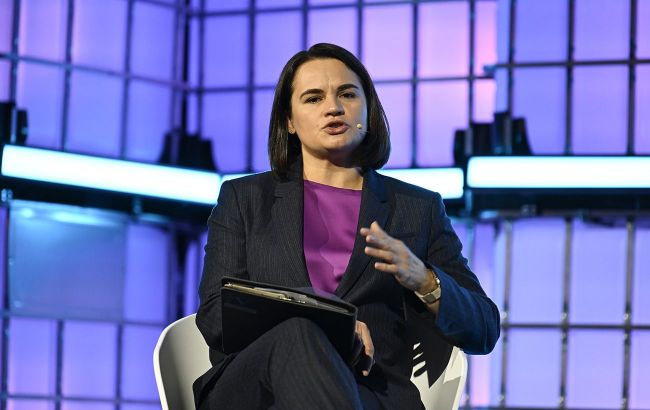 Leader of Belarusian democratic forces Sviatlana Tsikhanouskaya (photo: Getty Images)
Ukraine suddenly stopped ignoring the Belarusian opposition and its leader, Sviatlana Tsikhanouskaya. Read Tsikhanouskaya's interview with RBC-Ukraine about her meeting with Zelenskyy, war criminal Lukashenko, and his dependence on Putin, the Belarusian opposition, and the prospects for overthrowing the regime.
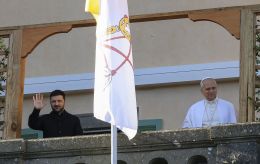
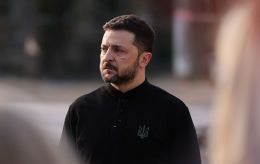
Until recently, official Kyiv avoided direct contact with Belarusian democratic forces. However, in early 2026, there was a radical shift in Ukraine's policy toward Belarus. President Volodymyr Zelenskyy held his first full-fledged meeting with Belarusian opposition leader Sviatlana Tsikhanouskaya in Vilnius and invited her to Kyiv.
Here are the key highlights from the interview.
Kyiv's new Belarusian policy and visit to Ukraine
The meeting with Volodymyr Zelenskyy sent a powerful signal to Belarusians. "As long as Belarus remains under Lukashenko's control, it will always be a threat to Ukraine. Without a free Belarus, there will be no secure Ukraine, and vice versa," she emphasizes.
The appointment of Ukraine's special envoy to Belarus is expected in the near future, and Tsikhanouskaya's visit to Kyiv is scheduled for late February or early March 2026. The parties plan to begin strategic consultations on sanctions policy, the status of Belarusian volunteers, and joint information warfare.
Hostage trading: Why Lukashenko releases prisoners
Recently, Lukashenko's regime has begun to release individual groups of political prisoners. Tsikhanouskaya warns the West against illusions: this is not humanism, but cynical bargaining. The dictator is using people as living commodities to break out of international isolation and achieve the lifting of sanctions.
The Donald Trump administration has already taken certain steps towards Minsk, lifting some restrictions in exchange for the release of people. "We must always remember that Lukashenko is a self-proclaimed dictator, an international criminal, and his legitimization cannot be allowed," she adds. According to Tsikhanouskaya, there are already two cases against Lukashenko in the International Criminal Court.
Nuclear blackmail and Russian control
Under Lukashenko, Belarus has effectively become a military platform for Russia. The deployment of Russian nuclear weapons and new missile systems (such as Oreshnik) on Belarusian territory is an instrument of blackmail not only against Ukraine but also against the whole of Europe.
Tsikhanouskaya emphasizes that Lukashenko is completely dependent on the Kremlin economically and politically. She is concerned that if a grand bargain is reached to end the war in Ukraine without taking into account the interests of Belarus, the country could remain under Russia's de facto control for decades.
Common path of Ukraine and Belarus
When asked how exactly the regime will fall, Tsikhanouskaya does not give a clear answer. However, she is convinced that changes in Belarus are inextricably linked to the end of the war in Ukraine.
According to her, even among Belarusian officials, there is an understanding that Lukashenko is leading the country to a loss of sovereignty. Therefore, Tsikhanouskaya proposes to organize a round table between Belarusian democratic forces and individual representatives of the authorities (not Lukashenko), with the mediation of the Americans.
Tsikhanouskaya also hopes that after her victory, Ukraine will become an advocate for a free Belarus on the international stage. In addition, she draws a clear line between the Belarusian and Russian opposition. "We are different, we have no imperial ambitions, and the majority of Belarusians are against war," says Tsikhanouskaya.
Is Lukashenko's return to big politics possible?
There is a risk that the dictator will again try to become handshakeable, as was the case in 2015 on the wave of the Minsk agreements on Donbas.
"Lukashenko has succeeded in doing this several times. In almost every election, people took to the streets in protest, were imprisoned, and then bought out. And everything was supposedly forgotten. But now a generation has grown up that says, "Enough! Let's stop going around in circles." And that's why I'm so grateful to the Belarusian people for not giving up over the last five years," says the Belarusian opposition leader.
Quick Q&A
— Why has Ukraine launched a new policy toward Belarus and contacts with the opposition?
— Kyiv has finally separated Lukashenko's regime from the Belarusian people. An agreement has been reached with Zelenskyy on the appointment of a Ukrainian special envoy and strategic cooperation, because without a free Belarus, there can be no secure Ukraine.
— Why is Lukashenko releasing political prisoners and trying to negotiate with the US?
— This is not a change of course, but a trade in hostages. The dictator is trying to exchange people's lives for the lifting of sanctions and legitimization by the Trump administration. Europe must not give in to blackmail until the repression stops completely.
— What is Belarus' role in Russia's aggression against Ukraine in early 2026?
— The Belarusian regime has become a full-fledged rear for Russia: more than 300 factories are working for the Russian defense industry. The deployment of nuclear weapons and the Oreshnik is a hybrid blackmail of Europe. Lukashenko is a direct accomplice to the aggression, and we are providing Ukraine with evidence of his crimes.
— Is there a threat that Belarus will become a consolation prize for Putin during peace talks?
— This is a huge risk. The issue of Belarus must be part of the big deal. If it remains under the Kremlin's control, the status quo will be frozen, and Russia will retain a springboard for new attacks in the future.
— What is the difference between the Belarusian and Russian opposition?
— The red line of Belarusian democratic forces: Belarusians are not Russians. Cooperation is possible with those Russian opposition figures who unequivocally condemn the aggression against Ukraine and have no imperial ambitions. Belarusian democratic forces do not plan to reform Russia; their goal is exclusively an independent European Belarus.