Ukraine's air defenses switch to manual mode due to Patriot missile shortage, expert

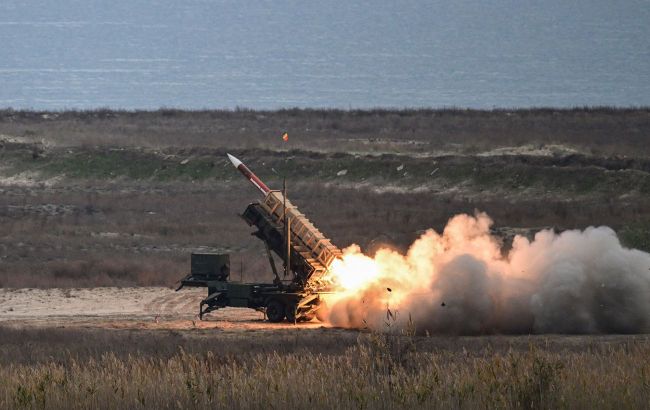
Due to a shortage of missiles for Patriot air defense systems, the Ukrainian military has been forced to change its tactics for repelling aerial attacks. Air defense systems have been switched from automatic to manual mode, stated military expert and former Security Service of Ukraine (SBU) officer Ivan Stupak in a comment to the RBC-Ukraine YouTube channel.
Air defenses switched to manual mode
According to the expert, the main reason for the declining effectiveness of air defense operations is the acute shortage of Patriot interceptor missiles. He said this is evident from both recent Russian attacks and statements by officials.
Because of the ammunition shortage, the Ukrainian Air Force has abandoned its usual target engagement procedure.
"Our military had to switch from automatic operation, where the systems automatically detect a target and launch two missiles, to manual mode, firing one missile at a time," Stupak said.
Operators must now decide for themselves which targets to engage and in what order. They are forced to assess the cost of incoming aerial threats to avoid wasting scarce and expensive interceptor missiles on cheap Russian drones, reserving them instead for high-value and more dangerous targets.
Why do ballistic missiles sometimes arrive before the air raid siren
The expert also explained why ballistic missiles sometimes strike before the air raid siren is activated. Due to the nature of a ballistic trajectory and the missiles' high speed, radar systems are not always able to detect the threat in time.
As a result, gaps in the warning system can occur, since no air defense system can guarantee complete protection. Against the backdrop of a shortage of interceptor missiles, this problem becomes even more critical.
The destruction of Russian aircraft and attacks on Ukraine
The Ukrainian military has regularly inflicted significant losses on Russian aviation. Earlier, Ukrainian forces shot down a Russian Su-35 fighter jet on the eastern front, one of Russia's most advanced and expensive combat aircraft. Such successes have significantly reduced the intensity of Russia's use of guided aerial bombs against Ukrainian positions and frontline cities.
At the same time, Russia continues to launch large-scale attacks on Ukraine, combining different types of weapons. During a recent overnight attack, Russian forces used anti-radiation and ballistic missiles, as well as more than 150 drones.
However, it later emerged that Ukraine's air defenses did not intercept any of the ballistic missiles during that attack, although the Russian Kh-31P anti-radiation missiles also failed to reach their intended targets.