Can Ukraine's FREYJA air defense system protect Europe from Russian missiles? Expert explains


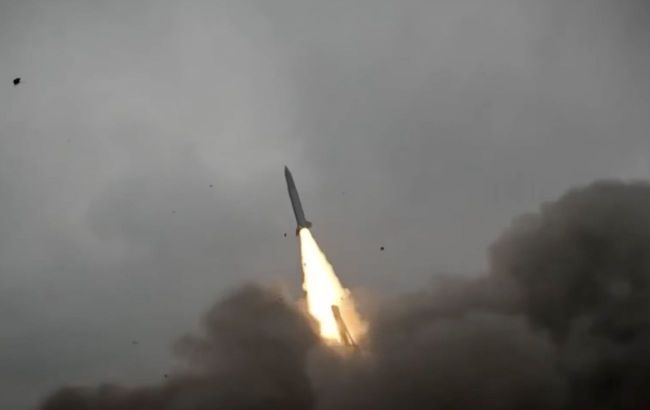 Photo: FREYJA (screenshot from a video)
Europe is developing the FREYJA air defense system based on Fire Point technology. It will combine European radars and sensors with cost-effective Ukrainian interceptor missiles, stated aviation expert and defense industry development director Anatolii Khrapchynskyi in a comment to RBC-Ukraine.
Khrapchynskyi said FREYJA should not be viewed as a conventional air defense system consisting only of a launcher, radar, and command post. According to him, it is a large-scale integration architecture designed to unify the defense capabilities of European countries and Ukraine.
The concept behind FREYJA is to combine a wide range of European sensors, radar systems, and guidance technologies with affordable Ukrainian interceptor missiles developed by Fire Point.
"In practice, this approach makes it possible to create a unified pan-European shield similar to Israel's Iron Dome and completely rethink how the continent's airspace is defended," Khrapchynskyi said.
How FREYJA differs from conventional air defense systems
Unlike traditional air defense systems such as SAMP/T, which are limited to their standard physical components, including a launcher, radar, and reloading vehicle, FREYJA operates as a higher-level integration platform, the expert explained.
The system connects dozens of separate air defense assets into a single intelligent network. This enables a shift from simply responding to incoming attacks to proactively countering threats. The platform can predict a threat's trajectory in advance, instantly assess the level of danger, and deploy the most effective interceptor available in the integrated network.
"This project not only makes rational use of Europe's existing defense resources but also addresses the critical shortage of air defense capabilities," Khrapchynskyi said. Through Fire Point's technology, Ukraine is offering a cost-effective alternative to expensive foreign interceptor missiles. This would allow both Ukraine and its European partners to build their own air defense capabilities and protect their skies without relying entirely on imported systems.
Earlier, it was reported that FREYJA could become operational by the end of 2026. The FP-7.x interceptor missile designed for FREYJA is made of composite materials and is capable of reaching speeds of 1,500-2,000 meters per second. The missile is 7.25 meters long, has a range of up to 200 kilometers, and carries a warhead weighing up to 150 kilograms.