Zelenskyy under pressure: peace talks, internal strains, and presidential office reshuffle


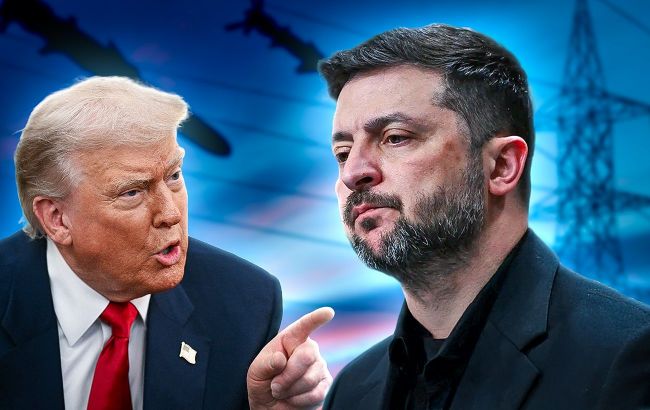 Donald Trump and Volodymyr Zelenskyy (RBC-Ukraine collage)
As Zelenskyy signals openness to elections and a referendum, Ukraine's peace talks enter a more complex phase. Could this affect the course of the negotiations, whether territorial concessions are possible, and why the president still has not appointed a new head of his Office — read the analysis by RBC-Ukraine.
Key questions:
- Will talk of holding a referendum and readiness for elections lead anywhere?
- How many Ukrainians oppose any territorial concessions?
- Why a breakthrough in peace talks may not come before spring?
- Should we expect the appointment of a new head of the Presidential Office and new ministers anytime soon?
"During the Korean War, negotiations went on for three years. Until Stalin died," a source close to Zelenskyy comments to RBC-Ukraine on the current escalation in negotiations. There has been nothing even close to this level of diplomatic intensity throughout the entire full-scale war.
Talks in various formats, phone calls, draft documents, and revisions to them — everything is flowing in an endless stream. And despite the cautiously optimistic assessments of many involved in the process, it remains unclear where this stream is actually heading. Or whether it is heading anywhere at all.
The main driver of all this activity, US President Donald Trump, is clearly eager to reach at least some kind of outcome as soon as possible — if not by Thanksgiving, then by Christmas; if not by Christmas, then by New Year's; if not by New Year's, then simply sooner rather than later.
A tried-and-tested rhetorical toolkit has been put to use: dissatisfaction with Zelenskyy personally, and with the lack of elections in particular. For now, however, Trump is holding himself back, stopping short of pushing the situation into a February-March-style escalation. He has even sent his negotiators, Steve Witkoff and Jared Kushner, to Berlin — an apparent sign that, for the time being, the White House believes the talks still have some kind of future.
At the same time, Russia is methodically increasing pressure as well. This ranges from attempts to finally grind down Pokrovsk at any cost to the systematic destruction of Ukraine's energy infrastructure. For now, the weather is on Ukraine's side, but the calendar is relentless, and Kyiv has already seen its first frosts. And every minus five degrees on the thermometer means roughly one additional gigawatt of electricity consumption nationwide.
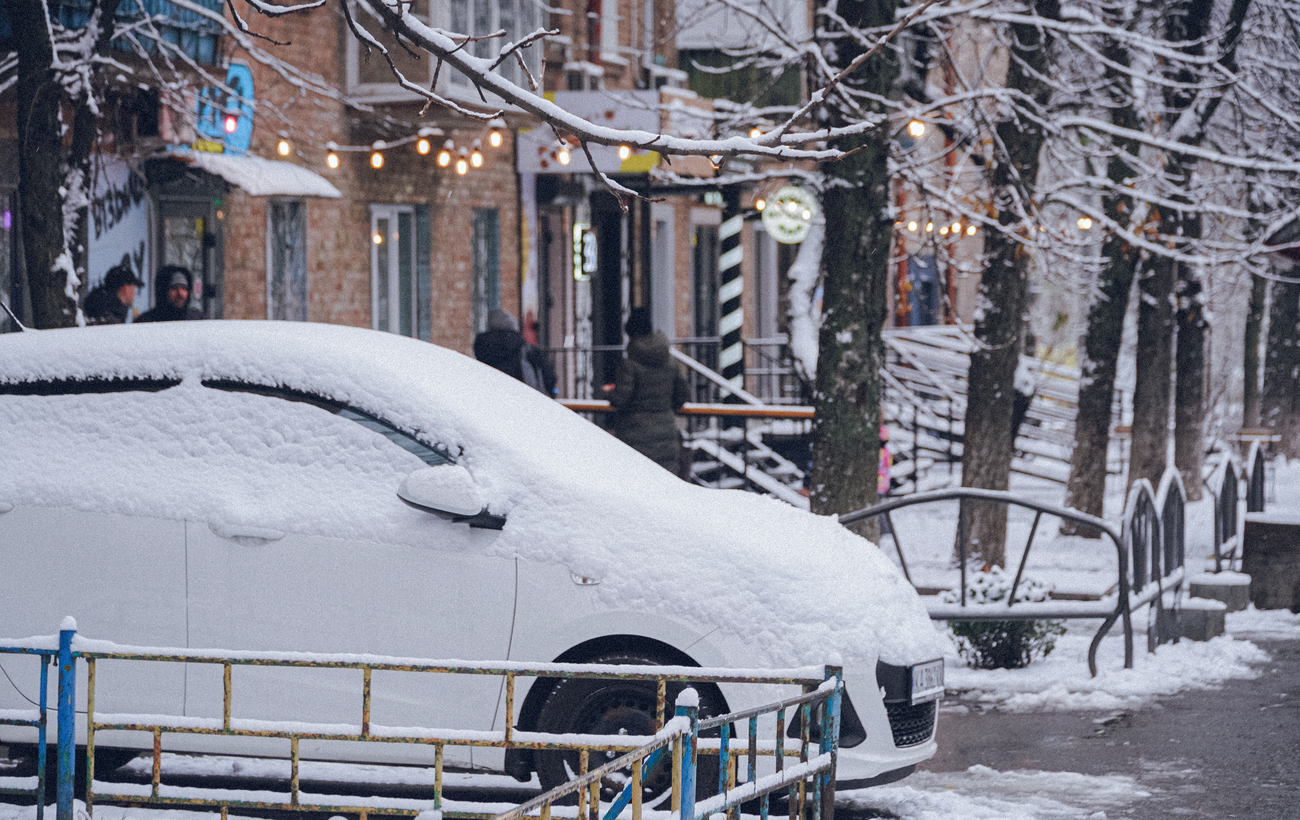
Snow in Kyiv (photo: Ihor Kuznietsov/RBC-Ukraine)
Against this backdrop, the replacement of the head of the Presidential Office and other possible reshuffles have slipped down the agenda. Moreover, as RBC-Ukraine has learned, there is little reason to expect major news on this front in the near future.
Referendum, elections, and Trump
Last week, Zelenskyy introduced a new concept into the negotiating vocabulary: a referendum in which the Ukrainian people could potentially resolve the issue of territories—the central and so far completely intractable point of any peace plan.
At the same time, Ukraine's basic position remains unchanged: there can be no talk of recognizing Russian authority over internationally recognized Ukrainian territory. And any ceasefire must begin along the actual line of contact between the forces.
However, Ukraine is clearly ready to discuss other options that the Americans are bringing to the table. Trying to find some kind of compromise between Russia's "give us Donbas" and Ukraine's "get out," the United States is proposing the creation of some sort of "free economic zone" from which Ukrainian troops would withdraw, but into which Russian forces would not enter.
Ukraine considers a different approach to be fair: if Ukrainian forces withdraw from the line, the aggressors must withdraw symmetrically as well. In any case, all such decisions would have to be approved by the Ukrainian people.
Even so, Ukraine's very willingness to at least discuss this topic has been welcomed by the Americans, who see it as a step forward.
Purely in theory, a referendum could be a way out of the current situation, including for the Ukrainian authorities, according to RBC-Ukraine's sources within the presidential party. First, in a democracy, no one can argue with the will of the people; it carries the highest authority.
Second, in any case, there will be many who consider any concessions—especially territorial ones (in any format)—to be outright betrayal, and therefore believe that those who made them should be punished. But if the people decided as they did, what questions can there be for the authorities?
However, the problem with a referendum is not only that the people might decide differently than the organizers intended, and what to do with a peace agreement then. From a technical point of view, a referendum is essentially the same as elections.
And holding elections, as anyone following the issue knows, runs into not only a legal ban under martial law, but also a host of objective problems: voter lists, voting by millions of refugees abroad and by the military, destroyed infrastructure, the impossibility of free campaigning, and ultimately the physical safety of polling stations.
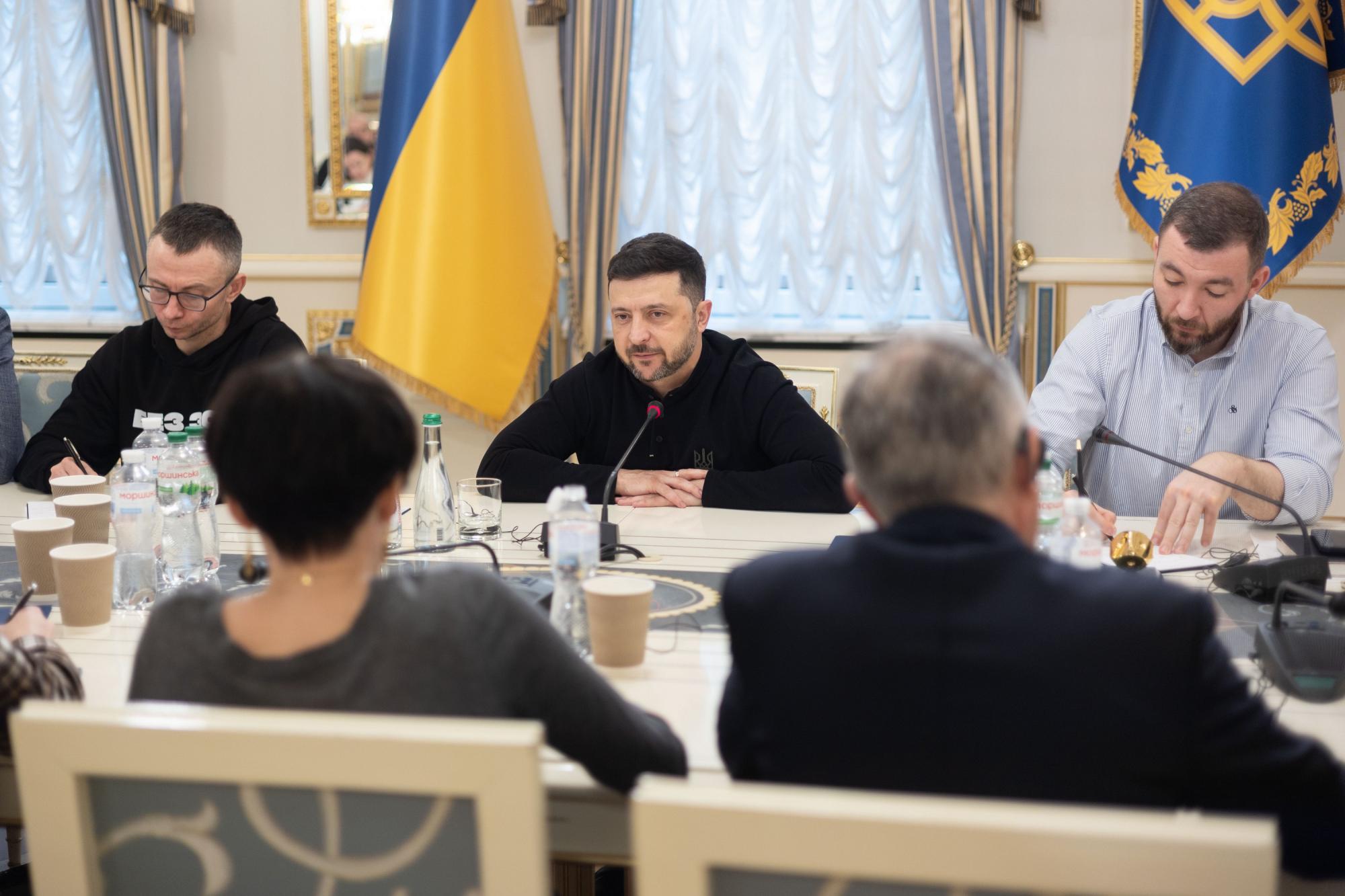
Volodymyr Zelenskyy at a meeting with journalists (photo: Presidential Office press service)
Nevertheless, Zelenskyy instructed lawmakers to draft a bill on the possibility of holding elections under martial law. This initiative itself, several sources in government confirmed to RBC-Ukraine, is not connected to any concrete plans to hold elections, but was purely a reaction to Donald Trump's remarks that Ukraine has not had elections for a long time. In other words: you reproach us for the lack of elections—fine, we are ready.
Moreover, this move shifted the ball to the American side: to hold elections, at a minimum, there must be a serious reduction in military activity. So demand that the Kremlin stop shooting and bombing, and you'll have your elections.
The issue was approached seriously. Last week, a working meeting dedicated to this question already took place at the Presidential Office. Preparations began on a relevant draft law intended to address all the problems related to security and beyond. Among the proposed innovations, according to RBC-Ukraine, are the possibility of multi-day voting and fitting the process into a 60-day timeframe, as in snap presidential elections.
However, those involved in drafting the bill already have doubts about whether it makes sense to take this work to completion. After all, Russia, through Putin's press secretary Dmitry Peskov, immediately shut down the idea of a referendum, calling it a "pretext for a pause that will not work."
This vividly illustrates the fundamental reason why the prospects for negotiations still look extremely murky, despite all the efforts made. The United States, Ukraine, and Europe may potentially agree among themselves on anything—but if a categorical "no" comes from Moscow, such agreements have little practical meaning.
Especially since the new US negotiating team, consisting of Steve Witkoff and Jared Kushner, does not appear inclined to pressure Moscow. The frequency with which Washington's negotiators are being replaced is telling in itself.
In theory, peace negotiations are entirely the responsibility of Secretary of State Marco Rubio, who also serves as Trump's national security adviser. But recently, Rubio has been largely absent from the negotiating track.
Another negotiator, the US Secretary of the Army, Dan Driscoll, flared brightly and faded just as quickly. Representing a rival faction and a longtime friend of Vice President J.D. Vance, Driscoll, according to American media, was "exerting himself a bit too much" and was pushed out of the process.
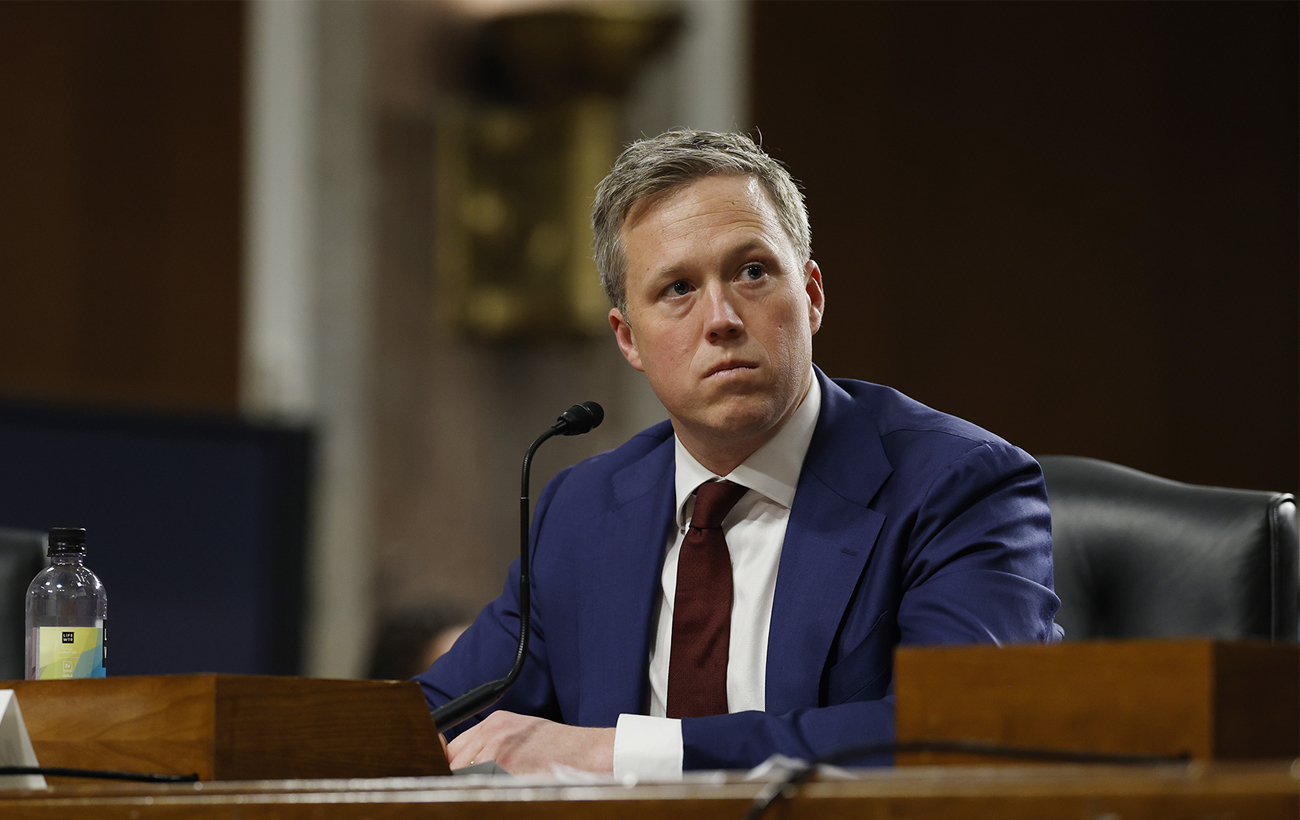
Dan Driscoll (photo: Getty Images)
Perhaps that is for the best. As numerous diplomatic sources told RBC-Ukraine, during his visit to Kyiv, Driscoll, to put it mildly, unsettled Europeans with the categorical nature of his statements and his complete unwillingness to consider another point of view.
Now Witkoff and Kushner have taken over. Apparently, Trump believes that their successful (at least partially) work on a peace deal for Gaza will help them end the war in Ukraine as well. One interlocutor from the Ukrainian side, well acquainted with the course of negotiations, suggested in a conversation with RBC-Ukraine that Rubio may have deliberately stepped aside from the process: essentially, fine—let them try now.
"And when they fail, someone like Vance could come along and say: let me try now. In general, I don't think Trump will drop this issue altogether," the source says.
The minimum task for Ukrainians in relations with the American president is ultimately not to end up cast as those who "don’t want to end the war." The maximum task is to prove the obvious to him: that Russia does not want to end the war.
Overall, Moscow is not even trying to hide its skeptical attitude toward the entire peace process. On the eve of the Ukrainian-American talks in Berlin, Putin's aide Yuri Ushakov said that "hardly anything good will come out of them," and that a number of points are "categorically unacceptable" for Russia.
"The Russians are dug in on the territorial issue and believe they can take Donbas by force. Here, their assessments radically diverge from ours, which say this could take several years. But unfortunately, things are not yet as bad for the Russians as Ukrainian Facebook suggests,” says a government source speaking to RBC-Ukraine.
And while the aggressor state continues the usual "strengthening of its negotiating position" by destroying Ukraine's energy system. The main goal, all RBC-Ukraine sources are convinced, is not so much to damage the economy or the front line, but to generate discontent from below, so that people pressure the Ukrainian authorities—"do whatever you want, just make this end."
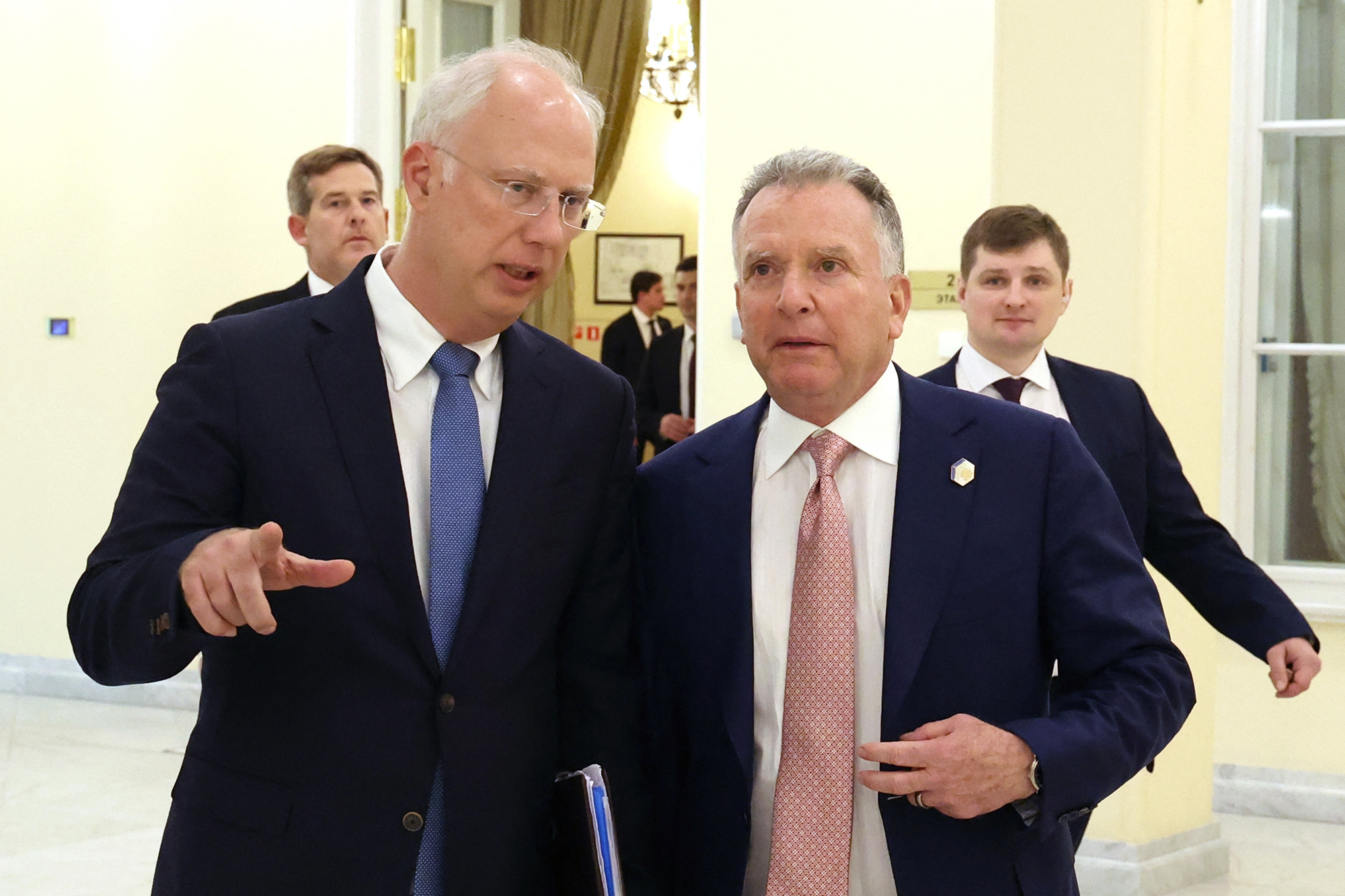
Russian negotiator Kirill Dmitriev with Steve Witkoff (photo: Getty Images)
"People aren't stupid; they understand that there's no electricity because the Russians bombed everything. But this is a question of fairness: if I've had no power for a day, and across the street the lights are on all the time, that's when resentment arises,” says a government source.
To that end, the government held separate meetings with regional leaders to ensure order in their jurisdictions—so that, for example, certain businesses (and often residential buildings connected to them) receive electricity under the same general rules, rather than under commercial arrangements.
Russian propaganda and the myriad bots delivering its messages to Ukrainians may simplify the situation down to this: either Donbas, or electricity and heat. Supposedly, let the authorities make territorial concessions—and then "everything will end." The manipulation is primitive, but it may resonate with some.
According to officials, Ukrainians' willingness to make territorial concessions, as some opinion polls say, decreases from east to west. And there are at least 15% who are not ready for concessions under any circumstances. Some of them are prepared for radical protest actions if the authorities agree to territorial compromises.
But no less important is the fact that Zelenskyy himself considers territorial concessions to be a very bad move, for many reasons. And there are still no guarantees that even in that case, everything will end.
Behind the scenes, there is a view that the critical moment for the aggressors will come next spring. "Putin will then have to make a decision—either to step up mobilization, because the current grouping will be worn down by then, or to start negotiating seriously, not as he is now. If we can hold out through the winter, he will have to make a choice," says a source in the government.
Presidential Office, Verkhovna Rada, and Cabinet of Ministers
"I’m surprised that the issue of the head of the Office has become one of the most pressing," Volodymyr Zelenskyy told reporters last week. In reality, there is little to be surprised about: in the system of power built by the president, the head of the Office of the President (OP) wielded disproportionately broad authority, and Andriy Yermak's chair has now been vacant for more than two weeks. And, judging by all indications, it will remain vacant for some time yet.
"Look, everything is still functioning: trips are taking place, addresses are being delivered, documents are being signed," says a source close to the president. According to him, if a new head of the OP is not appointed by the New Year, then no appointment will follow for quite a long time afterward.
According to RBC-Ukraine, as recently as the week before last, the issue seemed almost settled: First Deputy Prime Minister Mykhailo Fedorov was expected to become head of the OP. But he came to the president with a plan for an overly radical restructuring of the Office—something that ultimately put Zelenskyy off.
Another argument circulating in political backrooms may also have played a role: the head of the OP, the thinking goes, cannot be someone who actively contributed to the dismissal of his predecessor. And Fedorov, as RBC-Ukraine reported, was indeed one of the main drivers behind Yermak's removal, alongside Servant of the People faction leader Davyd Arakhamia.
In addition, appointing a new head of the OP inevitably raises the question of what to do with the current deputies—most notably Oleh Tatarov, who oversees the law enforcement bloc. His managerial skills are valued, but any reappointment of Tatarov would be extremely problematic from an image standpoint.
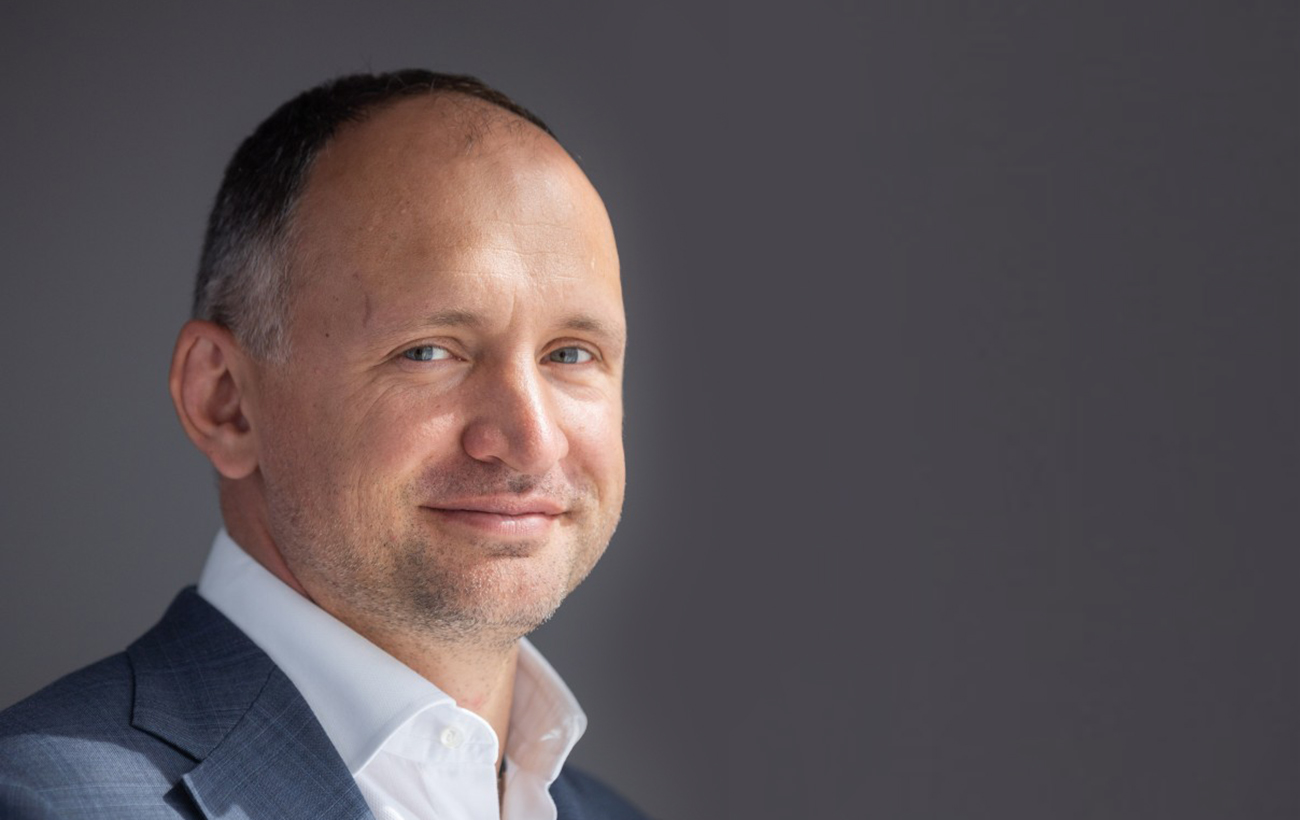
Oleh Tatarov (photo: president.gov.ua)
Overall, according to people in his circle, Zelenskyy would like to conceptually reform the OP, possibly by merging it in some way with the apparatus of the National Security and Defense Council, which he himself chairs. But at the moment, Zelenskyy is fully absorbed by peace negotiations, leaving him with neither the time nor the energy to launch such a major institutional overhaul.
Publicly, the president explains that appointing someone from the government to head the OP would leave another flank of the executive branch exposed. Meanwhile, lawmakers have so far failed even to fill the vacancies of the ministers of energy and justice, which opened up after the "Mindichgate" scandal several weeks ago. So let deputies at least complete this mandatory minimum first, he argues, and only then can new reshuffles be discussed.
But the Verkhovna Rada has run into serious difficulties even with this task. Despite social media actively circulating entire lists of officials whom parliament is allegedly about to appoint or dismiss, all RBC-Ukraine sources insist that no major personnel decisions will be taken this week, the last plenary session before the recess.
The maximum program is to at least appoint a new justice minister. The head of the relevant parliamentary committee, Denys Maslov, who was considered the leading candidate for the post, has so far failed to secure enough votes on the floor. The situation with the energy minister is even more complicated—quite simply, no volunteers are willing to take on that portfolio at such a time.
As a result, the Rada is planning to focus for now on legislative work, as there are numerous outstanding "loose ends" related to commitments made to Western partners.
As people in parliament say, lawmakers' overall mood has been noticeably lifted by the increase in parliamentary pay included in next year's budget. By contrast, Yermak's dismissal did not trigger any particular euphoria among deputies. First, many Servant of the People MPs understand that, by and large, it was not their achievement; second, for many of them, Yermak had done nothing personally harmful (assuming he even knew of their existence).
That said, the overall political atmosphere after the dismissal of the "vice president," as Yermak was often dubbed, has undeniably improved, all interlocutors acknowledge.
"Parliament has now been given more sovereignty. The problem is learning how to use it. If decisions—on ministers, for example—continue to be delayed for as long as they are now, the president will start to have questions," says one prominent Servant of the People MP.
The growing importance of parliament has significantly boosted the political capital of Davyd Arakhamia, as the chief "vote wrangler" and "parliamentary manager." He played a major role in Yermak's downfall, and all sorts of rumors circulate in the corridors about the risks he faced at the peak of the conflict.
The political future of Prime Minister Yulia Svyrydenko also depends on good relations with Arakhamia and the Rada as a whole.
"The prime minister in this story, as they say, 'saw it coming just in time,'" one MP quips in a conversation with RBC-Ukraine. The reference is to the fact that Svyrydenko was widely seen as Yermak's protégé, but at a critical moment she quickly reassessed the situation and switched to the camp of his opponents.
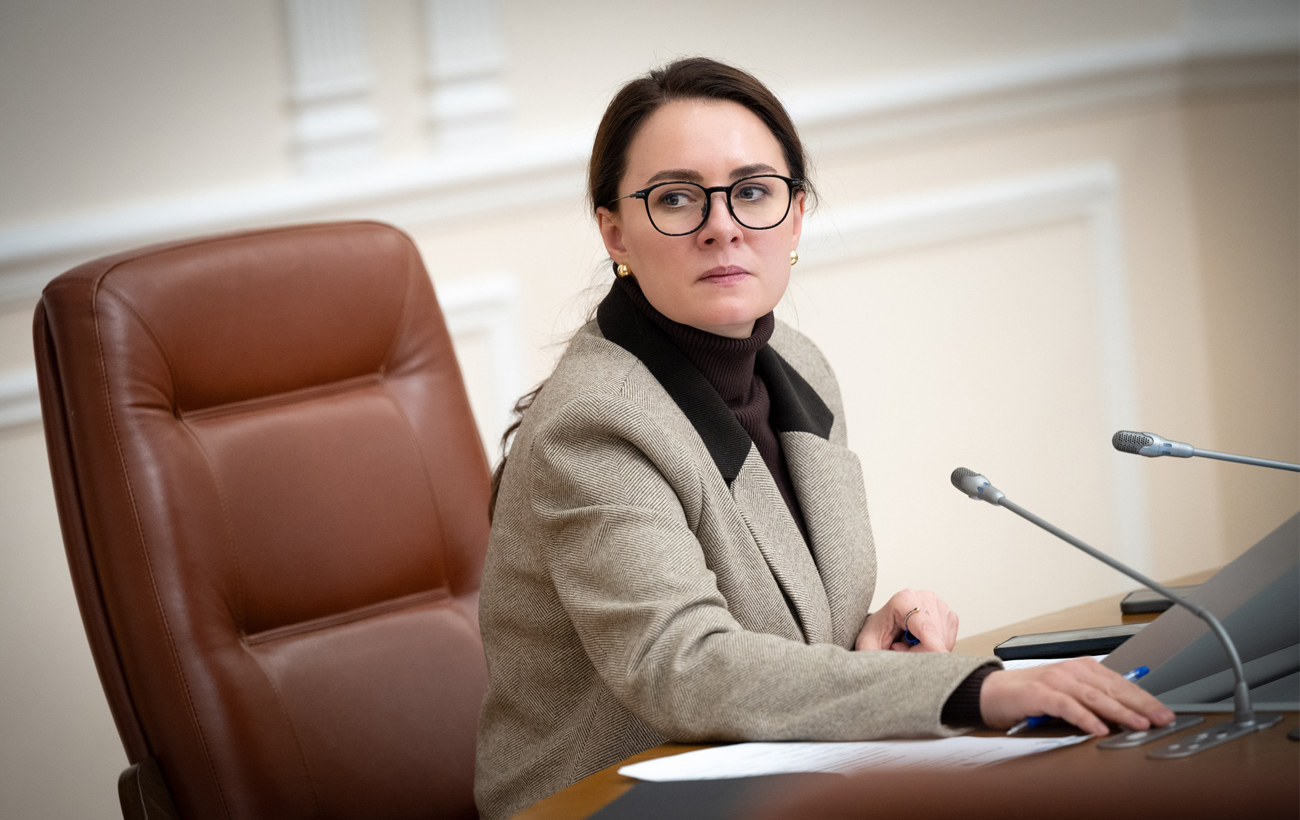
Yulia Svyrydenko (photo: facebook.com/KabminUA)
More broadly, it turned out that none of the many top officials who owed their rise to Yermak stepped forward to defend him.
Zelenskyy himself, having lost his "number one manager," has begun to communicate more actively with his old circle, receiving more diverse and less filtered information.
"It's not that we've regained 'health points,' but at least we've stopped losing blood. Now everyone in politics will be probing the boundaries of a new sovereign democracy," a source in the president's entourage tells RBC-Ukraine, describing the post-Yermak political landscape.
Sources: public statements by Volodymyr Zelenskyy, Russian and Western officials, and comments from RBC-Ukraine sources in political and diplomatic circles.