Venezuela's black gold: Who gets the oil after Maduro and why Russia should worry


 Oil production in Venezuela (photo: Getty Images)
The US special operation in Venezuela has had almost no impact on the oil market. But if everything goes according to Washington’s plan, the United States could soon expand losses for the Russian budget.
Key questions
- How did the oil market react to the special operation in Venezuela?
- Why is Venezuela producing little oil?
- What is special about Venezuelan oil?
- Is it profitable for the US to develop oil production in Venezuela?
- Why is Russia afraid of the US in the Venezuelan oil market?
Exports of Venezuelan oil have been virtually paralyzed for several days. This is the result of a US special operation in Caracas, where on January 3, the country’s president Nicolás Maduro and his wife Cilia Flores were seized and taken to the United States. They are being held there on charges of narco-terrorism and corruption.
As a result of the special operation, only oil exports were halted. Oil production capacity was not affected by the attacks carried out against the port and military facilities in Caracas.
“Several vessels that have recently loaded crude and fuel bound for destinations including the U.S. and Asia have not set sail, while others that had waited to load have left empty, according to monitoring data. No tankers were loading on Saturday at the country's main oil port of Jose,” Reuters reports.
The market did not swing
The global oil market reacted very weakly to the events in Venezuela. Brent crude prices fell by 1.2% to $60 per barrel shortly after trading opened on Monday. Later, the price rose slightly, reaching $61.21.
Chief analyst and head of research at A/S Global Risk Management Arne Lohmann Rasmussen estimated that Brent prices would rise by only about $1–2, or even less, when futures trading opens on Sunday evening. He forecasts that this week, Brent prices may even decline slightly.
“Despite this being a huge geopolitical event that you would normally expect to be positive or push up oil prices,” he said, “the bottom line is there’s still too much oil in the market, and that’s why oil prices will not go ballistic,” Rasmussen believes.
The reason for the calm in the markets is that Venezuela, although ranking first in the world in oil reserves (over 300 billion barrels), produces only 1% of global output. Exports amount to about 1 million barrels per day and go mainly to China, India, and Cuba.
This situation is the result of US sanctions, which began to be gradually introduced back in 2006, when the country was ruled by Hugo Chávez. At that time, the United States accused the Venezuelan authorities of human rights violations.
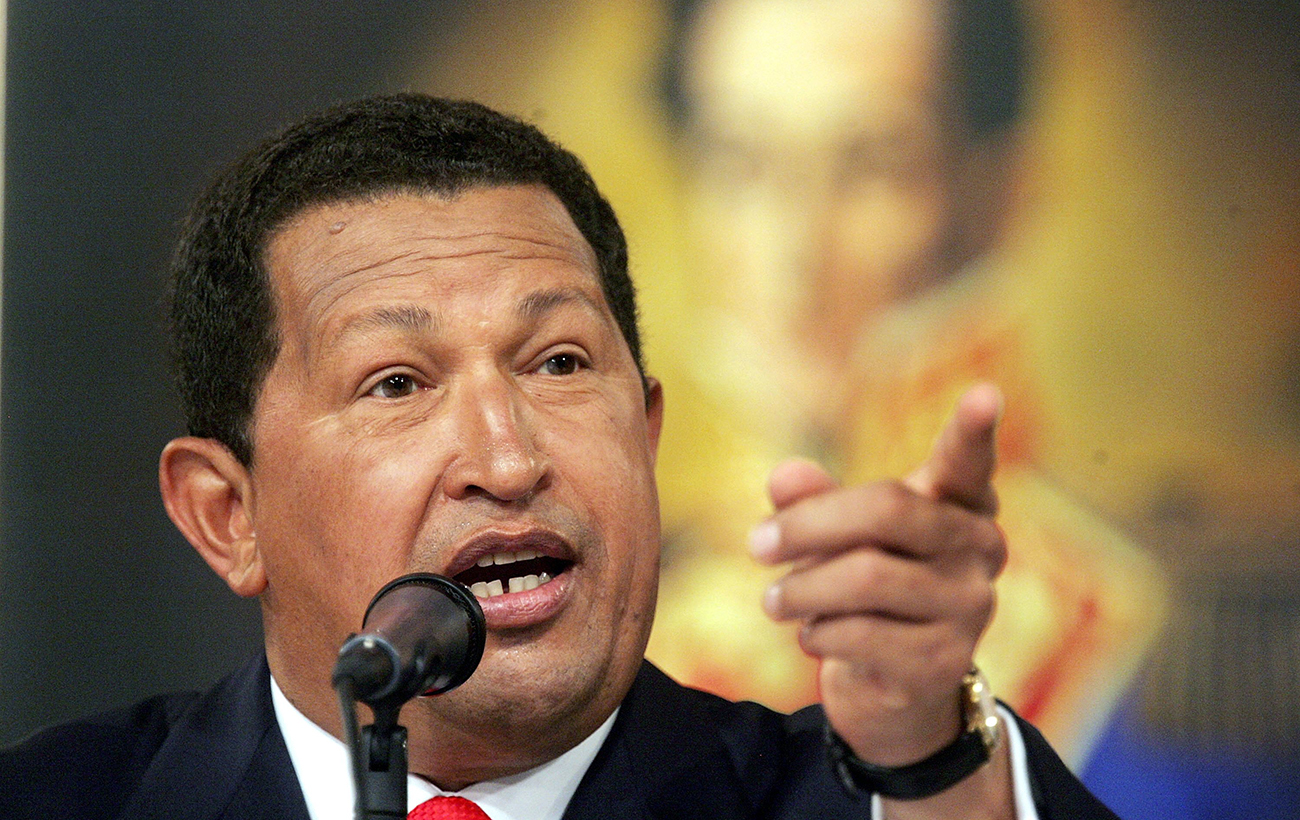
Former Venezuelan president Hugo Chávez (photo: Getty Images)
“The country is under sanctions. So, they do not have the technological capabilities to invest in oil production. As a result, they do not use their potential,” Volodymyr Omelchenko, director of energy programs at the Razumkov Centre, told RBC-Ukraine.
One million barrels of production is not a volume that can somehow affect the global market. “Such a volume can easily be replaced with oil from Saudi Arabia and the UAE,” the expert noted.
For almost 20 years, sanctions have only been tightened. During his first presidential term, Donald Trump first spoke about a military option to resolve the Venezuelan problem and tightened sanctions by banning the purchase of bonds issued by the Venezuelan government and the national oil company PDVSA.
In 2019, Washington imposed an oil embargo on Venezuela and froze all assets of its government in the United States. Washington charged Nicolás Maduro and fourteen of his associates with drug smuggling.
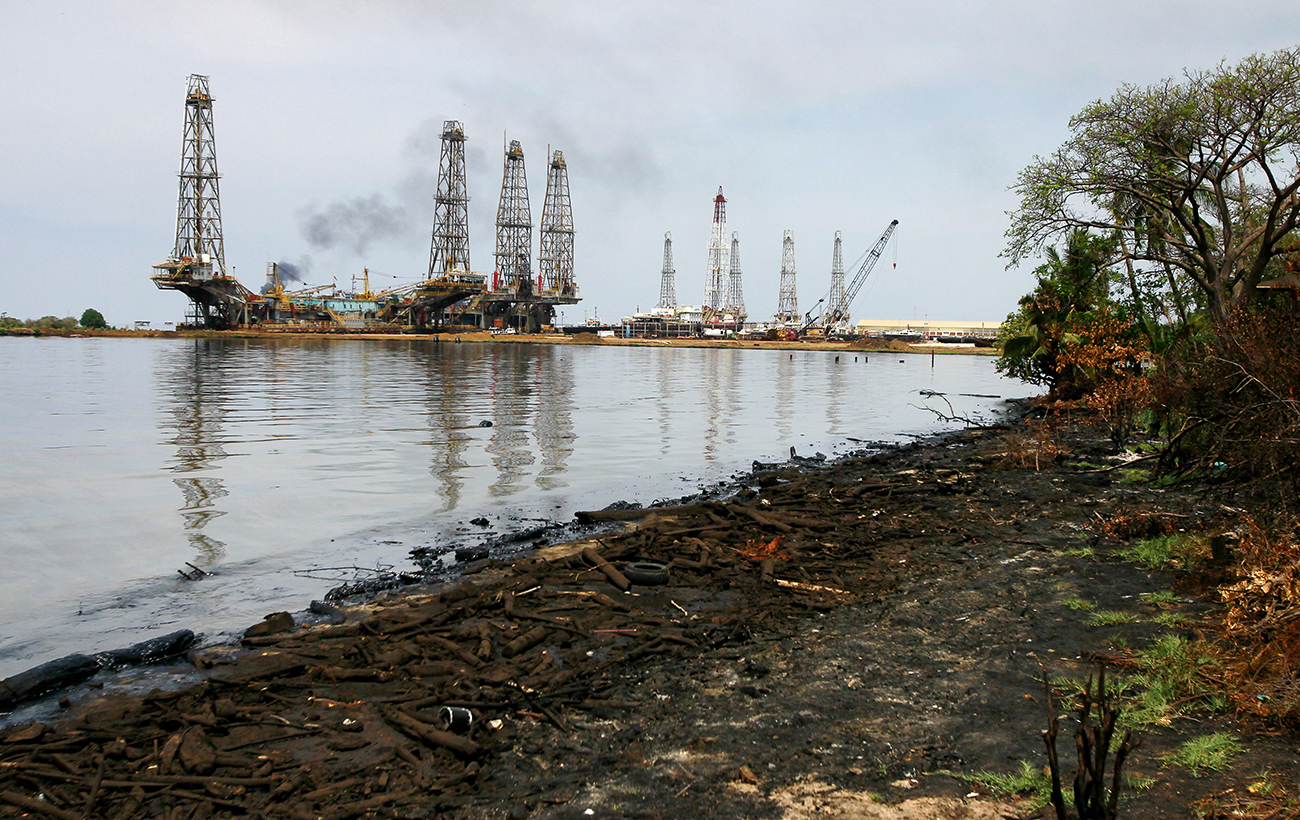
Venezuelan oil rigs (photo: Getty Images).
In November, Venezuela’s oil exports amounted to 950,000 barrels per day. In December, after the United States announced a blockade of tanker entry to and exit from the country, exports were cut in half. Thus, the market effectively did not notice the loss of Venezuelan oil.
Drugs or oil?
The United States officially names the fight against drug trafficking from Venezuela as the reason for the special operation. But there may be another reason — establishing control over oil production in the country.
“I think ExxonMobil and Chevron, which have interests in Venezuela, and other American companies are very interested in that,” said Russian opposition expert on the oil and gas market Mikhail Krutikhin.
The peculiarity of Venezuelan oil is that it is extra-heavy and viscous. The process of its extraction and processing is expensive. But such oil is needed for the production of bitumen, fuel oil, lubricants, and petrochemicals. It is processed into synthetic oil to obtain high-quality gasoline, diesel, and other petroleum products, including plastics, cosmetics, and medicines. Extra-heavy oil for further processing and export must be diluted with lighter oil, which Venezuela is forced to import. This feature complicates the use of local raw materials on the global market.
For now, American companies are forced to increase imports of heavy oil from Canada and the Persian Gulf countries, Krutikhin notes. But they are interested in having sources of such oil closer and under full control.
If the United States achieves its goal and the situation in Venezuela stabilizes, oil production could increase to 3–4 million barrels per day in 3–4 years and replace 50% of Russian oil, believes Omelchenko. But it will not happen quickly, the expert noted.
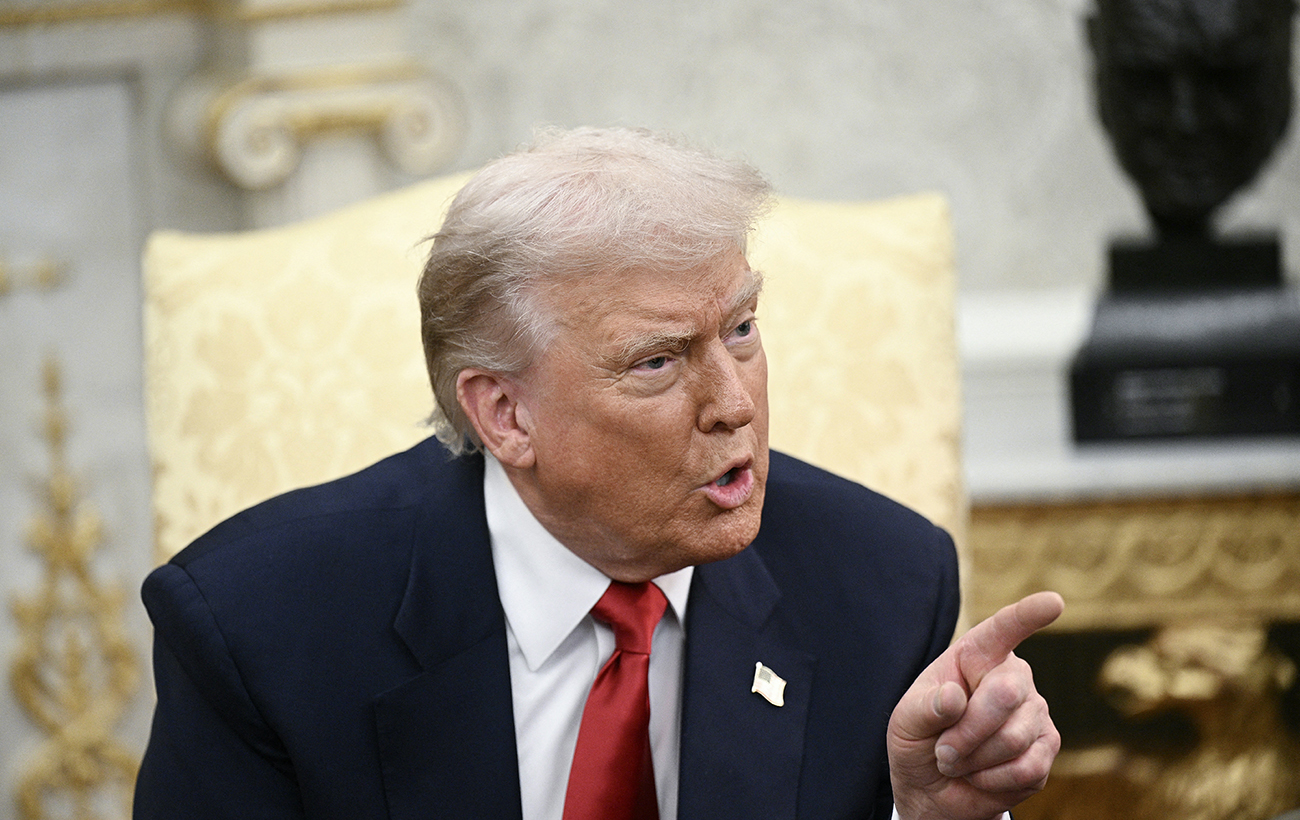 US President Donald Trump (photo: Getty Images).
Although US plans are not yet obvious, Trump has already urged American companies to pour money into developing Venezuela’s oil infrastructure.
An increase in oil production could push oil prices down, which is unprofitable for American companies. But the United States nevertheless wants to control the market, and therefore, by gaining access to oil production in Venezuela, it will be able to influence prices depending on the situation.
“When necessary, they will be able to lower oil prices by regulating production. When it is not necessary, when prices are sagging, they can reduce them. And they will be market leaders in the long term,” Omelchenko noted.
However, this can happen only if the United States fully implements its plan. “We have already seen the examples of Iraq, when the United States quickly carried out an operation to eliminate Saddam Hussein’s government. At first, everything was ok. But then they lost control over Iraq and did not gain benefits. The same applies to Afghanistan. We do not know what will happen in Venezuela. Such a scenario cannot be ruled out — a quick victory followed by getting stuck in a guerrilla war. And everything could end badly for the United States. Such a scenario is realistic, because Americans are not very popular in South America,” Omelchenko noted.
A blow to Russia in any case
Krutikhin believes that in the second half of the 2020s, some, albeit weak, revival of Venezuela’s oil industry will definitely take place. The volume of oil it produces and exports will increase. Even if insignificantly, but with the prospect of serious growth in production and, accordingly, a decline in prices. For Russia, such an option is unequivocally negative.
“All scenarios regarding Venezuela say that in the short term, and especially in the long term, Venezuela will produce more oil. For Russia, this is a negative outcome,” he noted.
Russian businessman Oleg Deripaska is already sounding the alarm. He fears that the United States wants to bring the price of Russian oil down to $50 per barrel.

Russian businessman Oleg Deripaska (photo: Getty Images).
“If our American ‘partners’ get to Venezuela’s oil fields (and they have already reached the fields of Guyana), more than half of the world’s oil reserves will be under their control. And apparently, their plans include ensuring that the price of our oil does not rise above $50 per barrel,” he said.
Meanwhile, Russia, realizing that sanctions pressure will increase and oil revenues will decline, decided at the end of last year to gradually reduce the base oil price.
In 2030, it is forecast at $55 per barrel, while last year it was $60. From 2031, a price increase of 2% per year is expected. But if the US operation is completed successfully, the forecast will likely have to be revised.