Under public pressure. Why Zelenskyy dismissed Ukraine's army chief and what he offered Fedorov


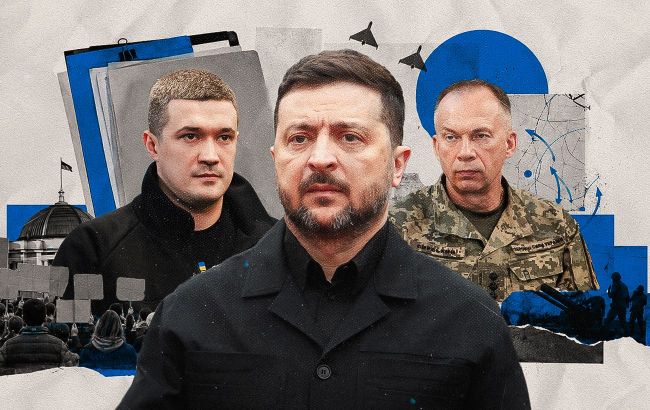 President Volodymyr Zelenskyy dismissed Mykhailo Fedorov and Oleksandr Syrskyi (photo: collage by RBC-Ukraine)
A political crisis and the so-called Cardboard Maidan (a wave of peaceful street protests in which demonstrators used handwritten slogans on pieces of cardboard instead of traditional banners) pushed President Volodymyr Zelenskyy to replace Ukraine's commander-in-chief, appointing Mykhailo Drapatyi to the post.
Read RBC-Ukraine's report to learn why Zelenskyy ultimately decided to dismiss Oleksandr Syrskyi and what position he offered to Mykhailo Fedorov.
Key points:
-
Fedorov's ultimatum. At first, Mykhailo Fedorov said he was willing to return only as defense minister and only if Commander-in-Chief Oleksandr Syrskyi and Chief of the General Staff Andrii Hnatov stepped down.
-
The Cardboard Maidan protests. Demonstrators immediately demanded that Fedorov be reinstated and Syrskyi dismissed. Pressure on Bankova (shorthand for the Ukrainian presidential administration, named after the street where it is located) came from Ukrainian society rather than from Western partners.
-
Choosing a new commander-in-chief. President Volodymyr Zelenskyy held meetings with senior military commanders, effectively selecting Syrskyi's successor. Besides Mykhailo Drapatyi, one of the leading candidates was Oleh Apostol.
-
Risk of divisions within the military. Some officers support the leadership change, while others fear that replacing the commander-in-chief under public pressure and possible personnel purges could destabilize Ukraine's Armed Forces as Russia threatens further escalation.
"Ukraine is changing its political strategy." With those words, President Volodymyr Zelenskyy launched a reshuffle of his governing team, announcing on social media on July 12 that he intended to replace the prime minister.
Within about half an hour of that post, the president published several more updates describing meetings with senior officials. Political insiders immediately identified those officials as the leading contenders to succeed Yulia Svyrydenko. Although most observers expected Serhii Koretskyi, then the head of Naftogaz, to get the job, Zelenskyy had another candidate in mind: then-Defense Minister Mykhailo Fedorov.
However, according to two sources familiar with the conversation, Fedorov made it clear to Zelenskyy that he did not see himself moving into the prime minister's office (located on Hrushevskoho Street in central Kyiv) and preferred to remain defense minister in order to continue implementing his reform agenda.
A few days later, speaking at a press conference as the former defense minister, Fedorov publicly reiterated that he was willing to remain part of the government only as defense minister, but with one condition. Or rather, two: Commander-in-Chief Oleksandr Syrskyi and Chief of the General Staff Andrii Hnatov would both have to leave their posts.
A series of what many saw as chaotic personnel decisions by Zelenskyy, combined with the increasingly public conflict between Fedorov and Syrskyi, triggered a wave of criticism of the government. That criticism culminated in a new wave of Cardboard Maidan protests in Kyiv and several other cities, followed by the dismissal of Commander-in-Chief Oleksandr Syrskyi and his replacement by Mykhailo Drapatyi.
A chain reaction
By the evening of Thursday, July 16, it appeared that the political crisis sparked by Volodymyr Zelenskyy's sudden overhaul of the Cabinet had largely been brought under control.
Ukraine had a new prime minister and a new government, although several key positions remained vacant. The most important of them was, naturally, the Ministry of Defense. The Office of the President had initially planned to appoint Ihor Klymenko, the former interior minister, to the post. However, after he came under heavy criticism during protests supporting Fedorov, neither Klymenko himself nor members of parliament were prepared to see him join Koretskyi's new government.
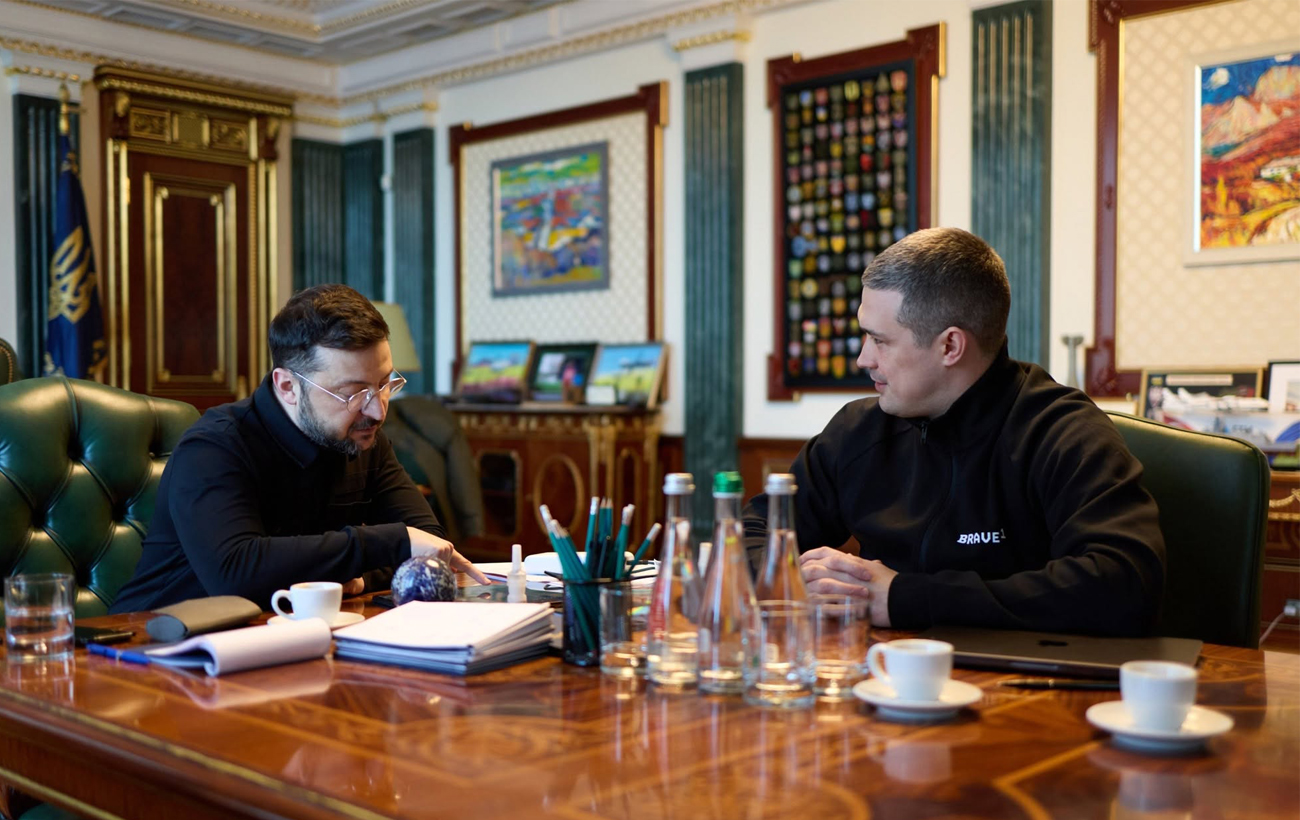 Volodymyr Zelenskyy and Mykhailo Fedorov (photo: Facebook page of President Volodymyr Zelenskyy)
To avoid leaving the country's most important wartime ministry without leadership, Zelenskyy ultimately decided, at least temporarily, to fill the vacancy by transferring Yevhen Khmara from the Security Service of Ukraine (SBU).
That move, however, risked triggering a new round of political tensions. With Khmara's departure, Oleksandr Poklad effectively became the only realistic candidate to serve as acting head of the SBU. According to multiple RBC-Ukraine sources, Poklad has a long-standing personal feud with Kyrylo Budanov, the former head of Ukraine's military intelligence agency (HUR) and the current head of the Office of the President.
Sources close to the president told RBC-Ukraine that when Budanov agreed to move to Bankova, he had reportedly insisted on one condition: that Poklad would not be appointed to lead the SBU. At the height of the current crisis, however, Budanov signaled that he would not openly oppose such an appointment if it happened. For now, Poklad remains acting head of the agency, and the presidential administration does not plan to submit his nomination to parliament for confirmation.
Although Zelenskyy had largely contained the crisis within the government, the protests showed no sign of fading. Ukrainians once again displayed their trademark creativity in public demonstrations, but the slogans written on cardboard signs essentially boiled down to two demands: bring Fedorov back and remove Syrskyi.
The authorities had clearly not anticipated such a reaction. Once officials publicly suggested that Fedorov had effectively been dismissed because of his conflict with the commander-in-chief, it became increasingly difficult to contain the growing criticism directed at Syrskyi.
The similarities between the current protests and last year's demonstrations are striking. The method of organizing the rallies, the profile of those taking part, and the atmosphere of peaceful but determined protest all closely resemble the previous movement. More importantly, so does the underlying cause. As in last year's controversy over the National Anti-Corruption Bureau of Ukraine (NABU) and the Specialized Anti-Corruption Prosecutor's Office (SAPO), the government once again made a decision that many viewed as highly controversial and failed to adequately explain it to the public. The public, in turn, decided to remind the authorities that its voice still mattered.
There is, however, one key difference from last year's events. At that time, the decisive factor may not even have been the protests themselves, but the intense pressure exerted by Ukraine's Western partners, which forced the government to quickly reverse its decisions regarding NABU and SAPO.
That dispute centered on the rules governing Ukraine's anti-corruption institutions, an issue European governments had publicly raised with Kyiv for years. As a result, Western pressure behind the scenes was considerable. According to some sources within Zelenskyy's team, it ultimately became the decisive factor.
This time, by contrast, there have been no reports of Western governments pressing for specific personnel changes. Some European diplomats did ask RBC-Ukraine last week why Ukraine had launched yet another major government reshuffle just months after officials had established effective working relationships with the new administration, and why such changes were necessary without an obvious reason.
More broadly, however, direct calls from foreign partners demanding that one official be dismissed or another appointed are more characteristic of American political practice than of European diplomacy. There is no indication that the United States played any role in the current developments, apparently because it did not.
Even so, public pressure alone proved significant enough to force Zelenskyy to act.
Will Fedorov return?
On Saturday, July 18, Zelenskyy held another round of talks with the two central figures in the standoff: Fedorov and Syrskyi.
According to a source familiar with the discussions, the meetings were, for the time being, an attempt "to somehow reconcile everyone and prevent the situation from deteriorating further." No personnel decisions resulted from those talks.
According to RBC-Ukraine's sources, during the initial round of meetings on July 12, Fedorov was not the only official who refused to leave the Ministry of Defense. One source also said that Zelenskyy came away from those conversations feeling that "Fedorov was not fully on the president's team."
RBC-Ukraine has previously reported on suspicions within the government that Fedorov harbored political ambitions of his own.
Subsequent events, particularly Fedorov's unusually blunt press briefing the day after his de facto dismissal, only reinforced those suspicions.
People close to the former minister say they did not expect him to be pushed out in this way, effectively being "lost in the shuffle" during the government reshuffle.
At the same time, the door back into the president's team has not been completely closed for the former defense minister. However, according to the sources, it would not be in the role of miltech czar (an informal title referring to a senior official responsible for coordinating military technology development), as some media outlets had reported.
RBC-Ukraine's sources say that after his dismissal, Fedorov was offered the position of secretary of Ukraine's National Security and Defense Council (NSDC). That post ultimately went to former Interior Minister Ihor Klymenko, who, according to the sources, had himself been unintentionally "lost in the shuffle" during the government's reorganization.
The day before Syrskyi's dismissal — the key condition set by Fedorov — sources close to the former minister insisted that if he agreed to return to government, it would only be to his previous position at the Ministry of Defense.
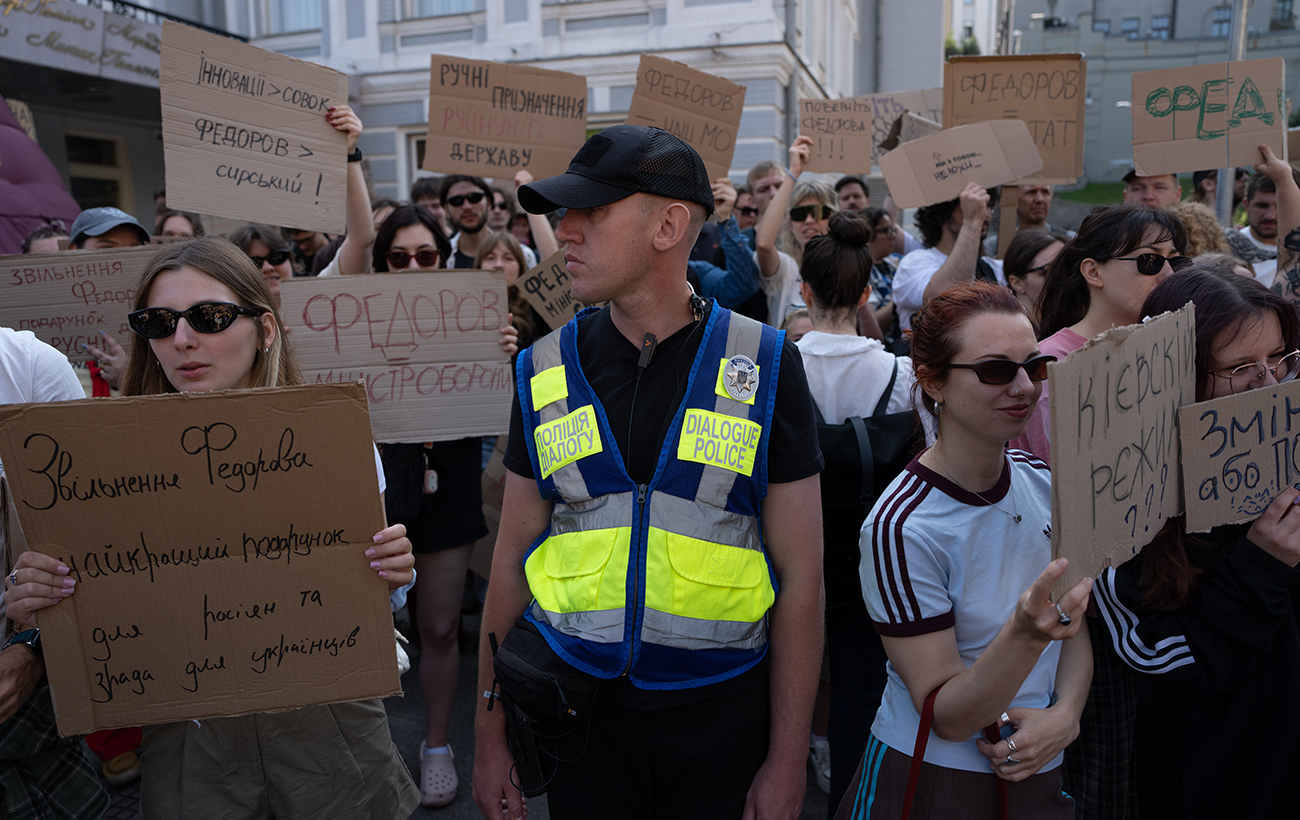 Protests in support of Mykhailo Fedorov continued for several days (photo: Getty Images)
"Only a black swan (an unexpected, highly disruptive event - ed.) could change that now," one of the publication's sources joked. As it turned out, he was right.
On Tuesday evening, the president said he had offered Fedorov a government position related to "developing the state's technological capabilities." According to RBC-Ukraine, the meeting between Zelenskyy and Fedorov on Tuesday focused on the position of deputy prime minister for technology. As of now, Fedorov has neither accepted nor rejected the offer.
Interestingly, after new Prime Minister Koretskyi announced on July 17 that the government had approved Khmara's appointment as acting defense minister, the corresponding resolution did not appear on the Cabinet's official website until July 20. Whether or not the delay was connected, it may indicate that the president was still trying to reverse course on Fedorov's dismissal.
"After Fedorov's press briefing, and knowing the president's personality, it is highly unlikely that he will back down. And Fedorov will not accept any other position, not even a deputy prime minister's post overseeing digitalization and technology in the defense sector," one RBC-Ukraine source suggested.
Having spent nearly seven years in government, Fedorov understands the real influence attached to different offices. For example, he knows that a title such as "deputy prime minister for..." may sound impressive, but without simultaneously heading a ministry it carries little actual authority.
Sources in parliament say lawmakers are divided in their assessment of Fedorov's dismissal. Many members of the parliamentary defense committee believe Zelenskyy's decision to remove the minister was "a mistake." Others argue there were "objective reasons" for the dismissal, although they insist those reasons had nothing to do with Fedorov's conflict with the commander-in-chief.
How Syrskyi was dismissed
While the issue surrounding Fedorov remained unresolved, Zelenskyy turned his attention to the other part of the crisis: what to do about the commander-in-chief. That uncertainty lingered for several days.
Before the government reshuffle began, sources in different political and military circles told RBC-Ukraine that the supreme commander-in-chief (President Zelenskyy, who constitutionally serves as Ukraine's commander-in-chief) was generally satisfied with Syrskyi's performance. However, once Syrskyi's dismissal became one of the protesters' central demands, Zelenskyy was forced to respond.
For several days, the president held a series of in-person and online meetings with senior military commanders and brigade commanders, with each meeting announced on his official social media accounts. From the outside, the process looked very much like a search for a new commander-in-chief. For days, both traditional media and social networks circulated longlists and shortlists of possible successors to Syrskyi. The situation, however, remained highly fluid, with both the list of candidates and expectations about whether Zelenskyy would actually replace the commander-in-chief changing from day to day.
As of Monday, RBC-Ukraine's military sources said the most discussed scenario was for Air Assault Forces Commander Oleh Apostol to become commander-in-chief, while Deputy Chief of the General Staff Volodymyr Horbatiuk would take over as chief of the General Staff. Both men were said to have good working relationships with Syrskyi.
Even on Tuesday afternoon, several RBC-Ukraine sources stressed that no final decision had yet been made. One source explained that, after all the consultations, Zelenskyy still had doubts about whether there was another candidate with the necessary experience and qualifications to replace Syrskyi.
Later that afternoon, the president held another meeting with Fedorov. Then, at around 6:30 p.m., according to RBC-Ukraine, he had a lengthy conversation with Syrskyi and Chief of the General Staff Andrii Hnatov. The details of that meeting have not been disclosed. However, military sources told RBC-Ukraine that Zelenskyy informed the commander-in-chief that he was forced to dismiss him because of the protests.
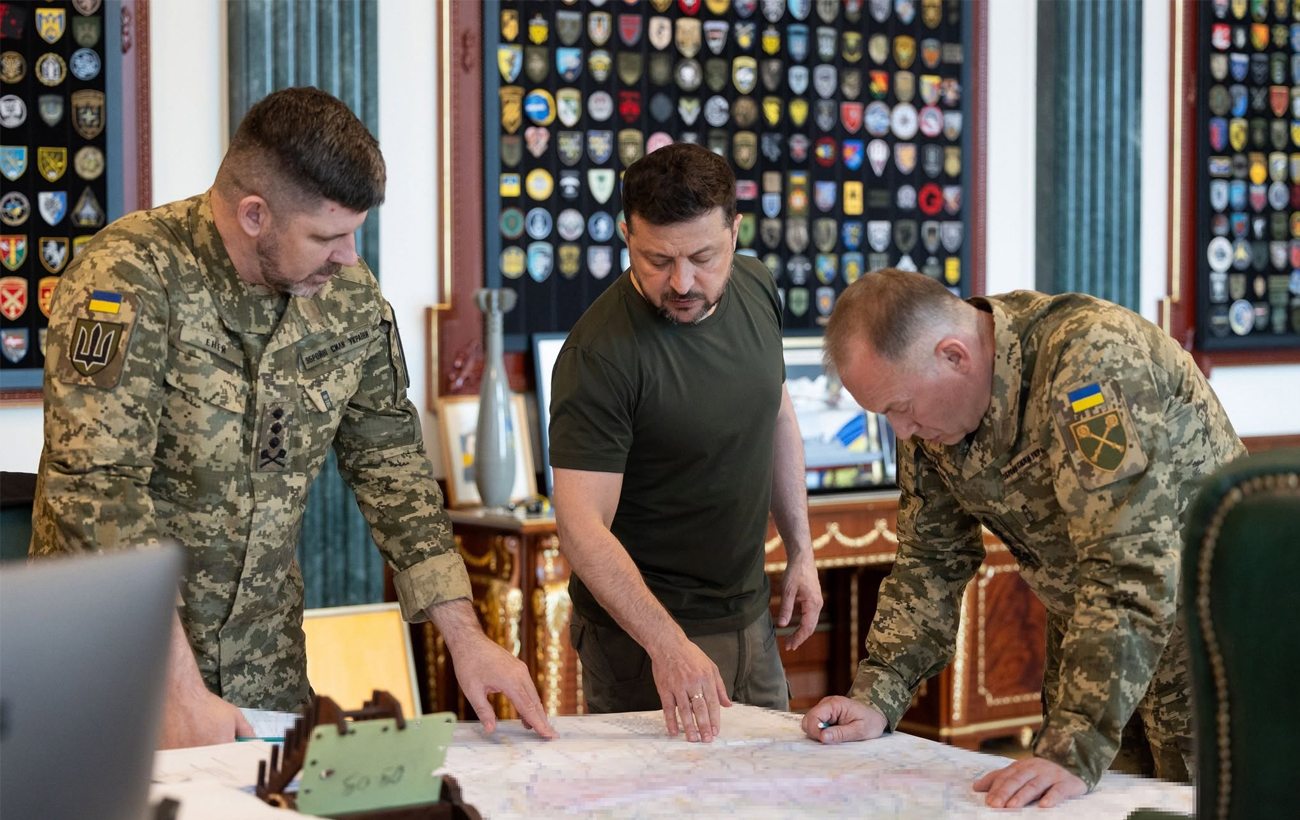 President Volodymyr Zelenskyy, Oleksandr Syrskyi, and Andrii Hnatov (photo: Facebook page of President Volodymyr Zelenskyy)
After the meeting, the president announced that he intended to appoint Mykhailo Drapatyi, commander of the Joint Forces grouping, as Ukraine's new commander-in-chief. Drapatyi had effectively become the leading favorite of the Cardboard Maidan protesters, with his name appearing more often than any other on the demonstrators' signs.
Fedorov welcomed Drapatyi's appointment, calling it "a breath of fresh air and new hope in the struggle of free people for freedom and justice." He also said he had called Syrskyi to "thank him for the defense of the Kyiv region, the Kharkiv operation, and other historic battles."
Reaction to the president's decision has largely fallen into two camps. Many welcomed Drapatyi's appointment as commander-in-chief. Others, however, emphasized Syrskyi's military record and argued that it was a mistake to replace the country's top military commander in response to public protests.
"If last year's protesters' demands were entirely understandable and justified, this time the street cannot be the one deciding who should serve as commander-in-chief. If the authorities start following public pressure on decisions like this, the process will become impossible to control," one political source told RBC-Ukraine, explaining why they opposed replacing the commander-in-chief.
Another concern raised by military sources is that replacing Syrskyi could deepen divisions within Ukraine's armed forces. Even now, opinions inside the military are far from uniform. Some officers openly criticized Syrskyi, while others remained publicly silent despite privately harboring resentment.
"There was a camp of disgruntled officers who wanted the commander-in-chief removed. The risk now is that replacing him could trigger a purge of those who served under Syrskyi. That could have serious consequences for the military as a whole," one officer said on condition of anonymity.
General Drapatyi now faces an extraordinarily difficult task that extends beyond proving those concerns unfounded. His immediate and most obvious priority is to hold the front line, guide Ukraine through what is expected to be a difficult autumn and potentially an even harsher winter, while at the same time easing tensions on the home front.
Even before officially taking office, Drapatyi had already received strong endorsements from military personnel and prominent public commentators. Much of the criticism directed at Syrskyi has translated into high expectations for his successor. The protesters have set a high bar and extended Drapatyi a significant degree of public trust. It is now up to him to live up to those expectations.
***
A series of poor, or at least insufficiently thought-out, decisions by President Zelenskyy inevitably led to a single outcome: the country found itself in the midst of a political crisis.
Amid the rapid reshuffling of senior officials, Bankova lost experienced Interior Minister Ihor Klymenko, whose appointment to the National Security and Defense Council appears more like an honorary sidelining than a promotion. It also hastily transferred Yevhen Khmara out of the Security Service of Ukraine - a seasoned military officer with a track record of successful Alpha special forces operations, but no experience managing an institution as large and complex as the Ministry of Defense and without an established leadership team of his own.
Beyond that, Zelenskyy lost one of his longest-serving and, at least in the public's eyes, most effective political allies, Mykhailo Fedorov. At the same time, through his own decisions, he set in motion a protest movement demanding the dismissal of Commander-in-Chief Oleksandr Syrskyi that quickly grew beyond his control. The political fallout could now coincide with even more serious risks facing both Ukraine's military and the country as a whole, just as Russia may be preparing another escalation on the battlefield.
Some of these decisions can be explained, though not necessarily justified, by political logic. Yet even that rationale is difficult to apply in the current circumstances. There is still no sign of a ceasefire and, consequently, no realistic prospect of elections in the foreseeable future.