Ukraine's Constitution marks 30 years: What it says about war and Crimea


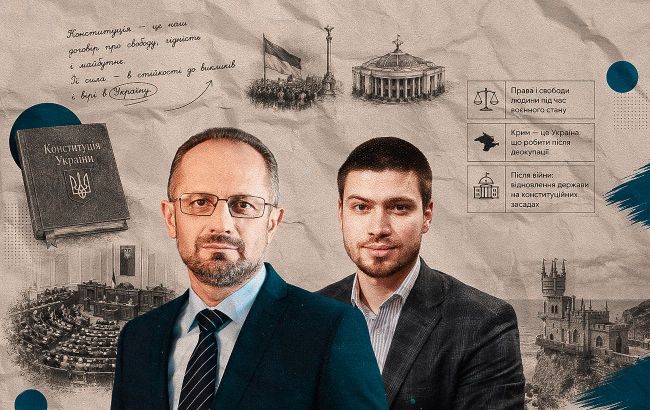 Photo: 30 years of the Constitution of Ukraine (collage by RBC-Ukraine)
Ukraine's Constitution has gone through several political crises, two revolutions, and is now enduring Russia's full-scale invasion. Experts consider it one of the most modern constitutions in Europe.
On the 30th anniversary of the adoption of the Constitution of Ukraine, RBC-Ukraine explains how the Basic Law was created, whether it meets the challenges of wartime, and what needs to be changed after victory.
Key points
- The legacy of 1996. The Constitution was adopted after five years of political crises and the Constitutional Night, which lasted almost a full day. Despite everything, the document became the foundation of independence.
- The challenges of war. The Constitution did not envisage a prolonged war. The document's weak points include the expediency of military-civil administrations and the limited powers of an acting president in the event the guarantor is lost.
- The ban on amendments. The Constitution prohibits any amendments during martial law in order to prevent usurpation of power and dictatorship.
- Future reforms. After victory, Ukraine will face a discussion about transitioning to a parliamentary republic, expanding the powers of local self-government, and the legal status of Crimea.
Five years without its own Basic Law: How Ukraine adopted the Constitution
After proclaiming Independence in 1991, Ukraine continued to live under the 1978 Constitution of the Ukrainian SSR. The adoption of a new document was slowed by an acute political conflict between different branches of government: the presidential camp and the Verkhovna Rada, which included many communists.
The search for a compromise on the form of government, the powers of the president, and the status of Crimea lasted five years, during which the Constitution was constantly supplemented and amended. The 1995 Constitutional Agreement became an attempt to temporarily resolve the crisis.
"The Constitution was adopted under extremely difficult circumstances. At that time, we were experiencing an economic crisis, there was a struggle between President Kuchma and Verkhovna Rada Speaker Moroz, and within parliament, the positions of the factions were so diverse that there were only about 100 supporters of Ukrainian statehood," recalled Taras Stetskiv, MP of five convocations who participated in adopting the Constitution.

Photo: The Constitution of Ukraine with dedicatory signatures of the authors (tsdazu.archives.gov.ua)
The famous Constitutional Night from June 27 to June 28, 1996, put an end to this process. The session of the Verkhovna Rada then lasted continuously for 23 hours and 50 minutes.
MPs considered every article, overcoming resistance from communists and opponents. At 9:18 a.m. on June 28, the Constitution was finally adopted — 315 members of parliament voted in favor. It was a historic moment that definitively secured the legal foundation of Ukrainian independence.
"Although our Constitution is already 30 years old, it remains one of the most modern. It was written through great suffering. Unlike other post-Soviet states, which created their constitutions in a year or two, we worked on ours for five years. We were able to take into account the experience of our neighbors. We also already had the European Convention on Human Rights and international covenants — we had a solid foundation for the Constitution," constitutional law expert Bohdan Bondarenko told RBC-Ukraine.
Does the Constitution meet the requirements of wartime?
Despite the new challenges facing Ukraine now, the Constitution prohibits amendments to the Basic Law under the legal regime of martial law.
"And that is correct. During war, powers are concentrated, the political system does not function in certain aspects, and this means there is a potential threat of usurpation of power and dictatorship, which is why amendments are not allowed during war," explains Roman Bezsmertnyi, one of the authors of the Constitution.
According to him, the Constitution outlines all the necessary frameworks regarding the martial law regime, but certain legislative changes introduced after the war began in 2014 are inappropriate.
"The introduction of military-civil administrations was absolutely mistaken. In areas of military operations, local self-government bodies did not function, and in order to avoid problems in resolving budgetary issues, military-civil administrations began to be introduced. Most likely, it was done for tactical reasons. But there was no necessity for it," Bezsmertnyi says.
In his opinion, the introduction of a military commandant's office would have been a more appropriate option.
"Under a martial law regime, territories where fighting is taking place should be subordinated to a military commandant's office. Everything should be in the hands of the military. In other territories, ordinary legislation should operate under the legal conditions of martial law," Bezsmertnyi emphasizes.
Bondarenko also agrees that the current Constitution does not fully correspond to all the challenges of wartime.
"Ukraine's Constitution was not written for war. Ultimately, neither was any other constitution, unless it is temporary. It is a social contract that defines the rules of life for society as a whole. No country, when adopting a constitution, expects that it will have to live in a state of constant war," Bondarenko explains.
For example, the expert cites Israel, which does not have a codified constitution but only about 11 documents for constitutional regulation. Even though they were adopted 70 years ago and the country has lived in war ever since, Israel still cannot reach a socio-political consensus to establish a single constitution.
"Therefore, it is impossible to write a Constitution that will perfectly meet the requirements of wartime. Israel's example proves this. People cannot foresee everything; circumstances change very quickly," Bondarenko says.
At the same time, the authors of Ukraine's Constitution developed mechanisms for the functioning of the state under martial law and a state of emergency.
"The 1996 version of the Constitution provided for extraordinary legal regimes such as martial law and a state of emergency. But in 1996, there was no expectation of a prolonged war. This is reflected, in particular, in the president's term of office. Elections cannot be held under martial law. And that is correct. However, the Constitution did not envisage what to do if the war lasted five or twenty years," the expert says.
He notes that we are now forced to make decisions ourselves, "taking into account common sense and many circumstances," on issues where the Constitution provides no clear answer.
"Another vulnerable point is what to do if the state loses its president during the war. The Constitution provides that the powers of the head of state are temporarily exercised by the Chairman of the Verkhovna Rada, but to a very limited extent. This provision was designed for peacetime to prevent the usurpation of power while the country prepares for elections. However, such a format is not adapted to the realities of martial law," Bondarenko explains.
 Photo: The Constitution of Ukraine was adopted on June 28, 1996 (rada.gov.ua)
What will need to be changed after victory?
Experts agree that Ukraine's Constitution will need to be amended, and that work on some provisions can begin even now.
"The Constitution should be worked on constantly. A constitutional commission should already be established to draft new provisions. Constitutional norms are living matter that develops together with society, so they require improvement, clarification, and replacement. The Constitution should not be amended right now, but the situation should be analyzed and solutions prepared for adjusting the legislation. Some provisions have already become outdated, and there is indeed much to work on," Bezsmertnyi says.
Changes to the Constitution will depend greatly on the terms under which Ukraine emerges from the war, Bondarenko believes.
"It will be possible, and necessary, to enshrine a new vision of the social order after the war, but there are major risks that under the guise of improvement, very bad things could be pushed into the Constitution. A 2019 study showed that the majority of people in our country who shout, 'Let's rewrite the Constitution,' have actually never read it. So it is possible to write genuinely good rules, but if people do not know them, they will not work," Bondarenko says.
Should the president's powers be expanded?
In 2004, Ukraine introduced one of the most significant amendments to the Constitution by moving from a presidential-parliamentary system to a parliamentary-presidential one, thereby limiting the powers of the head of state.
This step was a response to the political crisis of the time and an attempt to prevent the monopolization of power. In 2010, Yanukovych overturned this decision through the courts, but in 2014, Ukraine returned to the parliamentary-presidential form of government. The question of expanding the president's powers remains a matter of debate.
"Ukraine should move toward a parliamentary republic, with the president performing only representative functions, and the powers of local self-government should be expanded. There are many obvious reasons for this. Ukraine has two centers of executive power, which destroys the unity of the executive branch and undermines its accountability. And the reason for corruption is that we have two centers of executive power," Bezsmertnyi says.
What should Crimea's status be after the war ends?
The question of the future status of a de-occupied Crimea will become one of the key challenges for Ukrainian constitutional law. The status of the peninsula was the most controversial issue in 1996.
"The biggest mistake made when adopting the Constitution was granting Crimea territorial autonomy. The other compromises, such as the Russian language or the appearance of the greater and lesser coats of arms, are insignificant. Crimea should have had either a national Crimean Tatar autonomy or become an ordinary part of Ukraine's territorial structure," Bezsmertnyi says.
He notes that granting Crimea autonomy was a decision made by the parliamentary chamber, since the working group had proposed the status of a district with a statute rather than the Constitution of the Autonomous Republic. Therefore, after the war, the expert envisions the peninsula as an autonomy of the Qırımlı.
"With the powers provided for by international law from the perspective of national, rather than territorial, autonomy, as it is now," Bezsmertnyi states.
Crimea's status within Ukraine will largely depend on how the war ends, Bondarenko believes.
"The regulatory status of the Autonomous Republic of Crimea introduced in 1996 was one of the elements that created the problems we faced in 2014. Not the only one, not the main one, but one of them. Therefore, once Crimea returns under our control, one scenario that should be considered is that the peninsula becomes an ordinary region, while ensuring cultural autonomy for the Crimean Tatars," Bondarenko believes.
This would require amendments to Chapter 10 of the Constitution, which is a matter for the entire Ukrainian people and is decided through parliament.
"So we elect a new parliament, look at the new realities, and depending on what we have, decide what to do with Crimea's constitutional and legal status," the expert says.
Despite criticism of certain provisions, both experts emphasize that Ukraine's Constitution established reliable mechanisms for protecting human rights and remains one of the most progressive in the world.
"The Constitution sets out quite clearly which citizens' rights may be restricted and on what grounds — this is the most important thing in the Constitution," Bezsmertnyi concludes.