Steel instead of soldiers: How a Ukrainian officer built a battlefield robot unit


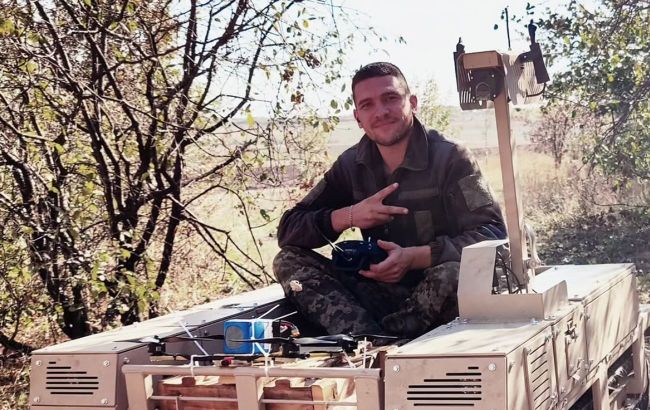 An officer of the 32nd Steel Mechanized Brigade 'Witcher and a ground robotic system (Photo provided by the 32nd Mechanized Brigade)
An NBC (Nuclear, Biological, Chemical) defense troops officer from the 32nd Steel Separate Mechanized Brigade with the callsign “Witcher” noticed that many flamethrower operators were not returning from missions. And he realized: people must be replaced with iron on the battlefield. At one point, his team managed to snatch the first Krampus platforms for themselves, and today the company has already carried out more than 500 missions with robots.
Read RBC-Ukraine’s report on how the commander proved the effectiveness of robots to his fighters, what tasks ground robotic systems perform instead of people, and how “Witcher” is building a unit where iron risks instead of humans.
Key points:
- The main goal is to save lives. Robots were introduced to replace fighters on dangerous routes and firing positions.
- Company-scale growth. From six people, the unit grew into a company and carried out hundreds of missions. The loss of 38 robots means 38 saved lives.
- Frontline upgrade. Equipment becomes outdated quickly, so fighters rebuild chassis themselves, weld on protection, and write software.
- Extreme evacuation. To save the robots, crews cut tracks under fire and pull out the equipment with vehicles.
- Robot versatility. Ground robotic systems haul ammunition and water, mine roads, evacuate the wounded, and receive AI modules for shooting down enemy FPV drones.
- New professions. Former medics and artillerymen, as well as wounded veterans, now operate the robots.
- A perimeter of robots. Can robotic systems truly replace humans on the zero line?
Robots instead of people: How an officer built a ground robotics unit from scratch
“We need to save the guys’ lives” — this realization marked the beginning of the story of ground robotic systems for “Witcher.” By education, he is a career officer. He studied for six years and began service in 2018 with conscript training in the 145th Regiment in Mykolaiv.
By position, “Witcher” is the chief of the Nuclear, Biological, Chemical defense troops of the 32nd Separate Mechanized Steel Brigade. But the realities of the full-scale war forced him to look for solutions far from classic textbooks.
At the front, he realized the main thing was bringing his people back alive from missions.
“Take flamethrower operators, for example — these are people who, to strike the enemy, must get within 500-600 meters of them. Many flamethrower operators do not return from this task,” the officer recalls.
Even with perfect planning, the chances of survival remained extremely fragile.
“If the commander gives an order that, after completing the task, the fighter must return to the disposition of the NBC company commander, the chances of survival increase. But we understand this is war, and it’s still 50-50,” he says.
That was when Roman began thinking about an alternative.
“And then the Krampus ground robotic systems appeared. I told myself: I want them in our brigade, that’s it.”
He began searching for robotic platforms, calling acquaintances, training centers, consulting specialists in the field, but everywhere he heard the same answer: “There’s nothing available.” Until eventually, the chief of the NBC defense troops contacted the young officer. “Witcher” told him: “There are people, and the people are motivated.”
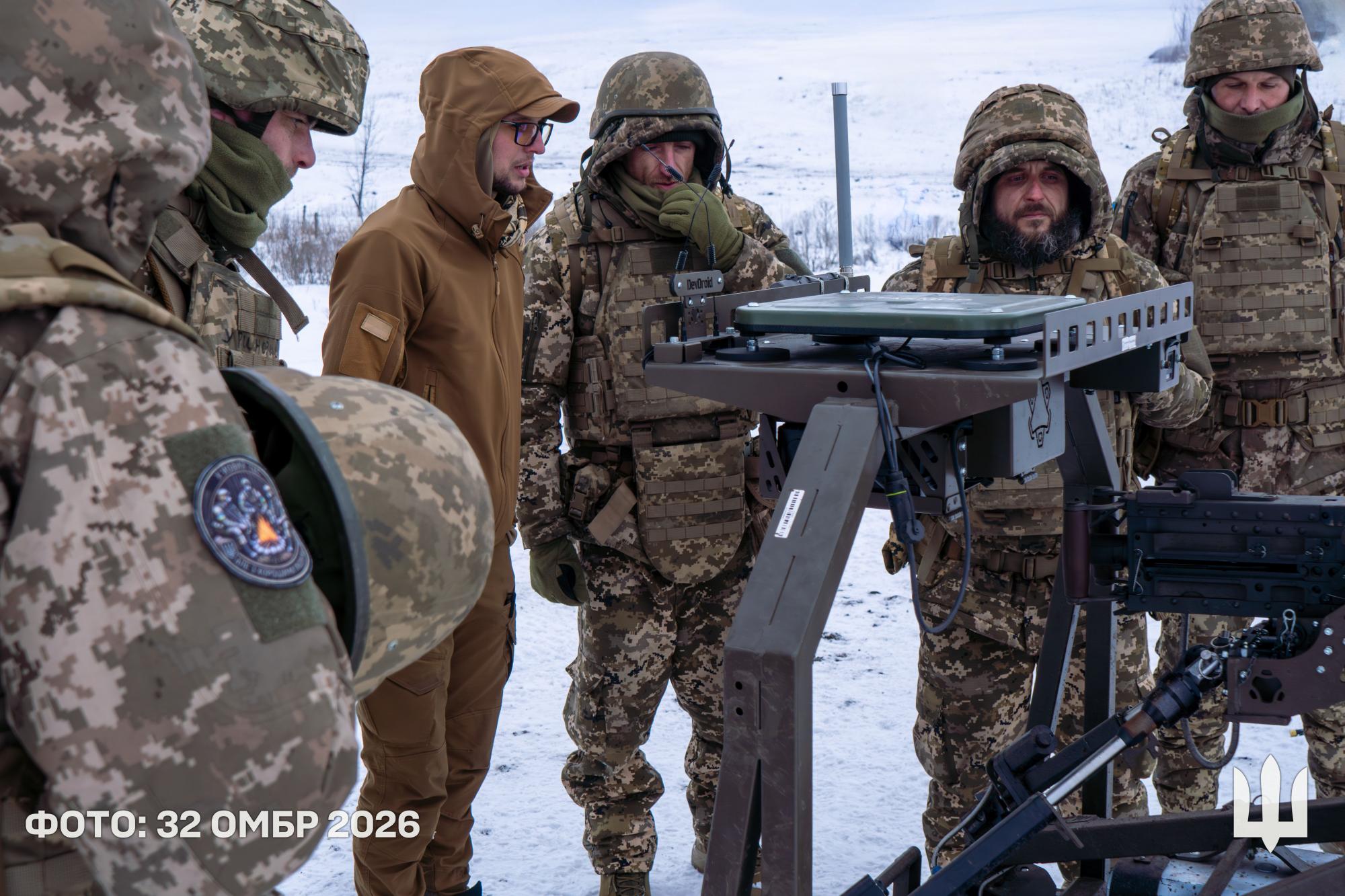 Photos provided by the 32nd Separate Mechanized Brigade
The team that came together was indeed highly motivated. A young officer with the callsign “Joker” came to serve from Lithuania, even though he had the legal right to remain abroad. Comrade’s father ended up in captivity. The fighter had initially left the service, but when “Witcher” started looking for solutions, he returned to the ranks.
“Witcher” heard from different people: “I don’t know what the prospects are with your robots, we need "birds"(drones), ATVs, mopeds.” Despite this, he continued developing the unit.
The technology race. Why the 2023 equipment was already outdated by 2025
When “Witcher” finally got the first platforms, it turned out their unit had become pioneers in their branch of service. There were still no official frontline deliveries — the equipment was raw. Roman became the first person in Ukraine to receive Krampus robotic systems at all, thanks to higher command understanding the need for them.
Within two weeks, the platforms were already in the unit, and the team began testing them. But technology often becomes outdated faster than a system can go from production to delivery to a brigade. It turned out these machines had been codified in 2023, while it was already September 2025. The enemy could jam them easily, and the video feed could easily be intercepted.
The commander found out who the developers were, got the director’s contacts, and went straight to the factory. The military and engineers sat down at one table, and the manufacturer quickly adapted to the kinds of robotic systems actually needed at the front.
Then came endless tests.
“The manufacturer redesigned the robotic system. I tested it at the training ground so many times that it’s scary to think about. I was ready to work stubbornly and test thoroughly just so we wouldn’t have to send flamethrower operators — in other words, so we wouldn’t send people,” the commander recalls.
The results of this work are already measured in saved lives.
“Throughout my service, including in the 32nd Brigade, I had six wounded fighters in various situations. We hit mines, FPVs struck us, but not a single fallen Hero. We lost several robotic systems, but the people themselves stayed alive,” he says.
There was one case during a combat mission when communication disappeared completely.
“There were situations where there was no communication, nothing at all. They reached some position, found a Starlink, and immediately contacted me.”
Roman assessed the situation, understanding there was intense enemy activity around them and that they had to withdraw very carefully. But the main thing was clear — the people were alive, and the equipment could be replaced.
“Witcher’s” unit began as a six-man composite detachment attached to a battalion. Step by step, the commander increased its capabilities, later forming a full-fledged platoon, then three separate platoons, and now it is becoming a company under his command.
“As of today, we already have more than 500 successfully completed missions. That means more than 130 tons of cargo delivered. To understand, that’s six fully loaded trucks or about 2,500 infantry supply runs into combat areas. In total, we lost 38 robotic platforms. But that means 38 living people,” says “Witcher.”
 Photos provided by the 32nd Separate Mechanized Brigade
Frontline tuning and queues for iron. How robotic systems are fine-tuned
The manufacturer must build the robotic system, codify it, and then receive a government production order. After that, they go to warehouses, and from there to the military — “to those who signed up in line,” as “Witcher” explains.
For the 32nd Brigade, as with other units, the state purchases robotic systems, though volunteers often help as well.
From the outside, it seems simple: the manufacturer delivers a ground robotic system, you pick up the controller, and off it goes. In reality, at the front, the equipment undergoes a complete rethink.
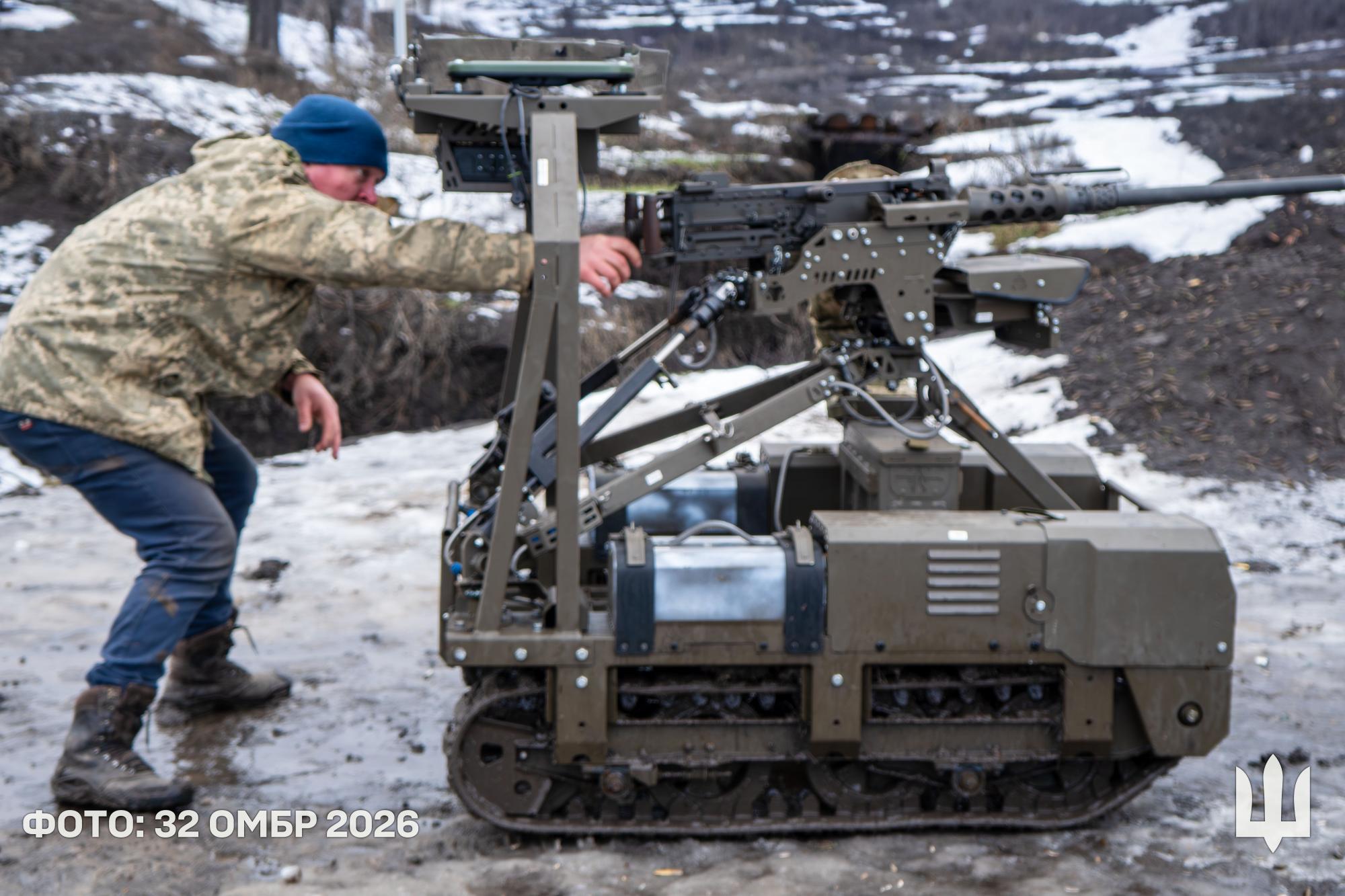
“We learned how to rebuild them and operate them. It looks like you just take a controller and drive. But before that, you have to carry out a huge number of manipulations. First, the military cuts the chassis, raises the clearance. The guys improvise: welding, reinforcing, installing Starlinks, and other equipment. They make the control system, synchronize everything with a laptop,” he explains.
After that come mandatory tests. If, during a mission, the vehicle starts pulling to the right, for example, it is immediately sent for another run-in.
“The guys drive into the forest, cut down trees there, load them onto the robotic system, transport them, and at the same time do something useful while testing the system.”
Overall, a prepared system can cover serious distances.
“The robotic system travels about 20 kilometers one way and the same distance back. That means it can travel 40 kilometers during one trip to the combat line,” the commander adds.
“There is no robotic system you can simply take and start using immediately. They all need to be fine-tuned afterwards. But the biggest shortage is time and queues. Demand for ground robotic systems is colossal right now — literally everyone wants them. So the main thing is waiting for deliveries. But this is happening constantly, and everything is developing rapidly before our eyes.”
Ambushes by “waiting” drones and evacuation at 90 km/h
Rescuing a damaged or stuck robot from the battlefield is its own dangerous art. The enemy quickly understood the value of Ukrainian ground systems and began hunting them.
Evacuating a stuck robotic system is not easy. Sometimes the enemy sets up ambushes around them, knowing Ukrainian fighters will come to retrieve them.
“They simply disabled the robotic system and landed a ‘waiting’ drone nearby. We noticed this from the very beginning, even with our first robotic systems. One of our systems wasn’t destroyed, it was just stuck. They landed a waiting drone next to it. The platoon commander said, ‘My guys will go there, but first a bird has to fly over.’ A drone flew first, and we spotted the waiting drone. They shot it down, and only then did the guys go for the robotic system. But that fact alone… once a system got stuck and we evacuated it only two days later,” the defender recalls.
“Witcher” describes the evacuation with admiration for his subordinates’ courage.
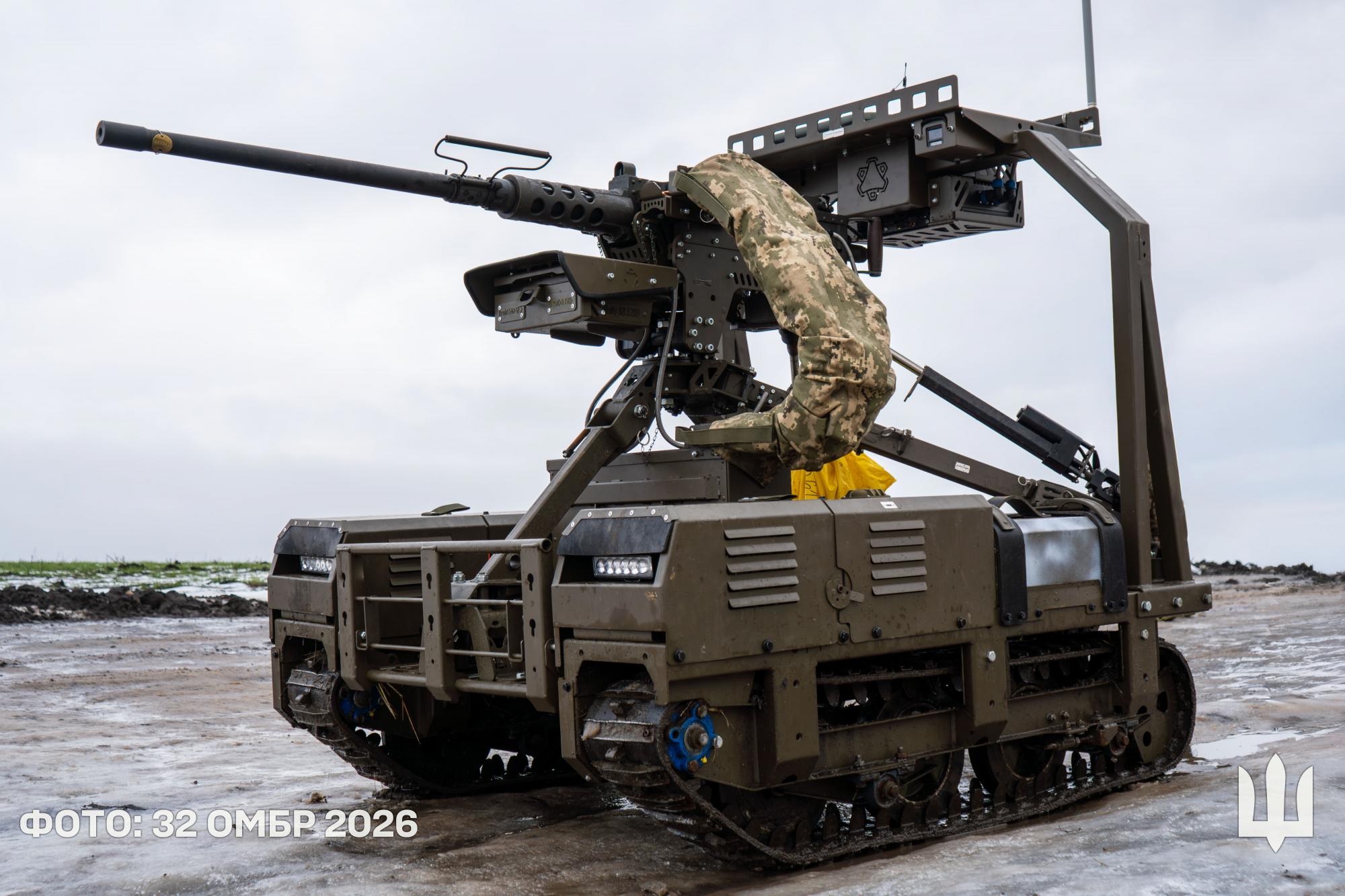
“Evacuation is terrifying. First of all, these are guys with nerves of steel, my Steel Wolves, who instantly rush into hot zones to retrieve robotic systems. They drive in, deploy a tow cable, hook up the system, cut the track, attach it, and drive away. They throw the track into the trunk — similar schemes exist with trailers equipped with electric winches. It’s the fastest way.”
The hardest missions are evacuating wounded fighters.
“It’s more complicated with evacuating people. If the person is in a serious condition, he won’t move on his own. It’s a difficult operation. We had such an experience. There must be a microphone, a speaker, so you can stay in contact with the person, there must be overall understanding and constant monitoring of the situation, corridors opened in time. You need to have robotic systems available. And only when all the factors align can you carry it out,” he explains.
What tasks do ground robotic systems perform in the 32nd Brigade
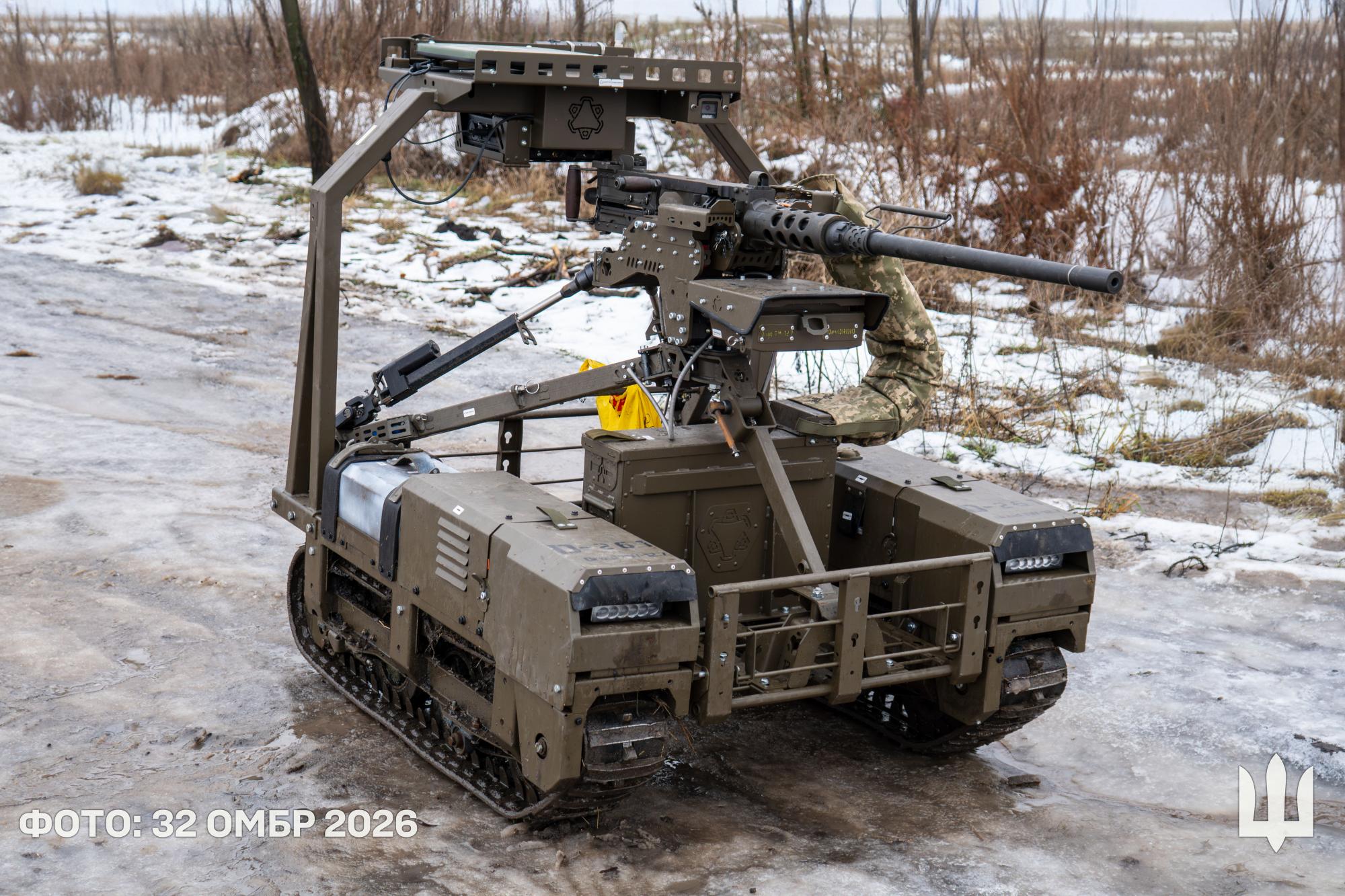
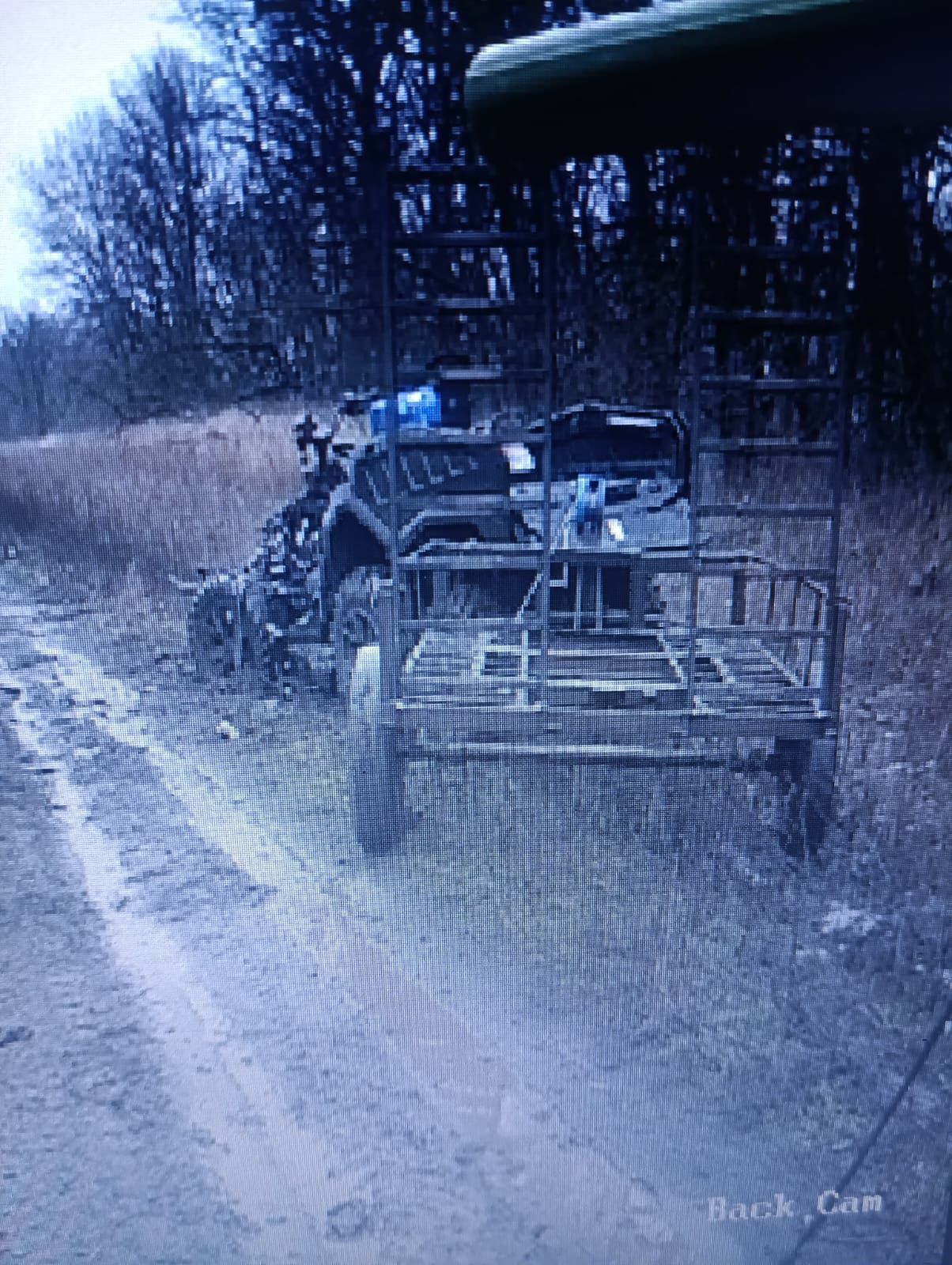
Today, robotic systems in the 32nd Brigade can do almost everything: engineering support, mining, blowing up roads; logistics support, including delivery of ammunition, fuel, food; evacuation of fallen heroes and wounded soldiers.
There are systems equipped with machine guns for ideal ambushes against enemy infantry. Also, the robots have learned to protect the skies, and now they want to expand into that area too.
“Technology is constantly moving forward. As for destroying aerial targets, there is an excellent AI-powered module capable of shooting down FPVs with self-guidance. The module already costs up to 1.5 million, but it pays for itself after five targets are shot down. You use them knowing there is no human factor and no risk to life,” he says.
The need for such equipment at the front grows every moment, but the unit catastrophically lacks personnel for expansion. To prepare, configure, and operate even one robotic system requires coordinated work by several specialists.
The robot goes on a mission and can cover up to 35 kilometers one way along a set route. It moves between villages and tree lines, constantly being loaded and unloaded.
“There is always some kind of cargo on it. Departure at 7 a.m., the guys drive up, load packages and supplies, determine which position to deliver them to. Water, food, fuel. It goes off — first unloading or loading point. Someone adds something, extra gifts. You can deliver to anyone: drone pilots, infantry, and so on.”
On the way back, along another route, the machine also does not return empty. For example, it collects batches of defective or damaged FPV drones from positions so the guys in the rear workshop can dismantle and rebuild them into new combat drones.
A full route like this lasts around 4-18 hours. Robotic systems perform the hardest humanitarian missions. The most difficult and responsible operation for the unit was a mission during which a robotic system evacuated a wounded fighter over 12 hours.
The main task was completed — the wounded soldier was delivered, while the crew controlled the process from a monitor screen, remaining safe themselves.
 Photos provided by the 32nd Separate Mechanized Brigade
Of course, robots do not travel around the front by themselves. Behind every meter a robotic system covers on the front line stands a team. The work is exhausting, so people must constantly replace each other to ensure focus never disappears, even for a second.
“There are five pilots: the one planning and the ones monitoring the operation. They need to rotate — someone rests while another takes over. Overall, to pilot five robotic systems, you need ten defenders. And that’s not counting those who initially reflash and prepare them for operation,” the commander explains.
A day under Grad fire and setting a personal example for subordinates
For “Witcher,” it was crucial to prove as a commander that he would never send people on a mission he would not undertake himself. He understood that personal example carries the greatest weight in war.
One morning at 7 a.m., “Witcher,” together with experienced comrades “Swede” and “Joker,” headed out to evacuate or revive two robotic systems that had been sent to evacuate a wounded soldier but became stuck and stopped moving. On-site, they discovered the problem — one machine’s track had become tangled in too much wire and cracked, while the other suffered electronic problems.
After assessing the situation, they realized the robot would go no farther. They cut off the most valuable parts — cameras, the expensive Starlink — took the equipment, and prepared to withdraw.
While the crew dealt with the equipment, the morning fog that had concealed them from enemy eyes dissipated. The evacuation vehicle, adhering to strict security requirements, drove away. The group missed it by mere minutes and remained alone at the positions.
At the positions where they were stranded, “Witcher” was asked about his role. He did not flaunt his rank and introduced himself as an ordinary communications soldier. During the discussion, they found the wounded fighter the robotic system had been moving toward and decided to evacuate him themselves.
Neighboring units promised to pick up the “communications soldier” and his group in the evening, then postponed the evacuation until morning. Eventually, it became clear no one was coming — they would have to break through on their own.
Time seemed endless. But it wasn’t just time dragging on: the men were under continuous shelling, with the enemy heavily bombarding the positions with Grad rockets. Then a message lit up on the phone screen from their own side: “The sky is relatively clear.” Within five minutes, the men gathered, requested suppression of enemy FPV drones from the brigade, and moved out.
The road passed through open areas and highways where they were completely exposed. Here, combat experience and the incredible intuition of their comrade “Swede” saved them more than once.
When they finally reached an intermediate checkpoint, another challenge emerged — the dugout was too small, and they would have to wait until morning. On top of that, “Swede” had leg problems. “Witcher” knew about his long-term health issues and understood there were still 15 kilometers of difficult road ahead in full gear — body armor and helmets — and he might simply not make it.
The commander proposed a rational solution.
“Let me leave all the equipment here — the Starlink, the cameras. In the morning, an evacuation vehicle will take you out together with the wounded.”
“Swede” flatly refused.
“No. The three of us came here together, and the three of us will leave together.”
The third was “Joker,” who helped carry the wounded soldier.
Those 15 kilometers to the village of Myrne were difficult. They moved in bursts, constantly hiding from enemy FPVs. Near the end, they spotted an enemy waiting FPV drone — thanks to accurate fire from “Swede” and “Joker,” it was destroyed.
Eventually, they reached the positions of a neighboring unit, whose fighters helped them get to a safer area where their own vehicle was already waiting.
They made it. All three of them. That mission completely changed the fighters’ attitude toward the young officer.
“After returning to the command post, not a single subordinate ever said: ‘I won’t carry out the mission.’ And people know I won’t send them blindly into bad weather,” “Witcher” recalls.
By the way, in war, besides calculations, ordinary intuition often plays a decisive role. Even when the equipment is fully ready and the weather seems perfect, a commander’s inner voice can change the course of events. “Witcher” recalls a case when his instinct saved subordinates from certain death.
“Sometimes intuition kicks in. There were times when the weather was great, and everything seemed ideal for a mission. The guys were already standing at the starting position near the Donetsk region sign, preparing to drive 12 kilometers deep. But I felt something was wrong. I told them: " No, you’re not going." I turned them around, and from the next group — not ours — one fighter was killed and another wounded exactly where my guys were supposed to go, hit by an FPV. My guys were delayed simply because they didn’t make the timing.”
 Photos provided by the 32nd Separate Mechanized Brigade
This incident once again proved to the crew that the commander’s decisions were based not on reckless gambling but on the desire to preserve every fighter. They were delayed, did not go, and stayed alive. And the equipment? The equipment could wait for a safer moment.
Parts from donors and defenders from different professions
Every machine at the front is treated as rationally as possible.
“Sometimes we remove parts from old systems — the ones we evacuate. For example, we may have one Starlink, and it can survive three robotic systems, so we don’t need to buy a new one every time,” Witcher says.
In this technological race, the winner is the one who moves faster than others.
“You either have to be first to get the newest things first. Some brigades have been doing this for a year, some for only a few weeks. We’ve been at it a bit more than half a year, but we already have effective results in our sector.”
The main secret behind such pace is constant learning. The Steel Wolves try not to miss a single development opportunity, attending specialized exhibitions and engineering hackathons. The guys learn quickly, take notes at industry events, and network with representatives of the field.
“It’s good when you can learn from someone else’s mistakes and minimize your own that way,” the commander explains.
The core of the unit consists of people who previously had completely different professions — former mechanics and artillerymen. But internal motivation works wonders.
For example, a former ambulance driver independently learned how to complete software for robots. A former grenade launcher gunner became one of the best pilots of logistics platforms.
Technology also allows those with physical limitations to remain in service even if they can no longer storm enemy trenches.
“I have a serviceman with gout. ‘RED’ is the best machine gunner, and now he can fire from almost any strike drone, learning very quickly.”
“Witcher” is building the unit with an eye on the future and is searching for people to become robotic system pilots.
“Maybe they have some health issues, but they can still be extremely effective and motivated. I’m also considering veterans for such positions.”
The main problem remains a shortage of specialists. Iron can be scaled up, but finding people with the right mindset and motivation is far more difficult.
“There are still very few people who can really ‘digest’ robotic systems. It requires a certain way of thinking and skilled hands,” Witcher notes.
 Photos provided by the 32nd Separate Mechanized Brigade
A front line without people? What to expect from robots at war
“Witcher” is convinced the future of infantry lies in moving as far away as possible from assaults toward fully robotic positions.
“I think it’s completely realistic to replace the entire chain so that only machines are on the front line guarding the perimeter. Of course, such machines still need people: the guys have to go out and service them. But it will be safer because they won’t have to go to the front themselves.”
In the commander’s vision, it looks like this: robotic systems roll back several dozen kilometers into relative safety, where the crew can calmly fix them.
“You take a backpack with a Starlink and everything necessary inside. Get on a motorcycle, ride to the location. Replace the batteries, and the robotic systems go further. Especially considering that the leadership is now very concerned about people and focused on preserving personnel. If you increase motivation and keep up with technology, you can sit here and control things there. People will join — and they already are,” he explains.
“Witcher” recalls that even ordinary Mavics were once treated skeptically, but now the army has learned to react to changing needs. When there is understanding from command, work moves much faster, he says.
But support from generals is no less important than support from loved ones. For “Witcher,” his family became a real psychological anchor during this wartime marathon.
“Family support is important too. My wife travels with me all the time, even though it’s not a vacation — she and our small child go with me to exhibitions. Wherever I go, she goes too. It’s really great because psychologically it can be very hard. We are allowed vacations. That’s our commander’s position: if you’re not having time with your family, you won’t be able to perform tasks effectively,” “Witcher” notes.
He does not disclose the number of robotic systems in his unit, but smiles — there is equipment, though it constantly needs improvement and experimentation. Modernization has become a continuous process in which some components are replaced with newer, more advanced ones.
Some say it is impossible to completely replace people with robots on the zero line, but Roman is convinced that every day brings Ukraine closer to having more robots instead of people at the front. And that means even more saved lives.