Ukraine to build 25,000 combat robots to replace soldiers in dangerous frontline missions

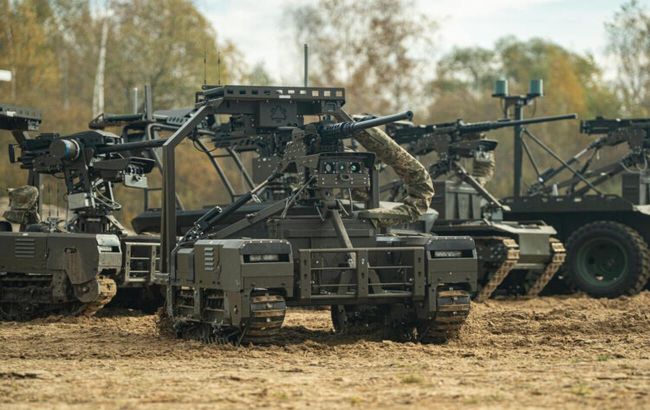 Photo: ground robots are designed to replace soldiers on the battlefield (DevDroid)
Ukraine plans to manufacture 25,000 ground combat robots in the first half of 2026. The machines are already carrying out a record number of battlefield missions, replacing soldiers in what soldiers describe as the kill zone, according to The Telegraph.
Unmanned ground vehicles (UGVs) have become a universal battlefield tool. They evacuate wounded soldiers, attack enemy positions, and lay mines.
Commanders call them the "new cavalry" because the machines can complete in minutes missions that previously cost soldiers their lives.
The main reason behind the mass deployment of robotic systems is saving troops’ lives, said Oleksandr Afanasiev, the UGV battalion commander of the K-2 Brigade. The brigade became the world’s first military unit fully specialized in operating unmanned ground vehicles on the front line.
Record number of robot missions
The Telegraph, citing Ukrainian President Volodymyr Zelenskyy, reported that the number of operations involving UGVs is rapidly increasing.
According to the report:
- Robots carried out 10,281 supply and evacuation missions in April
- The average operational intensity reached 343 missions per day
For comparison, this number was only 2,900 missions in November last year.
Robert Tollast, an expert at the Royal United Services Institute (RUSI), said the technological leap is transforming modern warfare and that robot-against-robot battles are only a matter of time.
Why Ukraine is switching to robotic warfare
The expansion of Ukraine’s robot army became necessary due to the growing threat posed by Russian drones. Areas near the front line have turned into a kill zone, where any moving target can come under attack within seconds.
Previously, logistics relied on pickup trucks and armored vehicles, but they were being destroyed faster than they could be replaced.
Using robotic systems allows Ukraine to deliver supplies and hold positions in areas where human presence has become too dangerous.
Earlier, President Volodymyr Zelenskyy said Ukrainian forces had, for the first time, managed to capture a Russian position using only drones and robotic systems, without infantry involvement.
Meanwhile, Commander-in-Chief Oleksandr Syrskyi reported that robotic systems completed 50% more missions in March than in February.