Russian strikes freeze Kyiv, fueling tensions between Zelenskyy and mayor Klitschko


 Volodymyr Zelenskyy and Vitali Klitschko (photo: collage by RBC-Ukraine)
RBC-Ukraine analyses whether Kyiv could have been better prepared for the Russian attacks on energy infrastructure, whether it was possible to avoid the current crisis in the city, who is to blame for it, what citizens can expect next, and whether this situation will have long-term political consequences.
Key questions
- Is there any reason to blame Klitschko for Kyiv's failure to prepare for the crisis?
- How do the mayor's entourage and the Kyiv military administration view the situation?
- When might the electricity situation in Kyiv improve?
- Can the central government remove Klitschko from office?
During the first three winters of Russia's full-scale invasion, Ukrainians were lucky with the weather, with temperatures remaining relatively high for this time of year. In the fourth winter, their luck ran out, and severe frosts hit Ukraine, particularly Kyiv.
This coincided with desperate Russian attempts to finally break Ukrainian resistance, both on the front lines, primarily in Donbas, and in the rear. One of the main targets was Kyiv, whose power grid suffered unprecedented Russian strikes.
As one of RBC-Ukraine's interlocutors in the government explained, Moscow apparently believes that if it can turn Kyiv into a city unfit for life, it will undermine the morale of all Ukrainians in general. And if some of the city's residents decide to wait out the cold weather in Europe, then the Poles, for example, will certainly not be particularly happy about it.
But the main and obvious task is for Ukrainians, tormented by cold and darkness, to put pressure on their government from below so that it agrees to serious concessions during peace talks to end it all. This task has not yet been accomplished — despite all the difficulties, there are no signs of mass capitulationist sentiments.
Instead, the crisis in Kyiv has sharply exacerbated the latent confrontation between local and central authorities. In accordance with Ukrainian political tradition, the question of what to do is overshadowed by the question of who is to blame.
Situation in Kyiv
"A lot has been done in Kharkiv, where the local authorities were prepared. Kyiv, unfortunately, has done much less; very little has been done in the capital. And even now, I don't see enough intensity – all this needs to be corrected urgently. There must be solutions," said President Volodymyr Zelenskyy in an evening video address on January 14, when it became clear that Kyiv's problems with electricity and heating were serious and long-term.
In the same vein, comparing Kharkiv and Kyiv to the detriment of the latter, the newly appointed First Deputy Prime Minister and Minister of Energy, Denys Shmyhal, also spoke out.
However, in informal conversations with RBC-Ukraine, even representatives of the central government note that it is highly inappropriate to compare Kyiv and Kharkiv directly. As one of the People's Servant MPs pointed out, despite its proximity to Russia, Kharkiv is still three times smaller than Kyiv.
Comparing the situation in Kyiv with other cities, even those near the front line, is incorrect, according to another Servant of the People MP. "The issue is not only about population size and network size. No Ukrainian city will experience such attacks as Kyiv over the winter. Any city will be in the same or even worse situation if Russia takes it on," he said.
The situation in Kyiv deteriorated sharply after a massive attack on the capital on January 9. As a result of the combined Russian strikes, large facilities for the generation and transmission of electricity, heat, and water were seriously damaged.
Emergency power cuts were introduced throughout the left bank of Kyiv, as well as in the Pecherskyi and Shevchenkivskyi districts, and there were interruptions in the supply of heat and water. About half of the buildings in Kyiv, or about 6,000 facilities, were left without heating.
By January 12, heat supply had been restored to most consumers, but the situation with electricity had not improved significantly. It was only possible to switch to schedules on the right bank of Kyiv—emergency power cuts continued on the left bank. In some cases, they lasted until 2 p.m. with breaks of 3-4 hours.
However, on January 13, Russia struck Kyiv again, which severely exacerbated the consequences of the first. Emergency power cuts were again introduced throughout the city.
After two attacks, Kyiv practically lost one of its large power and heat generation facilities.
The Ministry of Energy of Ukraine did not venture to make any predictions. "The situation with the duration of emergency power cuts, particularly in Kyiv, remains unpredictable after the massive Russian strikes," said Deputy Minister of Energy Mykola Kolesnyk.
However, the very next day, Prime Minister of Ukraine Yulia Svyrydenko made an encouraging statement that the situation would improve from Thursday, January 15, if there were no new Russian attacks. There were no attacks, but there were no radical improvements either.
Kyiv remains in a state of emergency, with blackouts of unpredictable duration. The situation is exacerbated by numerous local accidents caused by equipment overload during short power surges. Powerful diesel generators, which are saving the day in many apartment buildings, often break down. Inverters connected in high-rise buildings also cannot withstand so many hours of power cuts, and do not have time to recharge.
Could Kyiv have been better prepared for Russian strikes?
On January 9, Kyiv's mayor, Vitali Klitschko, appealed to residents to leave the city.
"I appeal to the residents of the capital who have the opportunity to temporarily leave the city, where there are alternative sources of electricity and heat, to do so," Klitschko said.
After these words, a wave of hate poured down on the mayor. Some of Klitschko's critics pointed out that instead of making such recommendations, he should have better prepared the city for emergency conditions.
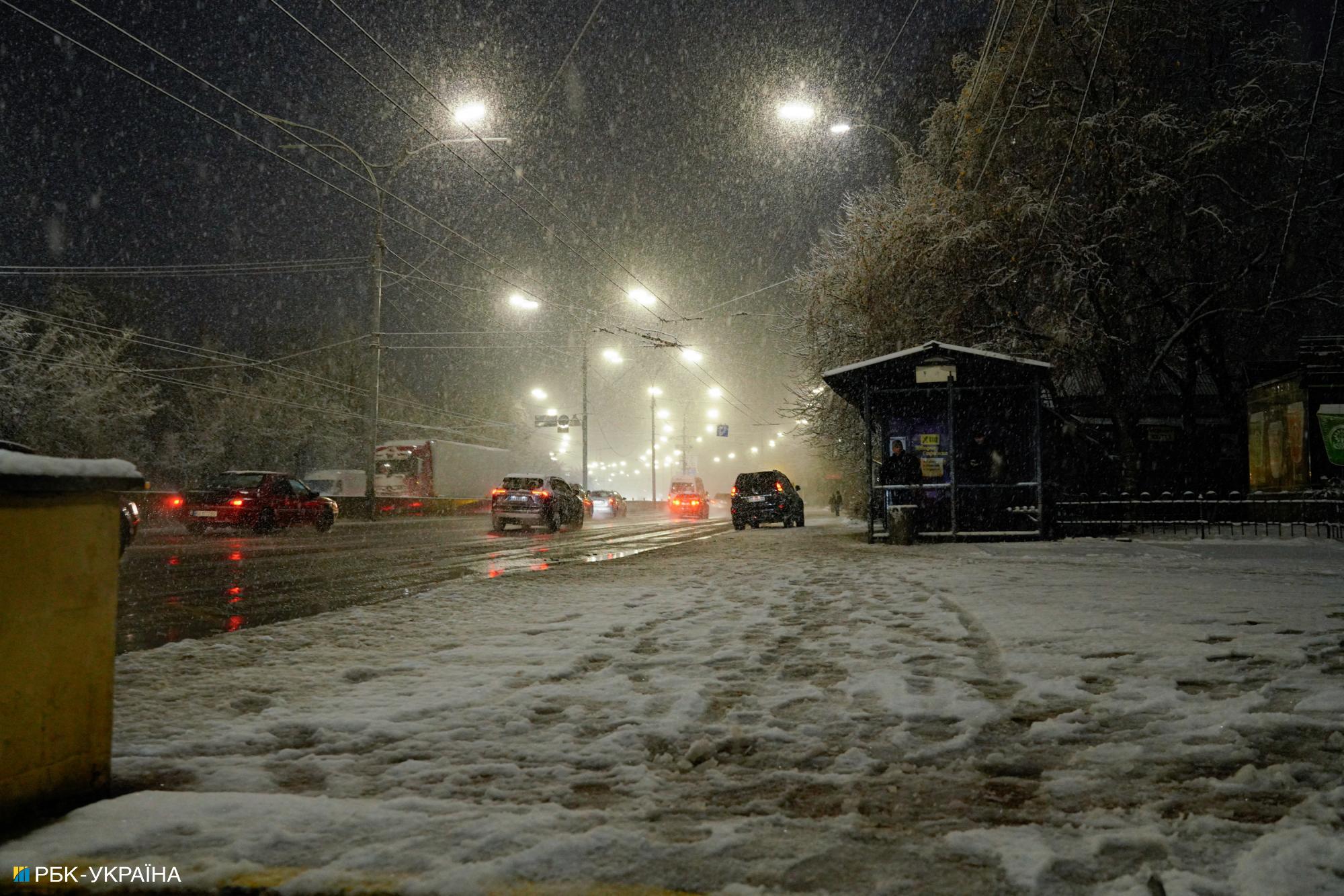 Winter in Kyiv (photo: Ihor Kuznietsov / RBC-Ukraine)
According to an informed source who spoke to RBC-Ukraine, the main complaint against Kyiv's leadership is that it failed to ensure the installation and commissioning of the necessary number of mobile generator sets. This equipment could have compensated for the loss of electricity after the power generation was disrupted by Russian strikes.
"No funds for the purchase of new equipment were found either from international partners or from other sources," said the source.
According to Volodymyr Omelchenko, director of energy programs at the Razumkov Center, the complaints against Kyiv Mayor Vitali Klitschko are indeed justified. But not only against him.
"The initial plans were to build cogeneration plants and decentralized generation facilities with a capacity of more than 300 MW. To date, about 50 MW have been built. This issue needed to be addressed more quickly," Omelchenko told the agency.
Back in November last year, Deputy Head of the Kyiv City State Administration, Petro Pantelieiev, said that seven new thermal power plants would be launched in Kyiv by the end of the year, presumably referring to cogeneration plants. However, the plan was never fully implemented. On January 14, he also reported that only five plants had been installed, but only two of them had been put into operation.
Compared to Kyiv, Kharkiv has moved from dependence on large heat and power plants to a network of small generation facilities. Over 127 cogeneration plants and gas turbine stations have already been installed there. These plants simultaneously produce heat and electricity, ensuring the autonomous operation of critical infrastructure.
However, Omelchenko believes that it is not objective to blame the mayor of the capital for all the problems. "We have a headquarters for preparing for the winter period, headed by Deputy Prime Minister Oleksii Kuleba, who is responsible for coordinating all work related to energy. Klitschko can only influence heating companies. Everything else is not under his control, neither the regional power companies nor the power generation facilities. Klitschko is 20% to blame, the rest is the responsibility of the state," says the expert.
In turn, the Kyiv authorities blame the central government for withdrawing funds from the city budget – UAH 8 billion from income tax was transferred from the Kyiv budget to the state budget at the end of last summer.
"Okay, they took eight billion – but you have a hundred billion in total, you are the richest city. And where did they take it from? From laying tiles and planting flower beds, the Kyiv authorities always had money for that," counters a representative of the Servant of the People party.
"The thermal power plants are on the city's balance sheet; no one prevented Klitschko from protecting them. They were just incredibly poorly prepared," adds another representative of the ruling party in a conversation with RBC-Ukraine.
As several interlocutors explain to the agency, the protection of the country's energy facilities is generally divided between different authorities. According to them, local authorities are responsible for protecting thermal power plants. As previously stated by the Kyiv City State Administration, all of the capital's thermal power plants have the necessary level of first-stage protection in accordance with the requirements of the General Staff of the Armed Forces of Ukraine. But this does not include the construction of sarcophagi around the facility, which would be extremely difficult to do.
"It is practically impossible to protect TPP-5 and TPP-6. The existing air defense is insufficient. This is a question for the military, not for Klitschko. The substations are under the control of Ukrenergo, and the networks are under the control of a private company. How could Klitschko have prepared them? Meanwhile, heat transportation is the responsibility of the city, the mayor's area of responsibility. Could something have been done better here? Yes. But you can say that about anything," says another source in Servant of the People.
In general, this is a fairly popular opinion among those with whom RBC-Ukraine spoke: given the cold weather and the intensity of the Russian strikes, it was basically impossible to ensure that Kyiv residents would not feel the effects at all. But could they have prepared much better? Virtually everyone agrees that they could have.
Military administration versus civil administration
The situation is complicated by the de facto dual power structure in Kyiv. At the beginning of Russia's full-scale invasion of Ukraine, the President created the Kyiv City Military Administration in Kyiv and appointed its head. Initially, it was military personnel, and since the beginning of 2025, it has been Tymur Tkachenko, who previously worked in the Cabinet of Ministers and the Kyiv City State Administration. The Kyiv City Military Administration does not, in fact, have full powers to perform the functions of the executive branch in the capital.
The dualism of power leads to confusion about where the functions of the mayor's office end and where the powers of the military administration begin.
In theory, it looks like this: the mayor and the Kyiv City Council, i.e., the local government, are responsible for the day-to-day management of the city, utilities, public amenities, and budget management. The CMVA and its head are responsible for ensuring security, controlling the martial law regime, and eliminating the consequences of emergencies.
But in practice, it is much more complicated. And in real politics, it leads primarily to clarifying relationships and shifting responsibility onto each other.
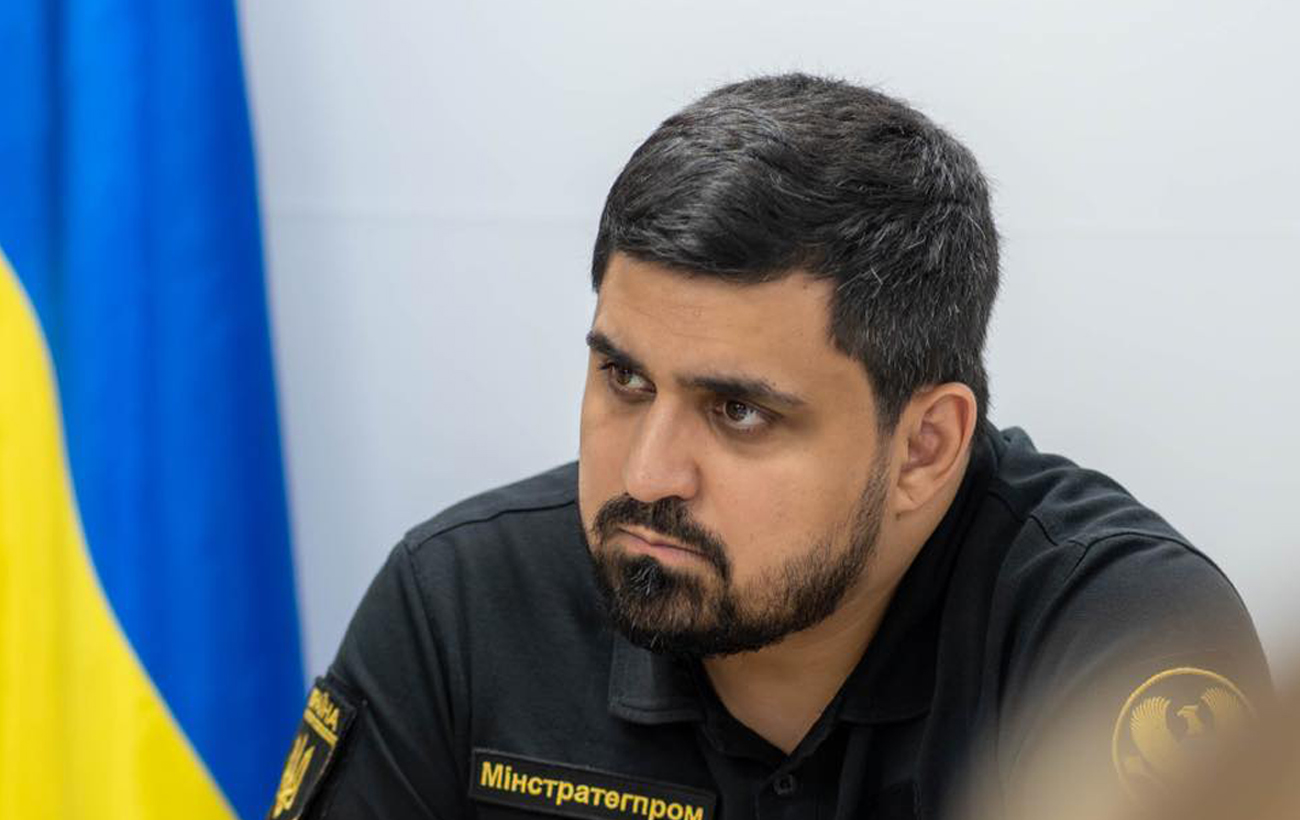 Kyiv City Military Administration Chairman Tymur Tkachenko (photo: facebook.com/timurtkachenko)
"There is a lot of manipulation and outright lies circulating about whether Kyiv was prepared for winter. I would like to note that the day before the devastating massive attack, I had a meeting with the Prime Minister of Ukraine... I conveyed all the threats and risks that could result from severe damage to the capital's critical infrastructure...," Klitschko said.
According to him, he proposed to create a joint headquarters to respond to a possible emergency and overcome its consequences, but as of January 9 — before the first massive Russian attack this year — there was no coordination of efforts with the government.
The Kyiv City Military Administration claims that local authorities were preparing for the current situation, but not everyone was ready for it, including the administrators.
"We cannot assess the level at which it was carried out – whether it was sufficient or insufficient. You need to ask the residents of Kyiv, they will tell you exactly how they assess the work and preparation of the city for emergencies involving energy and problems with heat supply and other utilities, including water. The residents of Kyiv are best placed to comment on the mayor's work. What the city authorities did or did not do, Kyiv residents can now see in their homes," Kateryna Pop, spokesperson for the Kyiv City Military Administration, told RBC-Ukraine.
At the same time, interlocutors close to Klitschko believe that the attempt to shift responsibility for the current situation in the city onto the mayor has a practical political effect – discrediting him and undermining his support.
"Much has been done within the powers of the city authorities. And the comparison between Kyiv and Kharkiv is incorrect, given that Kharkiv is many times smaller. Moreover, the intensity and determination of the Russian strikes on Kyiv left no chance for things to be better, no matter how well we prepared. At the same time, we also have the Kyiv City Military Administration, which is responsible for the city's security, and district administrations in the city, which have been allocated a budget. This is not often mentioned," notes a source close to the mayor.
For his part, one of Tkachenko's associates claims that the heads of district administrations tried to control the preparation process. But, according to him, they allegedly lack resources and complete information—utility structures are subordinate to the Kyiv City Council, so they could not greatly influence the situation.
"Many issues regarding the work of the air defense forces are not within the competence of Klitschko or the Kyiv City Council. The necessary protection measures at Kyiv facilities have been taken. All structures subordinate to local self-government are now working 24/7," says the interlocutor.
According to one of the Servant of the People MPs, declaring a state of emergency in the energy sector will not change much in essence. It is rather public noise necessary as a reaction to the problem. However, it will not lead to many practical steps to improve the situation.
"All the measures provided for by the state of emergency are already in place – the same schedules. And we already have enough headquarters; having another one will not add any light," the interlocutor said ironically.
At the same time, the MP views Shmyhal's appointment as Energy Minister positively, given the former Prime Minister's direct access to President Zelenskyy. "It is better to have a Minister with whom the President can communicate than one who has no such connection with Zelenskyy. One way or another, everyone understands where and by whom the most important decisions are made."
Is there alternative to Klitschko?
"People in Kyiv are always opposed to the authorities. Plus, they are smart, and the middle class has a lot of acquaintances in power, deputies. So, not everyone will believe that it was Klitschko personally who took it and messed up," one of the prominent deputies from the Servant of the People told RBC-Ukraine.
According to him, the current mayor of Kyiv still retains a certain Teflon quality and a basic rating that he has carried through the years since his resounding victories in the boxing ring.
"This situation will, of course, undermine Vitali. But he will make it to the second round of the elections (for mayor, ed.), whenever they are held. And then it depends on his opponent. So far, neither we nor anyone else has an alternative to him," the interlocutor continues.
In fact, throughout Zelenskyy's presidency, since 2019, the mayor of Kyiv has remained the only opposition figure with real power. Attempts to resolve the Kyiv issue have been made occasionally by the ruling team, but without any results.
According to RBC-Ukraine, during the current crisis, President Zelenskyy once again raised the issue of how the system of power in the capital is organized, in particular, that the mayor's office is merged with the Kyiv State Administration. However, the only serious attempt to reformat the Kyiv authorities was made by the former deputy prime minister and later "Mindichgate" (recent energy corruption case) figure Oleksii Chernyshov. After him, no one wanted or tried to take on this task.
The Kyiv City Military Administration never became a full-fledged political counterweight to the Kyiv City State Administration/mayor's office. Although Tymur Tkachenko was once the subject of high hopes in the government. But in the end, it all boiled down to heated exchanges on social media between the city's military and civilian leaders.
"Tkachenko is just a bit player in this story. No one else is interested in dealing with this issue, and no one has even tried. Our faction in the Kyiv City Council is weak, and we essentially lost the elections," says a source in the Servant of the People.
At the same time, Klitschko's team fears that the central government may try to use the current crisis to remove the mayor.
"According to our information, the President's team now wants to use this situation to register a petition on the President's website to remove Klitschko, collecting 25,000 signatures. And then allegedly support this petition by dismissing both Klitschko and Tkachenko at the same time,” says the interlocutor.
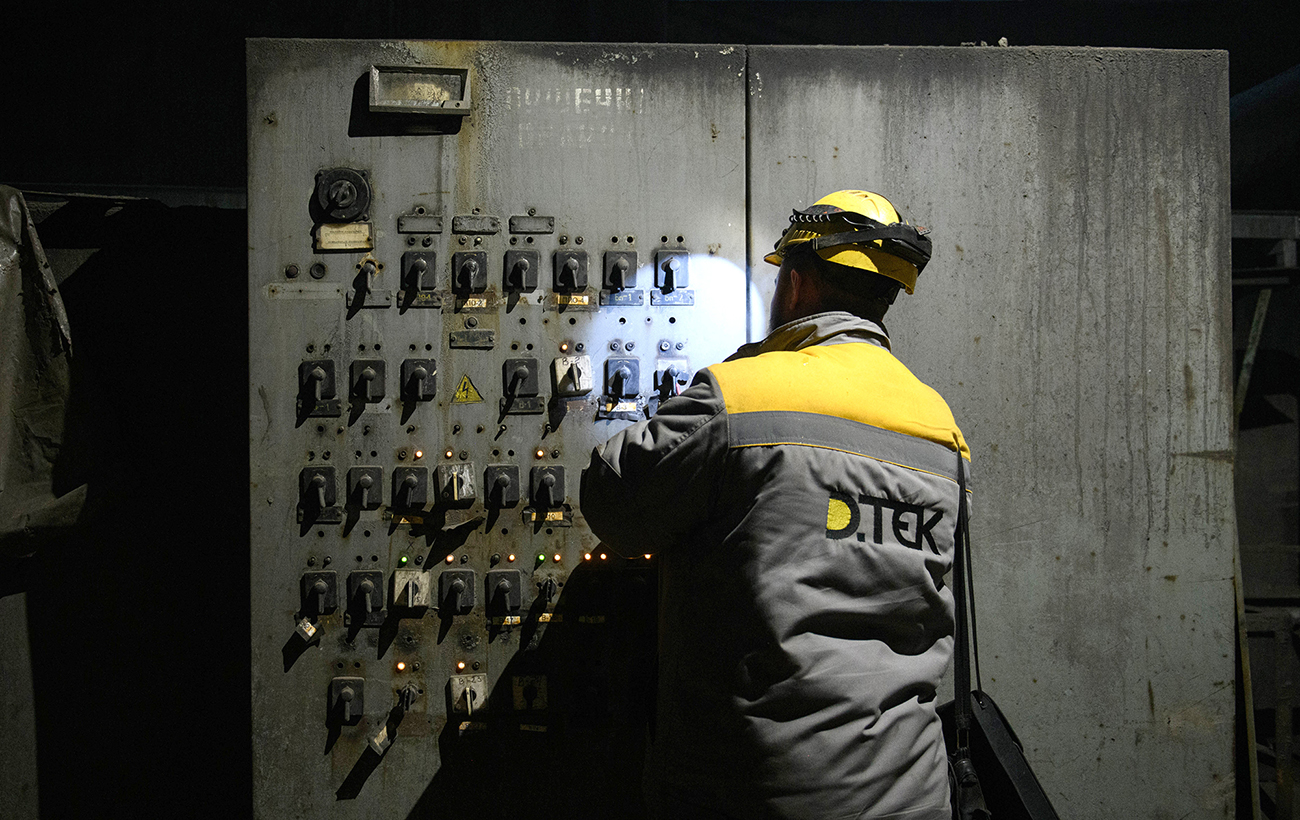 A DTEK employee at work (photo: Getty Images)
A petition on this topic is already actively circulating on social media, but so far it has been sent to the Kyiv City Council, asking it to remove the current mayor by its decision (which is unlikely given the current balance of power in the city council).
However, interlocutors in the government categorically deny their involvement in such initiatives. In addition, they acknowledge that the mayor has powerful European protection.
"He is well-liked in the European People's Party in Germany. Plus, local self-government is a sacred cow for Europeans, and they will immediately take a dim view of any attempts to attack the rights of communities," says a source in the Servant of the People.
"Of course, the Russians will finish off Kyiv's power system. Tonight, tomorrow night, the night after, but they will. What then? There will be a blackout, and everything will go to ensuring critical infrastructure," one of the Servant of the People deputies tells the agency.
But he does not predict any mass social crises: "Some will leave, some will grumble, some will barbecue in their yards and wait for spring." Indeed, judging by the weather forecast, we should not expect warming in the next few weeks — and, therefore, a sharp improvement in the situation in the city.
But despite the various mutual accusations between politicians, Kyiv residents (like the rest of Ukrainians) seem to remember the main thing: that the real culprit in the current situation is not Klitschko, not Zelenskyy, not Shmyhal or other top officials — but the Russians.
"We can see even without electricity that you are b*******" — this slogan was relevant in the winter of 2022-23 and remains relevant today.
RBC-Ukraine special correspondent Yurii Doschatov also contributed to the article.