Pause or deadlock: Will the US and Iran slide back into full-scale war?

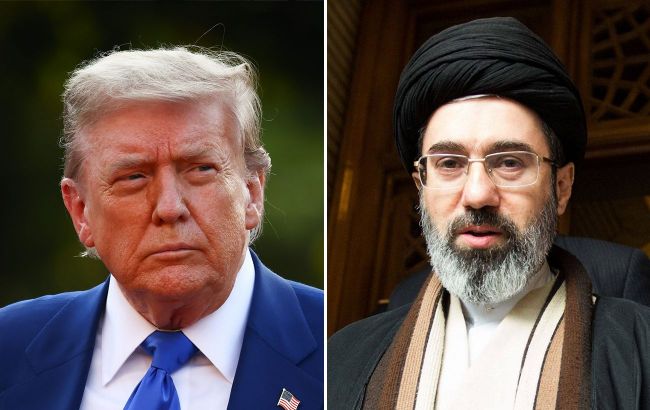 Photo: Donald Trump and Mojtaba Khamenei, Iran's supreme leader (RBC-Ukraine collage)
The US is "making room" for negotiations with Iran while simultaneously announcing the deployment of additional forces to the Middle East. Trump says he has "plenty of time" to reach a deal, but both sides are clearly preparing for a possible resumption of hostilities.
The US-Iran war has entered yet another phase of ceasefire. Why this has happened and where the truce could lead next is explored in RBC-Ukraine's report.
Key takeaways:
- A new ceasefire: After nearly two weeks of intense bombing, the US and Iran have paused active military operations. Washington is giving diplomacy a chance, while Tehran has temporarily halted attacks on US allies in the region.
- A strategic stalemate: The conflict has exposed the limits of US air power. The central question now is control of key maritime chokepoints.
- The cost and political risks: The war has already cost the US $37.5 billion. Support for the campaign is declining among Americans and MAGA supporters amid rising fuel prices.
- A new ceasefire: After nearly two weeks of intense bombing, the US and Iran have paused active military operations. Washington is giving diplomacy a chance, while Tehran has temporarily halted attacks on US allies in the region.
After nearly two weeks of bombing, the US is putting off any further escalation of its military campaign against Iran. Tehran, in turn, has suspended attacks on US allies in the Persian Gulf.
The war is once again on pause, yet the path to ending it remains unclear. Iran clearly believes it retains enough leverage to defend its interests. That situation is far from acceptable to the United States, but Washington's room for manoeuvre is becoming increasingly limited.
Battle over the straits
At this stage, the absence of a coherent US war strategy is becoming increasingly evident. Ideas about regime change in Iran, which were voiced in early spring, have largely faded from view. Stripping Iran of its nuclear status is no longer the central focus either. Instead, the main issue has become control of the Strait of Hormuz.
US Secretary of State Marco Rubio all but confirmed this during his remarks at the ASEAN Summit on July 23.
"If we create a precedent in the Middle East, where a nation state can decide that they are going to control an international waterway, charge a toll, and if you don’t pay them, blow up your ships, we have created a very dangerous precedent, which will repeat itself in other parts of the world, including in this region," Rubio said at the summit in Manila.
At the same time, Rubio did not mention that Donald Trump himself had repeatedly spoken about placing the strait under an American protectorate and charging vessels for its "protection."
Part of the absurdity of the situation is that the Strait of Hormuz only became a major issue after the launch of the US-Israeli operation. Moreover, in recent weeks the conflict has expanded to include Iran-aligned Houthi forces in Yemen, which have threatened to block the Bab el-Mandeb Strait — another narrow maritime corridor through which more than 10% of global seaborne trade passes.
The Bab el-Mandeb Strait has also served as an alternative export route for Saudi Arabia, allowing it to ship oil that could not be transported through a blocked Strait of Hormuz.
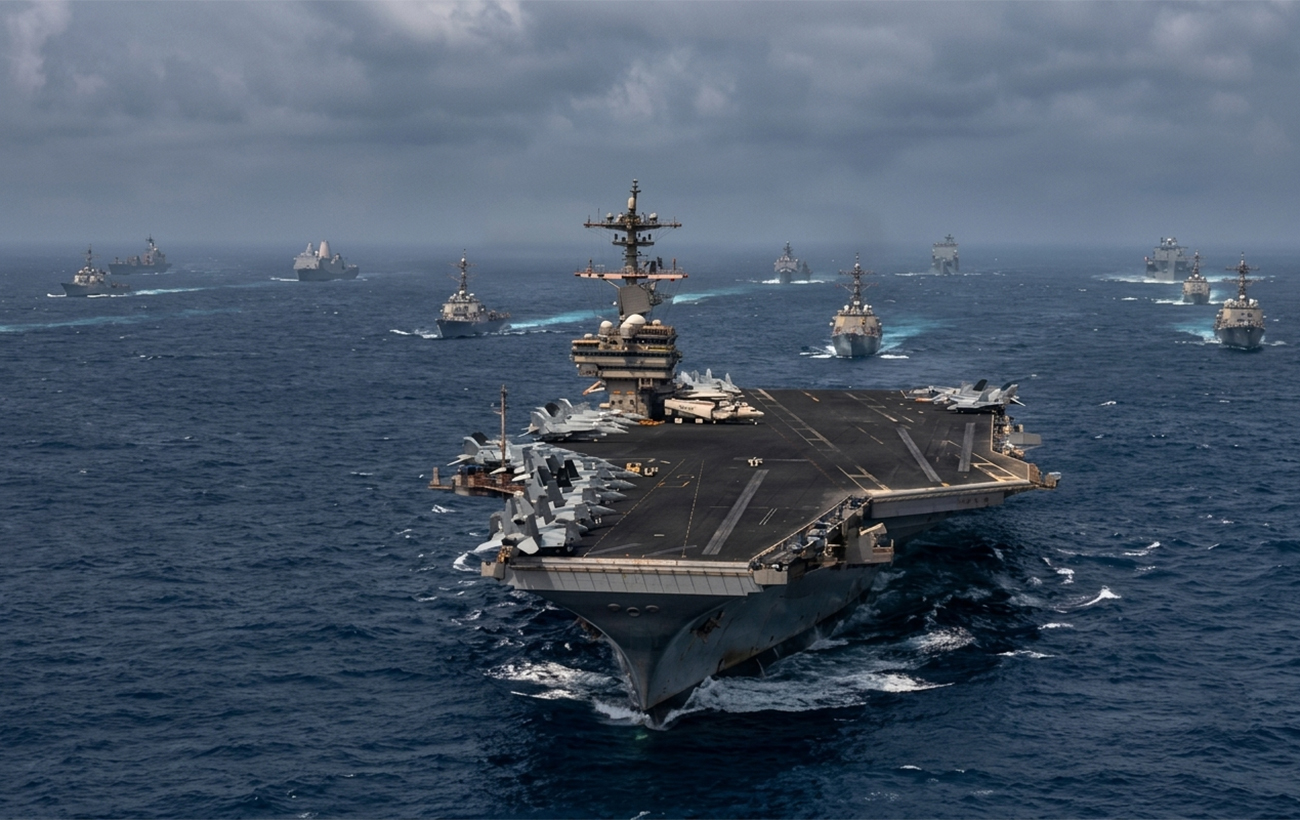
Photo: USS Abraham Lincoln, a US Navy aircraft carrier (centcom.mil)
The Houthis' actions have already prompted a stern response and threats from Donald Trump. However, questions remain about the United States' ability to actually prevent the blockade of yet another vital maritime artery. America is already fighting a resource-intensive war, yet those resources still appear insufficient to achieve the objectives set by its leadership.
At the limits of capacity
While there is little doubt about US military power, the war with Iran has exposed a number of weaknesses in the American military. Above all, it has highlighted a lack of preparedness to counter large-scale attacks involving vast numbers of low-cost weapons, including missiles and drones.
American countermeasures have proven extremely expensive and limited in quantity, while the US must not only defend itself but also protect its allies.
On July 21, the Pentagon said the war had already cost the United States $37.5 billion. Seeking to persuade members of the US Senate to approve additional military spending, US Defense Secretary Pete Hegseth said Iran was currently in its "weakest position." However, the official was unable to provide a clear answer as to when the military campaign might come to an end.
Such conduct by the administration is causing growing frustration among US politicians. The lack of visible results from American operations has only added to the discontent.
Some lawmakers have pointed out that the effectiveness of bombing campaigns has its limits and that the United States will not achieve a strategic victory through air strikes alone.
One senator told Hegseth during the meeting that lawmakers understood the limitations of air power and had essentially reached a stalemate.
General Dan Caine, chairman of the Joint Chiefs of Staff, who was also present at the meeting, effectively agreed with that assessment, acknowledging that "air power has its limits."
Breaking the deadlock and securing a strategic victory would require new solutions. Under current circumstances, the only remaining option appears to be a ground operation, though the likelihood of such a move remains low for a variety of reasons.
According to Politico, the White House is also aware of the "stalemate."
"I was told by very senior people that the president is now fully aware that the only way to the victory that he wants is completely politically impossible. The American people just will not support the kind of escalation it would take at this point," an unnamed source close to the White House said.
The outlet also notes a decline in public support for the war. Approval is falling even among MAGA supporters, Trump's most loyal political base. While about half of the US president's voters unequivocally backed the war in the spring, that figure has since dropped by 13 percentage points.
Many Americans are concerned about the war's economic impact, particularly the prospect of higher fuel prices. US service members continue to be killed and wounded in the conflict. Trump has also lost the support of some prominent MAGA influencers who favour an isolationist foreign policy.
All of this is unfolding just three months before the midterm elections, at a time when Trump has effectively abandoned his pledge to keep the United States out of foreign conflicts.
The situation is forcing both Iran and the United States to make difficult choices: either pursue further escalation in search of a decisive victory or accept uncomfortable compromises.
Room for diplomacy
Despite the effective collapse of a peace deal, both sides continue to make efforts to reach an understanding.
According to The New York Times, Iraqi Prime Minister Ali al-Zaidi brought a ceasefire proposal to Tehran on July 23. However, the newspaper reported that the offer was rejected.
Pakistan, which acted as a mediator ahead of the June negotiations, is also hoping that talks can be revived.
Finally, the United States itself has decided to leave some "room for diplomacy." On July 24, US forces suspended their air campaign. US Ambassador to the United Nations Mike Waltz said that President Donald Trump was allowing space for diplomacy, while emphasizing that the US continued to move additional military assets into the regionю
Iran has also taken a step toward de-escalation by suspending its retaliatory strikes. As a result, military activity in the region has indeed declined for the time being.
The question remains whether this latest "chance for diplomacy" will be squandered like previous efforts. Both sides appear to believe they can still wear down their opponent in a war of attrition.
Other actors are also playing a role. Israeli Prime Minister Benjamin Netanyahu is due to visit the White House on July 28 and may urge Trump to take a tougher stance toward Tehran, particularly regarding Iran's nuclear programme and its regional proxy forces, which Israel sees as a direct threat.
Meanwhile, Tehran is coordinating with Russia and China, a fact that US officials have openly acknowledged. Both countries have a clear interest in weakening the US position and could help Iran strengthen its leverage in any future negotiations.
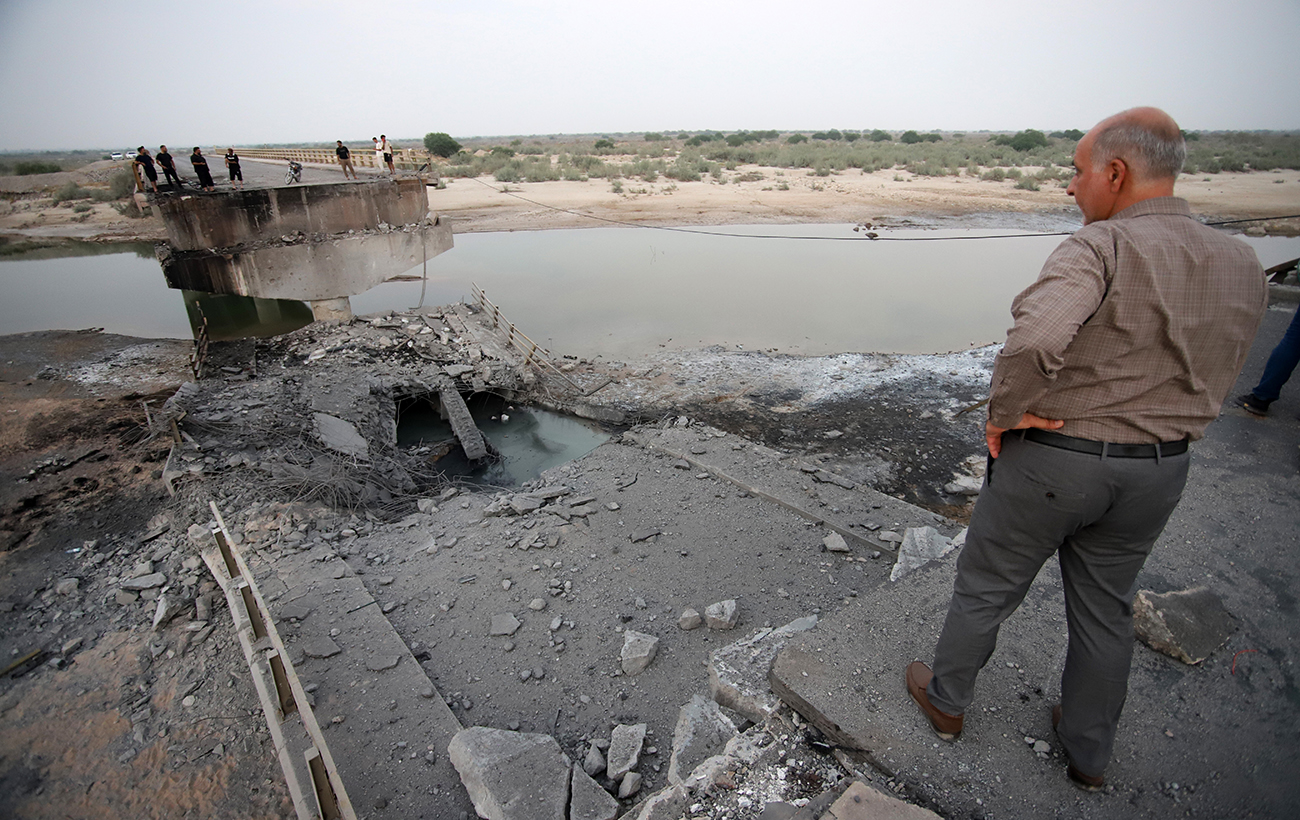
Photo: A destroyed bridge in Iran (Getty Images)
Oil market on edge
As Washington and Tehran continue their confrontation, global oil prices have been highly volatile. Over the past week, as US strikes and Iranian retaliatory attacks continued, Brent crude prices climbed sharply, at one point approaching $100 per barrel.
When the suspension of bombing operations was announced over the weekend, oil prices fell by more than 6% in a single day. However, the market could quickly rebound if hostilities resume, a scenario that remains highly possible.
Reuters, citing a senior Iranian official who spoke on condition of anonymity, reported that Tehran has little confidence that the current lull will last.
The official said scepticism outweighed optimism regarding the halt in attacks, adding that many in Iran viewed the pause as a tactical move rather than a genuine de-escalation. According to Reuters, the official also said Iran's leadership had accumulated enough bitter experience to believe it had been misled by the United States in the past.
Meanwhile, policymakers in Washington are considering the possibility that Congress may soon be asked to vote on authorising military action against Iran. Lawmakers are also seeking greater clarity from the president about the administration's next steps. One senator said discussions with the administration about the future course of action were expected to take place "relatively soon."
***
One Iranian citizen told Western journalists that the entire country felt "stuck in limbo." Similar sentiments are likely being felt around the world, as the conflict with Iran is disrupting global trade and energy markets. Economic uncertainty often fuels political instability, and the trajectory of the war raises the risk of the situation remaining unresolved for a prolonged period.
Ukraine has a clear interest in seeing the crisis resolved as quickly as possible. The conflict is boosting Russia's oil revenues while also contributing to shortages of critical military resources, including air defence systems.
At the same time, Ukraine's own experience serves as a stark reminder of how difficult and protracted a path to peace can be.
Quick Q&A
– Why did the US decide to halt the bombing campaign?
– Although Donald Trump has officially said he is "giving diplomacy a chance," Washington has in reality run up against the limits of its military capabilities, mounting financial costs (estimated at $37.5 billion), and declining public support. With the midterm elections approaching, the White House may be looking for a negotiated way to de-escalate the conflict.
– Do the parties believe the current ceasefire will hold?
– Both the US and Iran remain deeply sceptical. Tehran views the pause as a tactical move rather than a lasting settlement. At the same time, both sides maintain that they will act only in response to aggression from the other.
– How is the conflict affecting the global economy and Ukraine?
– During the fighting, oil prices approached $100 per barrel before falling sharply on news of a ceasefire, highlighting the market's volatility. For Ukraine, the conflict is also damaging, as instability in the Middle East boosts Russia's energy revenues and contributes to shortages of critical military resources, including air defence systems.