Macron's 'Jupiter' era nears its end: What France looks like now and who's ready to take over

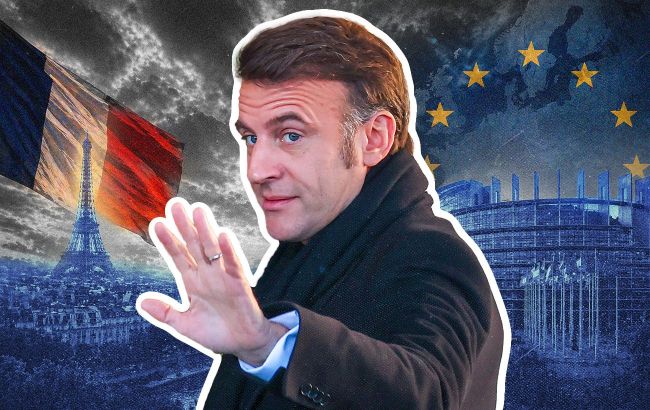 Emmanuel Macron (collage: RBC-Ukraine)
A decade of Emmanuel Macron’s rule is coming to an end. The prospects for his political force are very uncertain, while the left and right radicals are gaining strength.
What the French president managed and failed to achieve, who could become his successor, and what it means for France, Europe as a whole, and Ukraine in particular – read below.
Key points
- End of the “Jupiter era”. After nearly 10 years in power, Emmanuel Macron’s approval rating has fallen to 20%. His party has lost control of parliament, forcing the president to serve out his term in political agony.
- Succession problem. In the centrist Macronist camp, there is no leader capable of matching the president. Potential candidates risk only weakening each other in the 2027 election.
- Right-wing triumph. Marine Le Pen’s party, National Rally, led by Jordan Bardella, has a stable 30% support and demonstrates unprecedented cohesion, preparing to take the Élysée Palace.
- Risks for Ukraine. In the event of a right-wing victory, proactive support for Kyiv may shift toward isolationism and blocking Ukraine’s accession to the EU and NATO. Although Paris will try to maintain its status as a global leader.
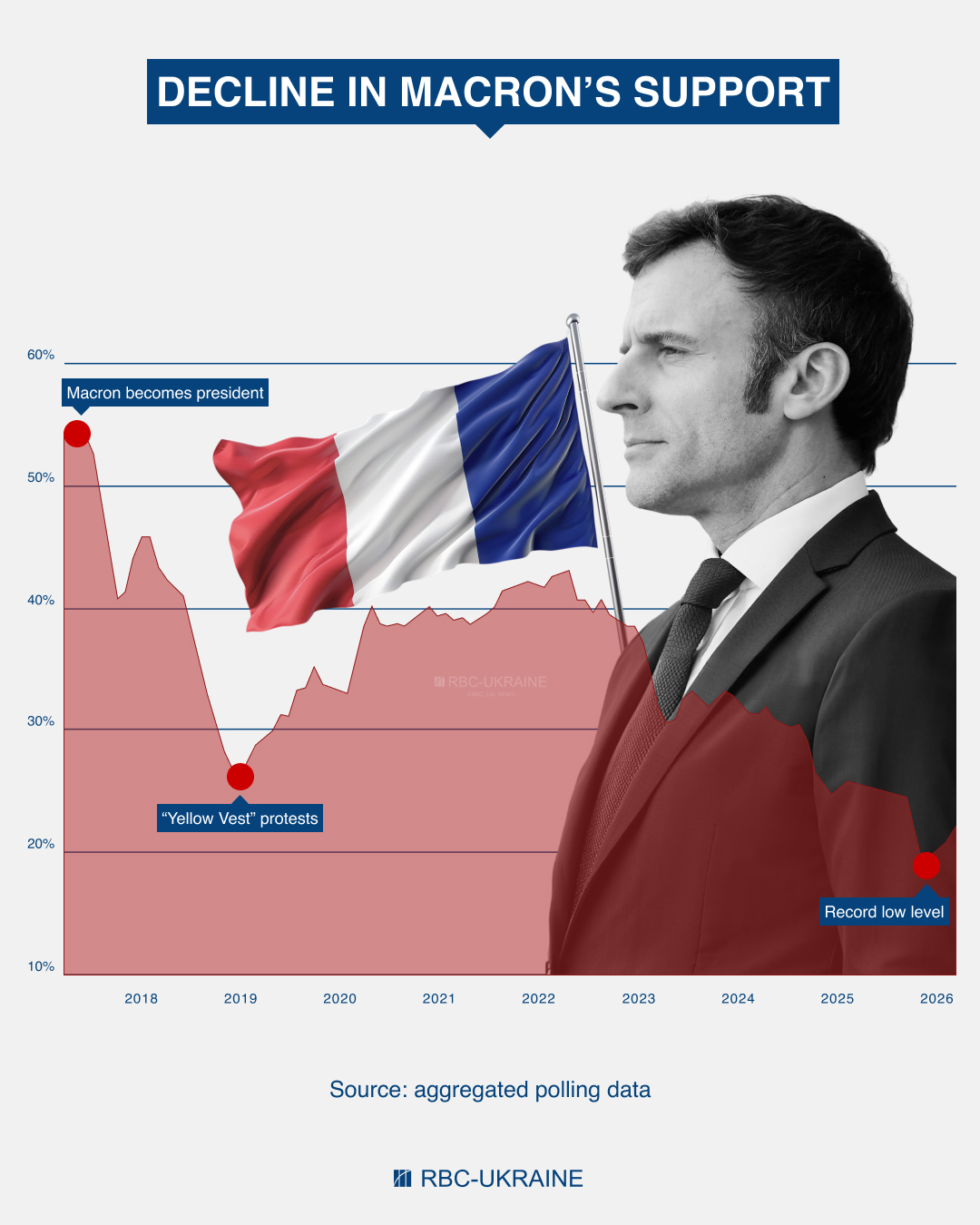 Macron’s presidential ratings (collage: RBC-Ukraine)
Emmanuel Macron promised to “rule like Jupiter,” restoring real power to the office of the President of France. He won public support by promising the French difficult but decisive and effective solutions that would allow the Fifth Republic to be renewed.
All of these promises were made back in 2017. And in 2026, Emmanuel Macron is approaching a decade in the presidency, his approval rating fluctuates around 20%, and France itself is in a years-long period of political turbulence.
Regardless of the results of the next election, in 2027, Macron will have to leave the Élysée Palace. As in many countries, a president can serve only two consecutive terms. The elections are scheduled for April 2027. As this date approaches, the question of the political legacy Macron will leave behind becomes increasingly relevant.
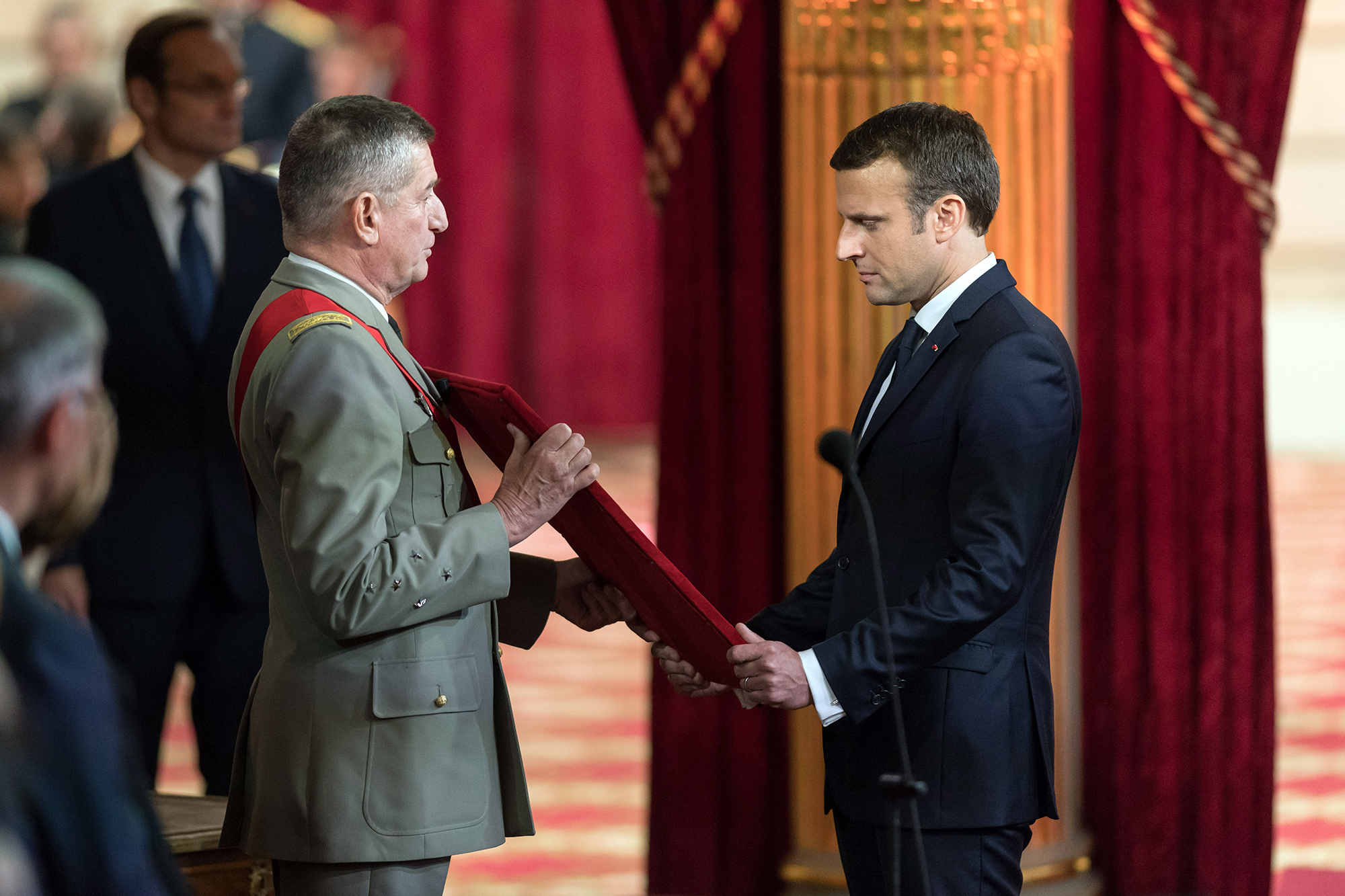 Macron’s inauguration in 2017 (photo: Getty Images)
“The hardest thing after nine years is to preserve what you did well and try to go further, but sometimes you have to correct what you did wrong,” the French president said last week about his legacy. He also assured that after 2027, he will leave politics.
Macronism as an attempt to reboot France
In 2017, Macron looked attractive, especially compared to his predecessors: the very controversial Nicolas Sarkozy (in 2025 sentenced for illegal campaign financing) and the extremely unpopular François Hollande (who ended his presidency with an approval rating of around 7%).
Macronism – as an attempt to overcome the traditional divide between left and right ideologies – became a new phenomenon in French politics at the time. Unlike other candidates representing old political forces, Macron presented himself as an alternative to the old political establishment, leading a completely new movement with himself at its head. This brought political success and made it possible to implement his program.
Of course, not everything worked out perfectly. The success of his socio-economic reforms is, to put it mildly, controversial. However, Macron did implement most of what he had promised.
He managed to go through the Yellow Vests protests, Islamist terrorist attacks, and the COVID-19 pandemic. He was eventually re-elected for a second term. France played a noticeable role in supporting Ukraine after the Russian invasion. Macronism definitely did not become a failure for France, but its best days are already in the past.
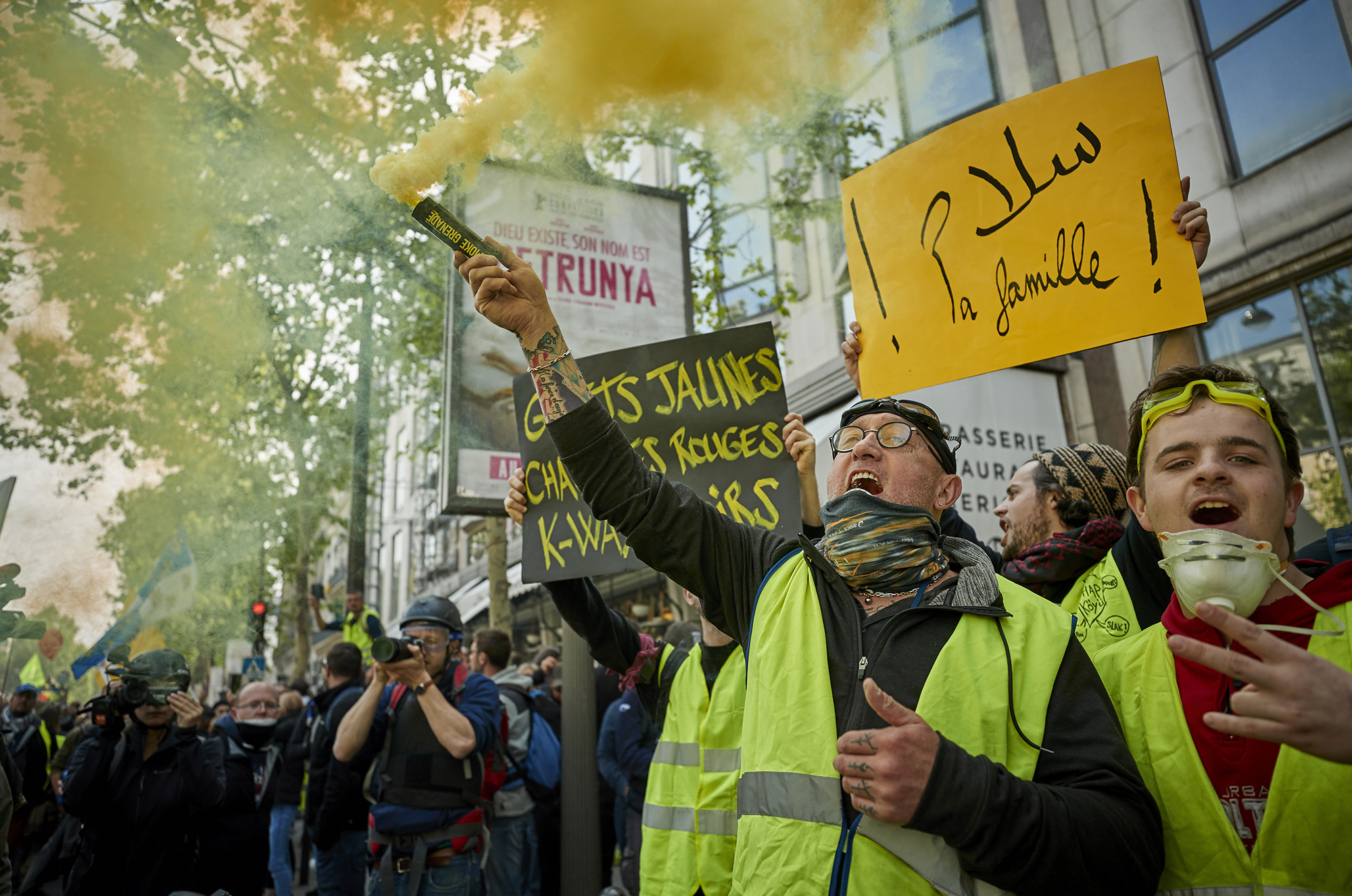 Yellow Vests protests in 2019 (photo: Getty Images)
What legacy will Macron leave?
In recent years, France has been in a state of political agony. After the controversial decision to dissolve parliament (the National Assembly) in the summer of 2024, Macron’s party significantly lost its position. Parliament is split between left and right radicals, between whom the centrist presidential faction must balance. Since fall 2024, this balancing act has cost the country four changes of prime minister.
The current government was formed only at the cost of compromise with the left and the suspension of an unpopular pension reform. This step provoked condemnation even among some presidential supporters, as important reforms were sacrificed for short-term political gains.
Macron is now rather serving out his term. Against this backdrop, hopes for the victory of Macronism remain in the realm of dreams and speculative forecasts.
Among former and current Macron supporters, some people could at least try to take up the seat. Anastasiia Shapochkina, director of the French think tank Eastern Circles and lecturer in geopolitics at Sciences Po Paris, notes in a comment for RBC-Ukraine that there are currently notable figures in the political center who came from Macron’s camp. But none of them can be considered a successor to the current president.
For example, former Prime Minister Édouard Philippe, who has now broken with Macron and already announced his presidential ambitions. There is also the young star of Macronists, Gabriel Attal, or the current Prime Minister, Sébastien Lecornu. All of them have recognition and some potential. Still, Macron remains without a successor.
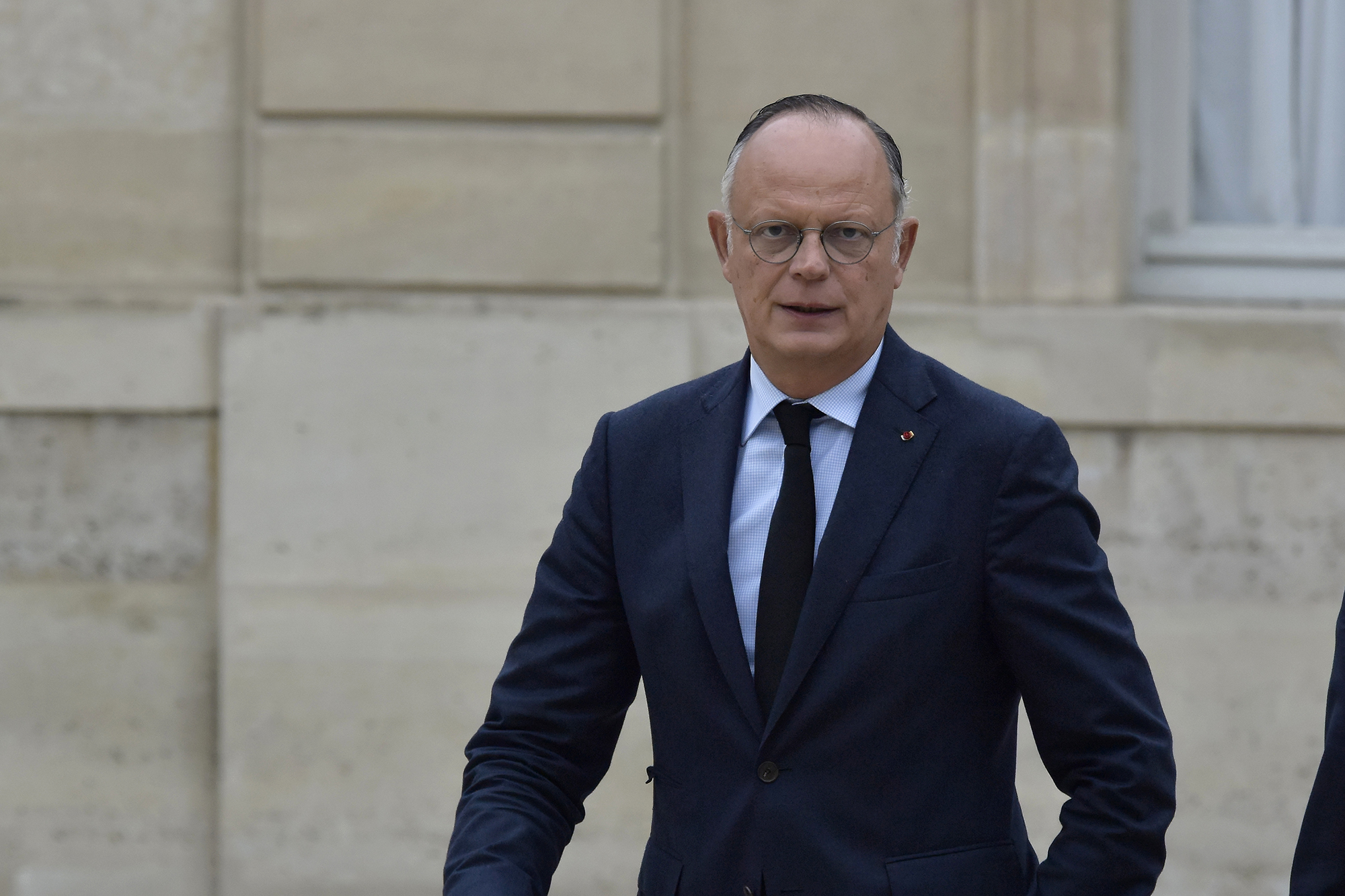 Édouard Philippe (photo: Getty Images)
“The problem is that none of them has sufficient quantitative support and political authority. And if several of them run for president, they will only weaken each other,” Shapochkina told RBC-Ukraine.
The expert notes that Macron’s party is highly personalistic. There is essentially no one who could match the current president in political weight. This is largely the result of Macron’s own actions, as he made efforts to remain the main leader of the entire political center.
There are different opinions about how to get out of this situation. There are assumptions that Macron would like to try to run for president again after a short break. Such ideas were mentioned in Le Monde after Macron met with the youth wing of his party in summer 2025. At that time, he told his supporters that they would be needed “in two years, in five years, in 10 years.” Yet, Macron’s recent statements about leaving politics cast doubt on such a scenario – although they do not completely rule it out.
Macron’s inclination toward “long-term battles,” as his advisers sometimes call it, has long been known. Perhaps he is indeed planning some strategic political combination, for which he is even capable of sacrificing the prospects of his movement in the next election.
Meanwhile, his political opponents are actively preparing for the presidential race. This is especially true for the main favorites, Marine Le Pen’s creation – the far-right party National Rally. Currently, polls give them about 30% support.
Le Pen herself will likely be unable to run due to legal proceedings in recent years. But the party has prepared for this; their leader and future candidate is 30-year-old Jordan Bardella.
While other parties are mired in scandals and internal disputes, the right shows remarkable flexibility and cohesion. The National Rally has distanced itself from its former ties with Putin’s Russia and softened its rhetoric toward Ukraine.
Great efforts have been made to attract voters disappointed in centrists and to gain support among young people. And all of these moves are bearing fruit.
Despite its rather specific past, the party demonstrates strong cohesion and is consistently preparing for future elections. “We are now trying to figure out who Macron’s successor will be, while Bardella is essentially already running a campaign,” Anastasiia Shapochkina explained to RBC-Ukraine.
The expert also noted that even if something goes wrong with the current leader, the right force has a reserve of people they can put forward as candidates. Nationalists have been moving toward the presidency since the 1970s and are clearly determined to finally achieve their goal. “In these elections, there will not be nine far-right candidates, there will be one. The centrists do not have such a level of consolidation,” Shapochkina said.
French citizens are tired of political instability and economic problems. In society, there is a demand for a political force that can put an end to this, even at the cost of possibly abandoning certain democratic norms or procedures.
Polarization of the political field also plays a role – classic center-right and center-left forces have long been in decline. In the 2010s, Macron emerged as an alternative to them. In the 2020s, the alternative to Macron is already the left and right radicals.
There is little chance that moderate forces will reach an agreement despite ideological differences, as happened in Germany, for example. “France is not a culture of coalitions,” emphasized Anastasiia Shapochkina.
Can a miracle happen?
Based on historical experience, one could say that things are not so bad. Losing presidential races is a kind of tradition for French far-right forces.
In 2002, Jean-Marie Le Pen reached the second round of the presidential election, with only a 3% gap from the frontrunner Jacques Chirac. In the second round, 82% of citizens voted for Chirac (essentially against Le Pen). His daughter Marine continued the “tradition,” losing the elections of 2012, 2017, and 2022.
The 2022 election is particularly notable in this sense and may give opponents of the far right hope. In spring 2022, Macron and Le Pen reached the second round. The president’s ratings were not very high, but the prospect of Le Pen’s victory led many voters to choose Macron as the lesser evil. This same strategy is currently partly working in parliament, where Macron occasionally manages to find situational compromises with the left to prevent the state from being completely paralyzed.
Some may be hoping for a repeat of such a turn in the 2027 election. Despite changes in rhetoric, the National Rally remains too toxic for many citizens, especially considering its more radical past.
According to Anastasiia Shapochkina, the hypothetical possibility that French voters will “wake up” and prevent the right from coming to power certainly exists. But this is not something politicians should rely on. “This already saved Macron. You can count on a second round, but you shouldn’t. The voter has changed,” she told RBC-Ukraine.
What to expect for Ukraine and Europe?
France’s role in the world means that not only the French, but also a dozen world capitals are closely watching developments. The unpredictability of France’s political future creates problems for them as well.
Emmanuel Macron is known for his active foreign policy. For the French president, this was a traditional way to offset failures in domestic politics.
After the government crisis in fall 2025, Reuters asked one Macronist what the president’s legacy would be. “What we remember presidents for is how they handled crises. Rearming Europe, Palestinian recognition. Maybe tomorrow there'll be other conquests,” the president’s ally replied.
The approaching end of the term clearly allows the French president to be more outspoken on foreign policy. “We should not underestimate that now there is a unique moment when the President of the United States, the President of Russia, and the President of China are categorically against the Europeans. So this is exactly the moment when we need to wake up,” Macron said last week.
Denys Kolesnyk, president of the MENA Research Center and specialist in geopolitical risks, also notes Macron’s merits in promoting the idea of Europe’s strategic autonomy and increasing the political weight of the French leader in the EU, especially after Angela Merkel left politics.
“Was he able to strengthen France’s position? He managed to set the direction of movement, but if this course is not continued, it will either be rolled back or not implemented,” the expert said in a comment for RBC-Ukraine.
 Emmanuel Macron and Volodymyr Zelenskyy (photo: Getty Images)
The question of geopolitical direction is one of the key ones. French far-right forces may shift the country’s course toward greater isolationism, which would be a blow to NATO and the EU. But Denys Kolesnyk reminds: France has always tried to position itself rather separately from others.
For example, France has been a full member of NATO since its founding in 1949. However, in 1966, under President Charles de Gaulle, the country withdrew from NATO’s integrated military command, justifying this by the desire to preserve French sovereignty. Although relations later improved, France fully returned to NATO structures only in 2009.
Kolesnyk suggests that France’s new policy toward NATO and the EU may look similar. In NATO, a gradual withdrawal from certain structures. In the EU, a return to rather forgotten ideas of a Europe of nations, which would not seek the merger of all European countries into a single entity.
The expert notes that whatever political force comes to power, it will, in any case, be interested in maintaining France’s position in the world. “Any French politician is guided by the country’s interests. And in the country’s interests, there is still leadership and primacy. So we can't say that they will completely go into isolation,” Kolesnyk said.
Regarding Ukraine, the forecast is less optimistic. Despite changes in rhetoric, the National Rally is skeptical about Ukraine’s prospects of joining the EU and NATO. Although, as practice shows, there are enough skeptics in Europe, what matters more is whether the new government will fundamentally block Ukraine’s integration.
“Probably, there will not be the same proactivity as now. On the other hand, France’s policy will become more consistent,” Kolesnyk commented on the prospects of Ukraine–France relations. He noted that a significant part of Macron’s Ukraine policy was declarative (not backed by concrete practical steps). Therefore, even in the case of a cooling of relations, Ukraine will not suffer irreparable losses.
Regardless, questions remain, including France’s participation in the Coalition of the Willing to support potential peace in Ukraine and the presence of a pro-Ukrainian voice at the G7 and the UN Security Council. Adequate forecasting is currently quite difficult, both because of the global situation and internal dynamics in France.
Denys Kolesnyk also mentions the dynamism of the situation. He reminded that in France, despite strong presidential power, the balance of forces in parliament plays an important role.
“A victory of the National Rally candidate in the next election may mobilize their opponents. Or vice versa,” the expert added. If the president represents one political force and parliament is composed of his opponents, France’s foreign policy will not be effectively implemented. It is currently assumed that nationalists could win the election and form a coalition. However, there is still a year before the election, and French politics has already seen unexpected pre-election turns.
***
It is no news that the “old world" is ending, and Macron’s leave is certainly one of the symbols of this process. Over his decade, he became one of the key European leaders, a symbol of the political reality of the 2010s. In a decade, he may be assessed as a historical figure in a completely different way, possibly revealing some non-obvious achievements or failures of his era.
Such an approach may even give a more objective assessment of Macron’s presidency than today. But if current trends continue, in a year Emmanuel Macron will leave behind a France full of social and economic problems, divided by political radicalism.
Prospects for political stabilization remain very uncertain. Macron has no successor. The French are tired and demand a strong hand. One year remains until the election. And a great deal will depend on how political forces conduct themselves this year. For France, for Europe, and for Ukraine.
Quick Q&A
– Will Emmanuel Macron leave politics after his term ends?
Although in 2025 there were assumptions about his possible return to power after a few years, last week, Macron personally assured that after 2027, he plans to leave politics.
– Why is Macronism considered a personalistic project without a successor?
The problem is that Macron made efforts to be the sole leader of the political centrists. There is currently no figure in his party who has the same political weight and authority. Potential candidates such as Édouard Philippe or Gabriel Attal do not have sufficient support and, by running simultaneously, may only weaken each other.
– What are the chances of the far-right National Rally coming to power?
The party of Marine Le Pen currently shows high cohesion and has about 30% support. Unlike centrists, the far right is consolidated around one candidate, who may be the young Jordan Bardella. Although in the past the strategy of voting against Le Pen allowed Macron to win, today the voter has changed, is tired of instability, and demands a strong hand.
– How could a change of power in France affect support for Ukraine?
The forecast is not unequivocally optimistic. The National Rally is skeptical about Ukraine’s membership in the EU and NATO, so Paris’s proactivity may decrease. Experts note that even with a cooling of relations, France’s policy may become more consistent, as a large part of Macron’s current course was declarative.