Invisible trauma of war. Story of Ukrainian soldier who survived dozens of concussions


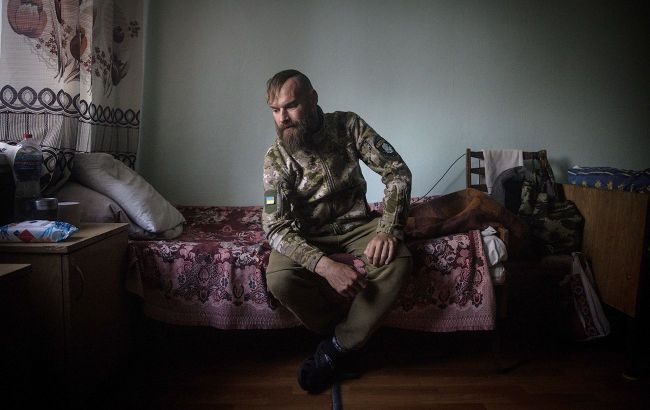 After concussions, soldiers need treatment (photo: Getty Images)
Concussion remains an invisible injury — the one that, unfortunately, soldiers have become accustomed to massively ignoring or considering something negligible.
Read the story of Ukrainian soldier Orest about the initially unnoticed but cumulative effect of blast waves, memory lapses, and why following the advice to “just don’t get angry” can cause you to miss a serious problem.
Key points
- A concussion is a full-fledged neurological injury. It disrupts brain function, causing chronic pain, memory loss, and PTSD, even if there are no external injuries.
- Micro-concussions accumulate over the years. Constant shooting and blast waves exhaust the nervous system unnoticeably, creating a delayed trauma effect.
- Soldiers often downplay their condition. Out of fear of appearing “weak,” fighters ignore symptoms, which leads to irreversible changes in the psyche.
- The consequences interfere even in the rear. Irritability and fear of crowds are physiological reactions of the brain, which continues to search for threats in a peaceful city.
- Help from specialists with combat experience is key. Advice from civilian psychologists often does not work because soldiers often trust only those who understand the specifics of war.
- Returning to the front as a way of adaptation. Due to difficulties with socialization, defenders often strive to return to their comrades, where conditions are more understandable than civilian life.
Why the consequences of an explosion don't come immediately
At the moment of the explosion, there is no awareness of the consequences. In the moment of the explosion, only one thing appears — the desire to survive by protecting your body from death. First, ringing in the ears, then falling to the ground, and later a momentary disorientation.
When you get a concussion, at first, you do not realize it. You are busy with something else, more important — survival. Awareness of the concussion comes later, in a moment of calm, when the body is already safe, and the brain moves away from the surge of adrenaline.
The first symptoms are a severe headache. Pills do not help. Nor does the desire to understand what is happening. Sleep intensifies the pain. The need to see a doctor is postponed by thoughts like “this isn’t an injury.”
Over time, consequences come — imperceptibly and quietly. Having been a step away from death, the head begins to react differently to the slam of a closing door, the roar of a motorcycle, or even a car passing far away. The brain automatically reacts to all possible threats, over time exhausting all of your rest time, turning it into a constant check for a repeat strike. Symptoms of post-traumatic stress disorder (PTSD) begin.
Books write that with concussions, one must come to terms with and get used to them. Over time, that does happen. Only until the next one. And then again, around in a circle. Exhaustion of the nervous system brings fatigue and burnout, a more emotional perception of reality. And you never even documented your injury anywhere. It seemed to you that it was “nothing.”
Over time, you fall out of the social picture of normal and become someone people look at more closely, from whom they do not know what to expect. And you yourself do not know either. Because memories of closeness to death surface unexpectedly and in fragments.
Read also: PTSD isn't anger: What it really looks like and how to help
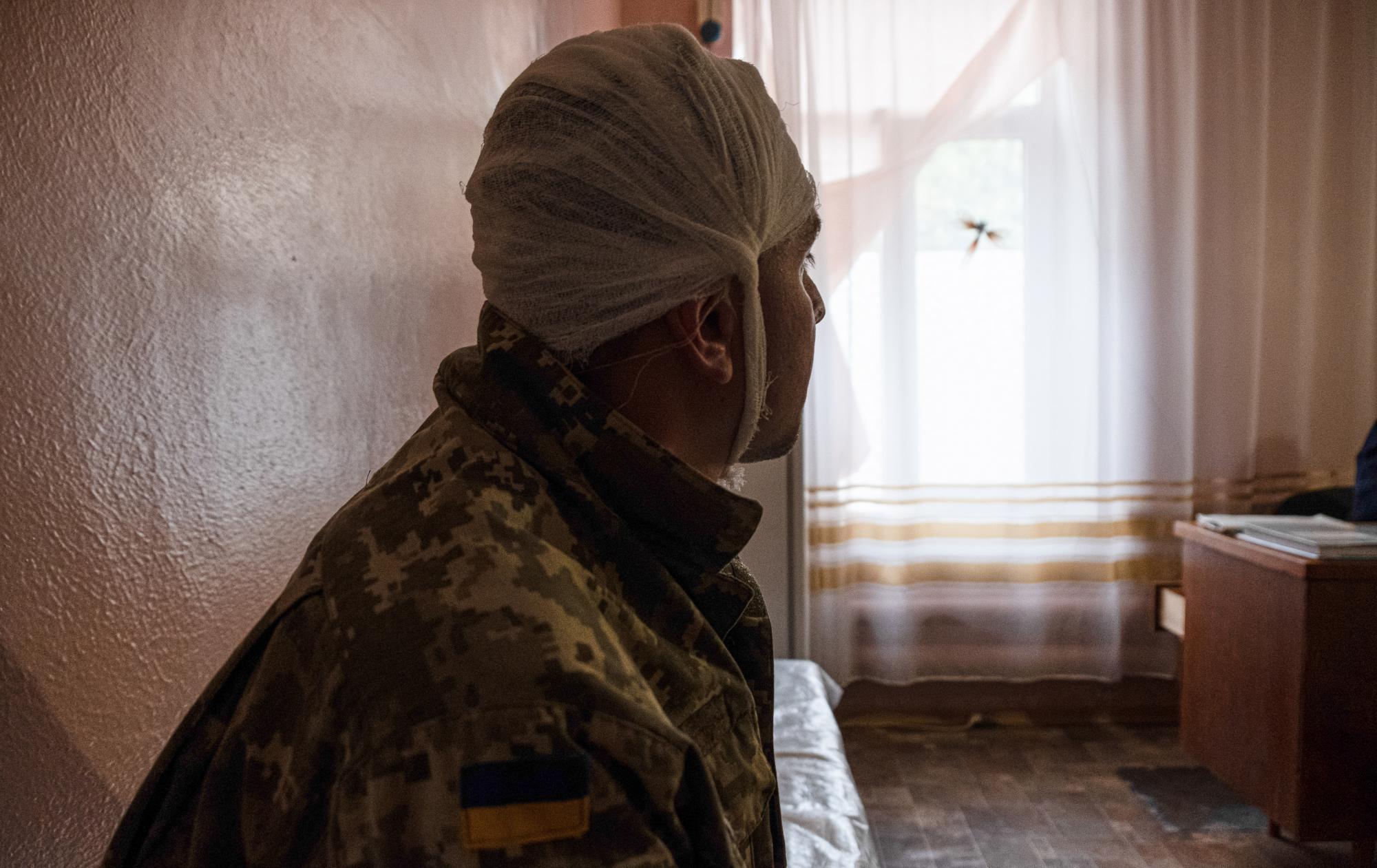 Soldiers experience concussions many times, serious consequences often come with time (photo: Getty Images)
'Not an injury, but part of service.' Micro-concussions destroy fighters’ health
Talking about concussions with soldiers is not easy. For most of them, acknowledging this injury equals an imperfect image of a fighter who has gone through fire and water. Even more frankly, among comrades, the idea of a worthy soldier is linked with his wounds or even death, even if the one who suffered less went through many more battles.
Even today, this story is told anonymously so that comrades would not figure out who it is, but perhaps would see themselves in this story as well. This is the story of Orest.
His combat path began in 2017, when the Anti-Terrorist Operation was ongoing in eastern Ukraine. From 2018 — the Joint Forces Operation (JFO), and from 2022 — Russia’s full-scale invasion of Ukraine. Battles in Rubizhne, Sievierodonetsk, Lysychansk; battles in Bakhmut, Khromove, Makiivka, and Myrnohrad. This man knows what war is and lives with its consequences, for years not connecting his condition with trauma.
In 2019, during one rotation, he fired more than a hundred RPG shots, Orest recalls.
“Then the first symptoms began: ringing in the ears, headaches, exhaustion. But we perceived it as a normal part of service. No one explained that these were already the consequences of injury,” he shares.
Orest explains: there are also so-called micro-concussions — the result of constant exposure to blast waves, shooting, the operation of heavy weapons. “People think that a concussion is only when something explodes near you. But there are also micro-concussions. They accumulate over the years — from constant shooting, from RPGs, from grenade launchers, from artillery.”
He speaks calmly, without pathos. As if he were describing an ordinary part of service. And that is the main problem. The first symptoms of PTSD did not look like something alarming. There was no sharp pain, no obvious danger.
“The first strange moment I remember was with the keys. I put them in the refrigerator, turned away, started putting on my shoes, and then searched for those keys around the apartment for about 15 minutes. When I saw them, only then did I remember that I myself had put them there. It had never happened to me before,” he recalls.
Read also: No second chance: Story of officer 'Lucky' who escaped encirclement in Eastern Ukraine
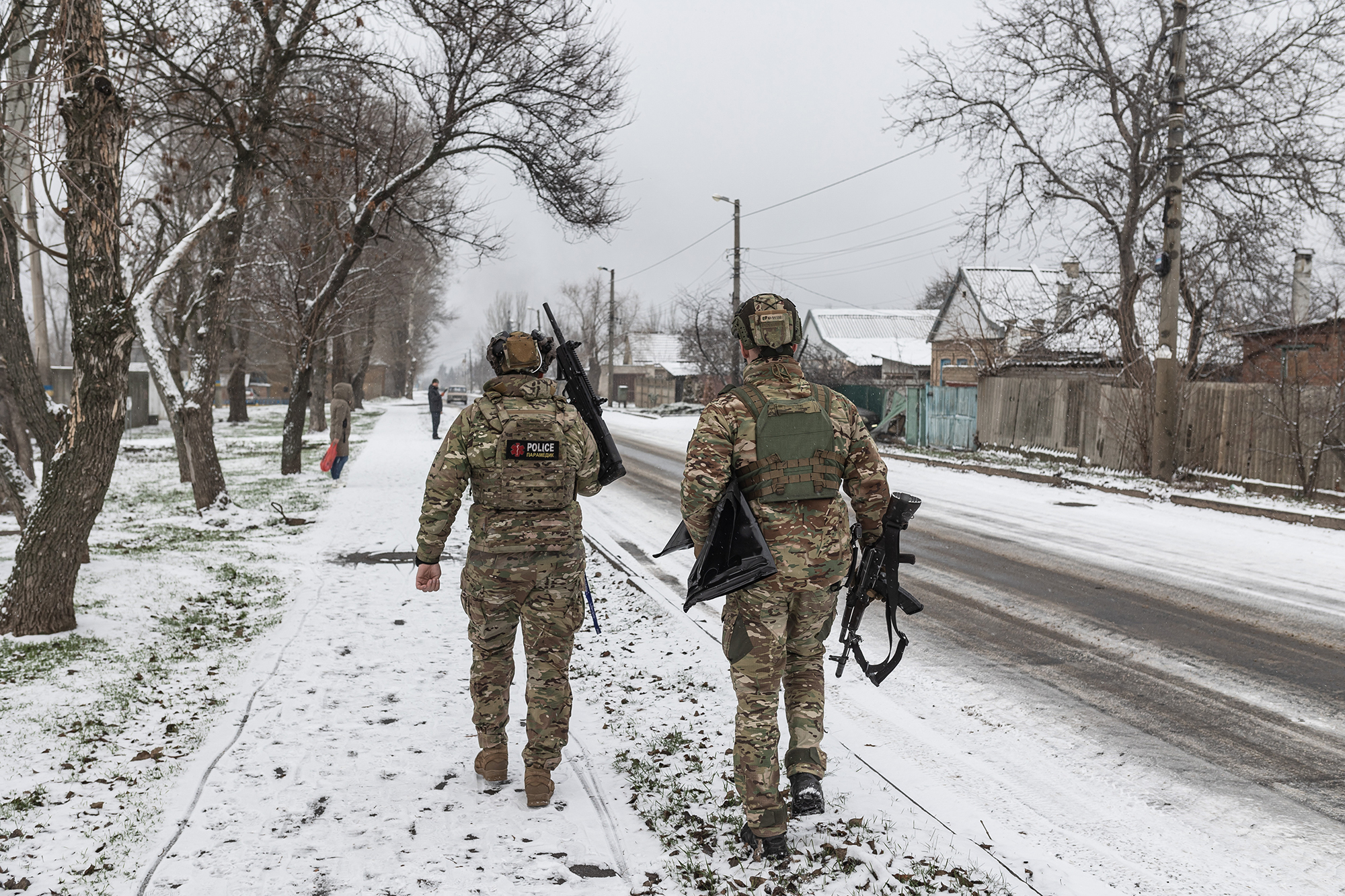 Orest went into service back in 2017. He had many concussions. During just one rotation, he fired more than a hundred RPG shots, which also had its consequences (photo: Getty Images)
Such episodes began to recur. Forgetfulness. Absent-mindedness. A feeling that thoughts are slowing down. “Back then, there wasn’t even a thought of ‘I’m tired’ — there was just ignoring it. We get micro-concussions for years — and don’t notice it.” But over time, not only did the physical condition change, but also the sense of self.
Orest talks about periods after rotations when returning to civilian life became difficult. “After combat, everything started to irritate me. People, noise, stores, crowds. You go into a supermarket — you see someone laughing, and it makes you angry. Even though you understand that this is not normal.”
He recalls that there were periods when he didn’t want to see anyone, even those close to him. “There were weeks when I just wanted to close myself off from everyone. Do not talk to anyone. Be alone. Not because you don’t love people, but because you simply can’t withstand contact.”
The hardest thing, he says, was not aggression and not anger. The hardest thing was constant fatigue. “It doesn’t go away. You’re like you’re always at zero (at the very frontline - ed.). You become irritable, grumble over nothing. And you don’t like yourself like that, but you can’t do anything about it.”
What happens to the brain after a concussion
What Orest describes has a clear scientific explanation, according to a neuropsychologist and psychotherapist at the Unbroken Center, Evelia Bilska. She explains that most people do not understand that their symptoms have a physiological basis.
“Chronic headaches, sleep disturbances, constant fatigue, irritability, emotional detachment, problems with memory, concentration, anxiety — people often do not associate all this with concussion. They think ‘something is wrong with me.’ But in reality, it’s the brain working differently after injury.”
The key problem is devaluation. “I constantly hear phrases like ‘it will pass on its own,’ ‘I’m not crazy,’ ‘others have it worse.’ And almost always, ignoring symptoms leads to chronicity. The earlier a person seeks help, the greater the chances of recovery.”
During a blast wave, micro-damage occurs, neural interaction is disrupted, and neuroinflammation forms. The brain works in overload mode. A person physically cannot function as before.
Orest did not seek help right away. And not on his own initiative. “I didn’t go to the doctors myself. My comrades basically sent me there. For years, they said ‘You’re no longer coping.”
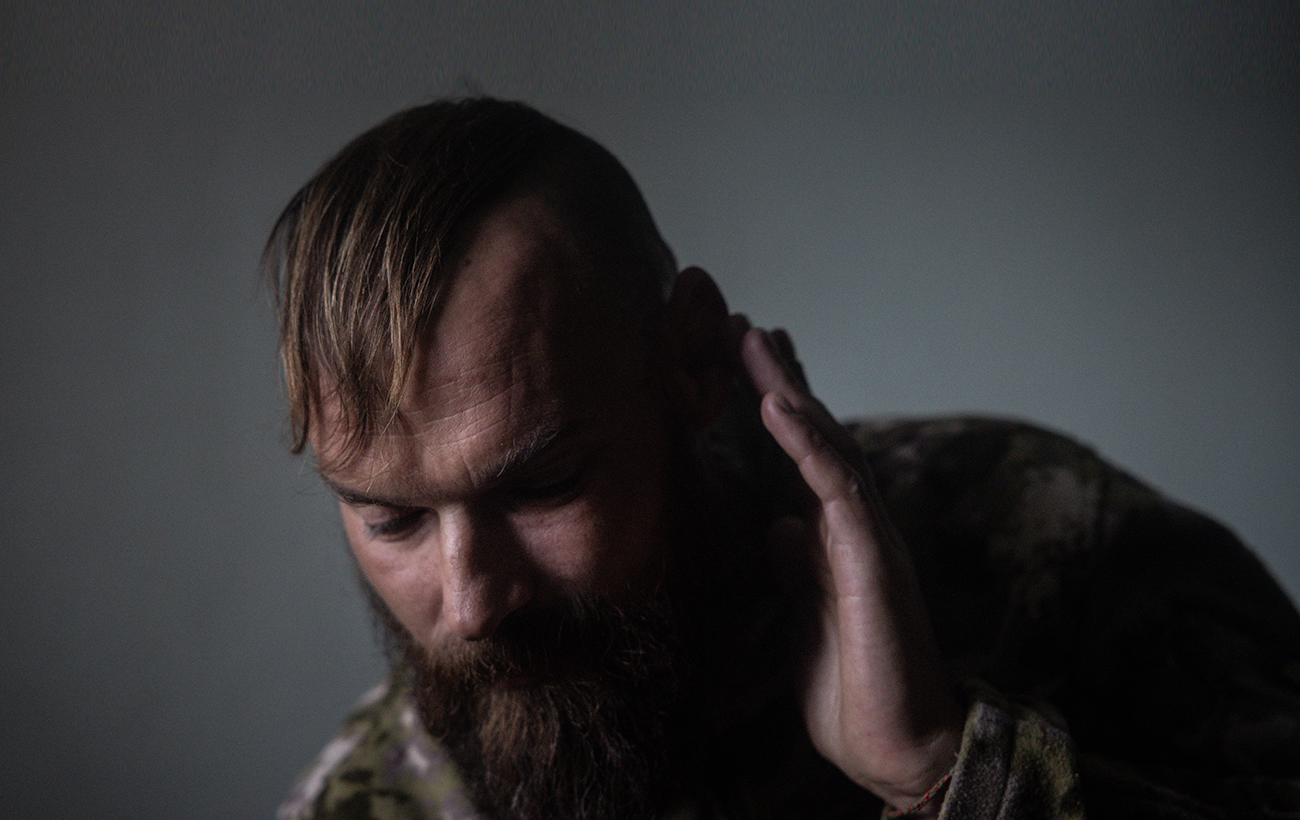 After a concussion, it is extremely important to seek help in time (photo: Getty Images)
He admits that only during treatment did awareness come of the condition he was in. “I was told directly: I will carry some of the consequences with me for the rest of my life. Because I sought help late.”
Orest’s main message is simple and harsh: a concussion is also a wound. It can break you even more than physical injuries. Because its consequences break you from the inside: your memory, character, relationships, life.
Why is so little still voiced this
Evelia Bilska explains that the reason is not only in the system, but also in culture. “We have a culture of enduring. There is a fear of looking weak. Especially among the military. There is confusion between psychotherapy and psychiatry. There is a lack of accessible information. So concussion is still not perceived as a full-fledged neurotrauma. Although in terms of consequences, it can be no less destructive than visible injuries.”
There is also the question of the expediency of unit military psychologists. They are listed in the brigade on paper, but rarely become a trusted person for a fighter. It is even more difficult with a civilian psychologist, who may be a wonderful professional, but far from the soldier’s experience.
During treatment, Orest heard such advice from one of the civilian psychologists: at the moment of aggression, close your eyes and tell yourself, “I’m not angry, I’m not angry.” Or “don’t take the situation around you so seriously.”
“It didn’t help. I listened to them, thinking that this was the right thing, but it didn’t help me. It made me even angrier. Then, when I found a psychologist with military experience, who also served, I felt relieved. Because we spoke the same language,” the man shared.
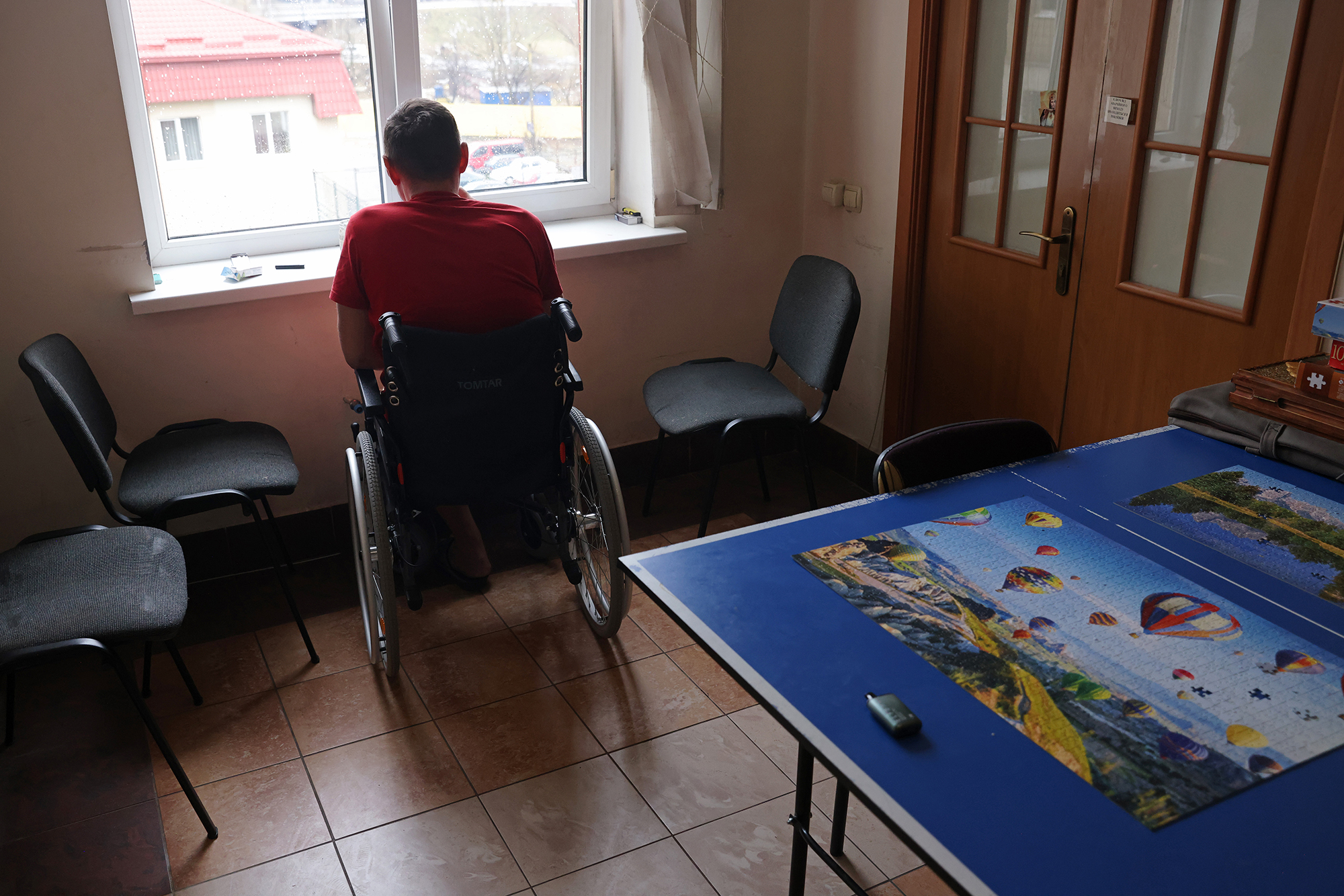 The importance of psychological help for a fighter is another aspect that is often not talked about (photo: Getty Images)
Underestimating the professionalism of a psychologist for a soldier is an important issue that is kept silent. The experience of war will always be a nerve-wracking thread that touches the mental state of someone who has seen combat with their own eyes. This is not general psychology, but a separate specialist who has gone through this experience and knows how to live with it. The military is already skeptical about turning to mental health specialists, and after such experiences, even more so.
Every person strives to live, and as strange as it may sound, returning to the combat zone and the company of their comrades is, for a soldier, precisely living. Repeated explosions, flashes, moments of crisis — this becomes familiar to a fighter, unlike the social rules and norms that one has to fit into in civilization. Psychologists could become those who pave soldiers' path from war to the rear.
After so many years of service and moral exhaustion in battles, Orest has today returned to the front again. “Here I feel alive, important, needed. When I’m at home, I rarely go out for a walk. And when I do go out, I have to answer people’s questions: ‘When will this end?’ ‘What should we prepare for?’.. Or listen to funeral bells, from which I want to run somewhere far away.”
He wants to build a family and seeks peace, but for now, he does not know how to find a balance between what has been lived through and living.
Read also: PTSD vs severe stress: Psychologists reveal signs people shouldn't ignore