No second chance: Story of officer 'Lucky' who escaped encirclement in Eastern Ukraine

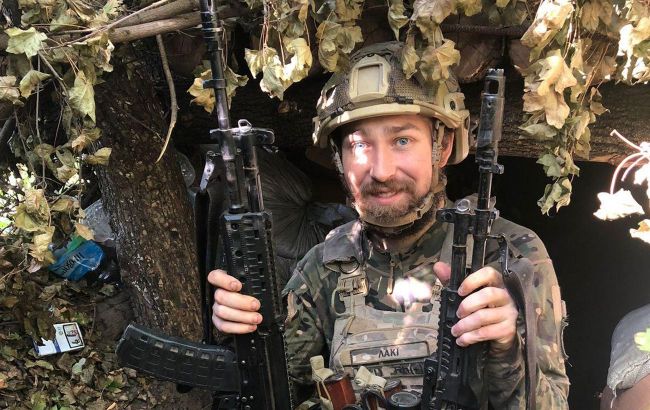 'Lucky', an officer of the Pomsta Brigade border detachment (photo provided by the source)
The battle on the border between the Luhansk and Donetsk regions became his first real test — a place where border guards of the Luhansk 3rd Border Detachment of the Offensive Guard’s Pomsta (Revenge) Brigade fought as infantry, holding the line against superior enemy forces. Being "somewhere in the rear" was not an option for him. He either led from the front or had no right to command. Read more about the story of serviceman "Lucky" in the full feature.
RBC-Ukraine and the Ministry of Internal Affairs of Ukraine present their joint project "Tvortsi istorii. Shchodennyk" (Creators of History. Diary), which introduces readers to defenders through first-person narratives — their thoughts, memories, and personal experience.
'Ukrainian-style Bermuda Triangle'
Luhansk region. Autumn 2024. The Serebryanske forestry, part of Luhansk region’s nature reserve fund, is a Ukrainian-style Bermuda Triangle — a place where entire units vanished. A place where positions were, quite literally, "devoured" by enemy artillery fire, drones, and incendiary munitions. A forested area where even now, only a few manage to survive.
It was here that an officer of the State Border Guard Service of Ukraine — a unit within the Ministry of Internal Affairs — with the call sign "Lucky" made decisions on which not only the mission depended, but also the lives of his men.
"When you enter the positions from the rear, it feels like explosions are everywhere. You don’t understand where the enemy is and where your own are. You just do your job," "Lucky" says calmly.
He was reassigned to the Luhansk 3rd Border Detachment as an officer. Formally, a commander. In reality, a man who faced his first serious battle just two days later.
Constant pressure and massive assaults
The assault began suddenly and violently. In the first minutes, enemy snipers were at work. One soldier was hit in the head, a serious "300" (wounded or injured - ed.). He was saved. Another, who took his place, was also wounded — his helmet absorbed the blow.
"There were only two of us left. Honestly, I was scared. I crawled, thinking: this is probably it. It’s all going to end very quickly," he recalls.
But the border guards did not retreat. The position was reinforced. "Lucky" stayed on the line and continued the defense.
In the Serebryanske forestry, the enemy did not act in small groups. The assaults were massive — 14 men at a time against different positions. Against them were just four border guards.

Serebryanske forestry (photo: Getty Images)
"Four against fourteen won’t hold — but when artillery, AGS (Automatic grenade launcher), and drones work together, the assault breaks," the officer recalls.
The enemy’s tactics changed quickly. If they couldn’t take a position in one go, they began methodically "smoking out" defenders: artillery, drones dropping munitions, incendiary devices, and gas. Bunkers collapsed, cover disappeared.
"There was a moment when a bunker just fell in. We had half an hour to get out and patch the holes, or they would have just torn us apart," the border guard shares.
One of the toughest fights happened when the enemy got behind their lines. Two groups were supposed to enter from different sides and clear the trenches. Contact with one group was lost.
"At that point, I didn’t even realize they might already be dead. I just couldn’t wait. I went myself," the soldier continues.
In that battle, "Lucky" was alone. He fired with a full load of ammunition, under constant drone surveillance. He moved instinctively — knowing where to enter and where to exit.
"If not me, then they’d get me. There was no other way," "Lucky" reflects.
He got out, brought reinforcements, and returned to the position with six men. Together, they repelled the attack — but saw the worst: two comrades had died.
There were also evacuations under mortar fire — the wounded, blood, screams. Work without pause.
"Everything had to be done as fast as possible. Medics, cover — everything worked. But it’s hard. Very hard," the border guard recounts.
After another shelling, "Lucky" suffered his third concussion. He was buried under the earth in a bunker.
"My ears were ringing, my head was confused. I don’t even know how I got out. But there was no evacuation — I just kept serving."
Another war
Later – a different direction. Kharkiv region. Open terrain. Fields, mined approaches, "petals" (high explosive anti-personnel land mine - ed.), constant drones.
"That was already another war. There, in the forest, you could hide, here - you just go by luck," adds the officer.
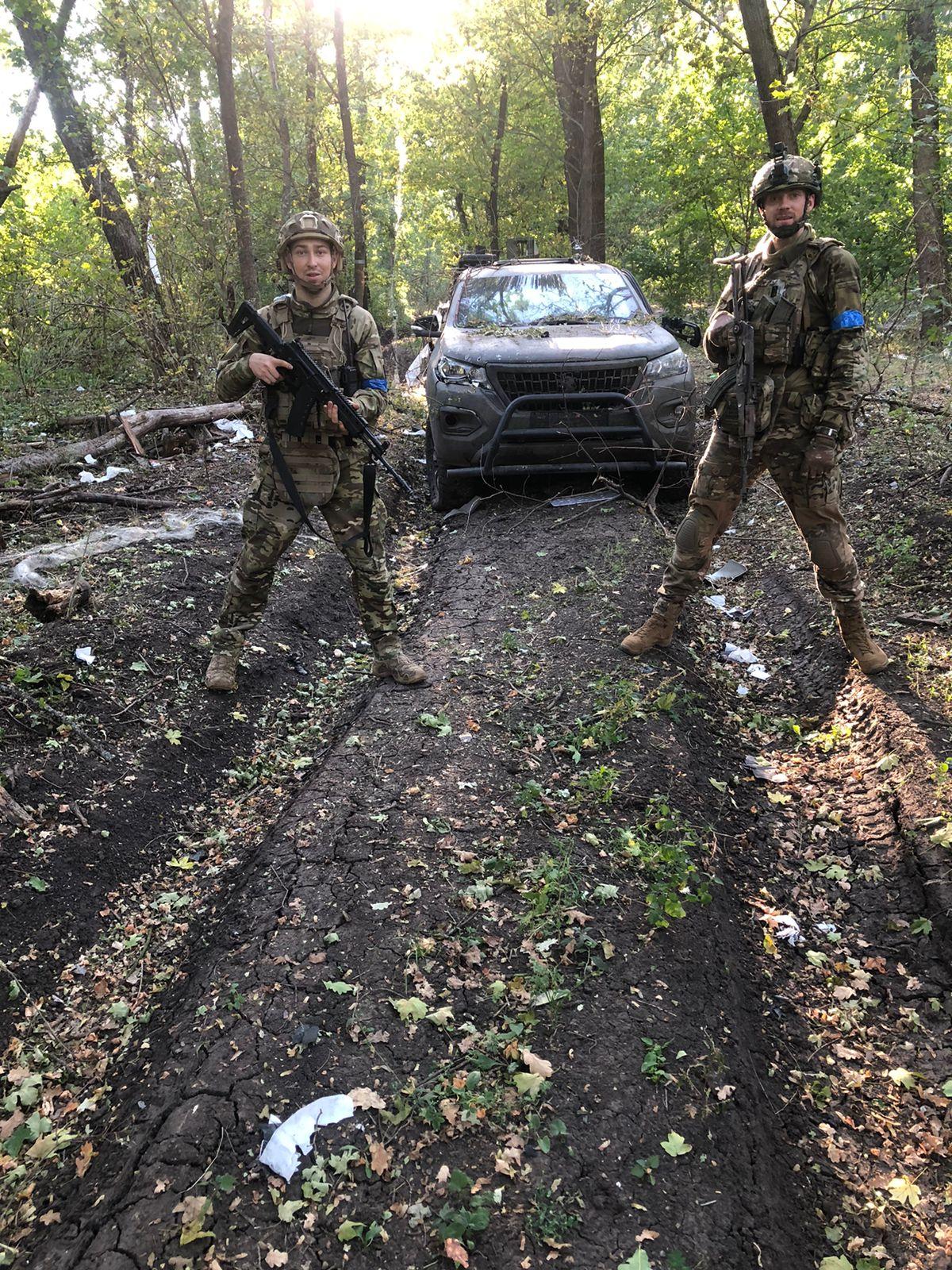
"Lucky" – an officer who didn’t "command from the rear," but personally went to the most dangerous spots (photo: provided by the source)
Officer’s audacity
During one of the combat missions, the unit discovered an enemy dugout from which the opponent was adjusting fire and targeting Ukrainian positions. Waiting for reinforcements would have meant losing the initiative. "Lucky" acted on his own.
He was not a "radio commander." He led the people himself, showed positions, and determined sectors of fire.
"I can explain, teach. But if I don’t go myself, I won’t be confident in the quality of the task’s execution," the commander explains.
One of the key moments – entering the enemy dugout. Without a bulletproof vest. With a rifle and a grenade launcher:
"I saw three of them. I said immediately, 'Any movement – I engage.' They surrendered."
The captives provided valuable information – routes, assault group composition, and plans. The data was immediately sent to headquarters. This allowed for a better understanding of the enemy’s tactics and preparation for subsequent battles.
When one against six
And the Serebryanske forestry doesn’t forgive even the smallest mistakes. In certain areas, the ratio of forces was sometimes one to six. The enemy tried to close the circle, cut off retreat routes, forcing the units either to surrender or to die.
"There was a feeling that they just wanted to erase us from the map. Not defeat – but destroy," recalls the officer.
The situation worsened with every hour. Ammunition – limited. Communication – unstable. Enemy – too close.
.jpg)
The officer, together with other defenders, managed to escape via the river, which the occupying forces did not expect at all (photo: provided by the source)
Operation River
The decision to move out was made quickly. Practically – right under the enemy’s nose. The only chance was to act unexpectedly. The route ran along the river. In the water. In the cold. In complete silence.
"We understood: if we were spotted, there would be no second chance," says "Lucky."
They moved in small groups, in sync. No lights. No extra sounds. The enemy was close, but didn’t expect such a maneuver. That’s what saved the unit.
Operation River became a way out of complete encirclement. Without panic. Without losses. With the personnel intact.
Only forward and not a step back
"Lucky" is not about random luck or chance. It’s about preparation, experience, and responsibility for people. About how the border guards of the Ministry of Internal Affairs fight, where the line between life and death is only a few steps away.
This is about an officer of the State Border Guard Service of Ukraine, who, under the harshest conditions, stayed in contact, went in first, and held the position to the last. Even when it seemed that the chances of success were zero.