Zelenskyy's ex-top aide Yermak under suspicion: Reactions from Presidential office, government and the West


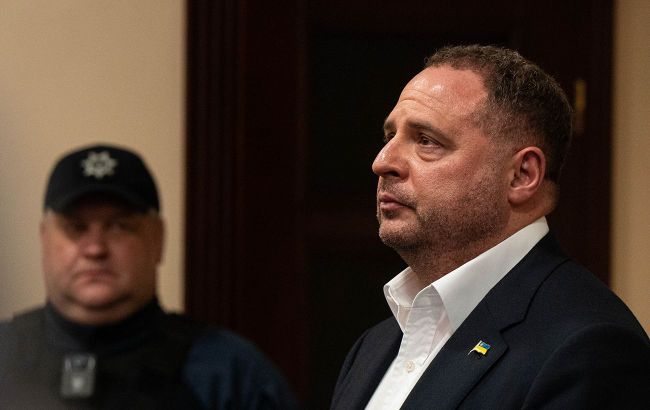 Photo: Andriy Yermak before the start of the court hearing (Getty Images)
The formal charges against Andriy Yermak have become the week’s biggest political story. The unexpected move by the National Anti-Corruption Bureau of Ukraine (NABU) in the money-laundering case raises questions not only about stability in the country, but also about how Western partners will react to the corruption scandal surrounding the former head of the Presidential Office.
RBC-Ukraine explains what consequences for Ukraine in general and for President Volodymyr Zelenskyy in particular are being discussed in Ukrainian political circles and in the West.
Key points:
- Blow to the top leadership: Former Presidential Office head Andriy Yermak has been formally charged by NABU, making the case the central topic of Ukraine's political agenda.
- Reaction from the Presidential Office: Officials are trying to avoid commenting on the situation in order not to fuel speculation, and are apparently hoping to simply wait out the scandal.
- International resonance: Western diplomats see the case as a sign that democracy is functioning, but they also fear internal destabilization during a critical stage of the war.
- Political theories: Politicians are discussing the possibility that the charges against Yermak coincidentally emerged at the same time as revelations from Yulia Mendel, and that this could be part of external pressure on Ukraine aimed at forcing concessions in negotiations.
The new phase of the so-called Mindichgate scandal, widely discussed in the media for several weeks, has now entered a completely new stage. On the evening of May 11, charges were brought against the man who, until recently, was considered the second most powerful figure in the country — former Presidential Office head Andriy Yermak. A court hearing on preventive measures against him is currently underway.
NABU has so far released only limited new details, but the charges against Yermak have clearly become the number one political story in Ukraine, rivaled perhaps only by Yulia Mendel’s revelations.
RBC-Ukraine spoke with several Western diplomats and Ukrainian politicians about how they see the consequences of the scandal. Nearly all sources agreed to speak anonymously. They all shared one prediction: the current chapter of Mindichgate will definitely not be the last.
Coincidence or not?
"I was among those who believed charges against Yermak were impossible in principle. Anything could happen, except formal charges. I was wrong," one lawmaker from the Servant of the People party said.
According to him, further developments will depend on what emerges during the court hearing on preventive measures for Yermak. He said it would then become clear whether the matter would remain limited to personal legal troubles for the former Presidential Office chief or whether the case could go further and reach higher-ranking officials.
The source described the reaction from the Office of the President as politically correct.
"You say one wrong word and immediately create grounds for further speculation," he said.
Indeed, officials in the Presidential Office are reluctant to discuss Yermak’s current legal troubles and speak only in broad terms.
"This is clearly going to be a long and unpleasant legal process, but the key thing is that it is resolved through legal procedures and fairly. Obviously, Russians and supporters of a peace deal at Ukraine’s expense will try to exploit this — they always exploit things like this. But this is a legal matter. What matters is that Ukraine, unlike Russia, actually has such a legal framework," a source in the Office told RBC-Ukraine.
Overall, the possible consequences of the latest phase of the scandal can be viewed from two angles. The first involves purely political problems for the current government and President Volodymyr Zelenskyy personally.
So far, he has not appeared as a direct figure in the case, although materials leaked to the media contain many hints pointing to the possible involvement of the country’s top leadership. This is what government opponents and anti-corruption activists have been emphasizing for months.
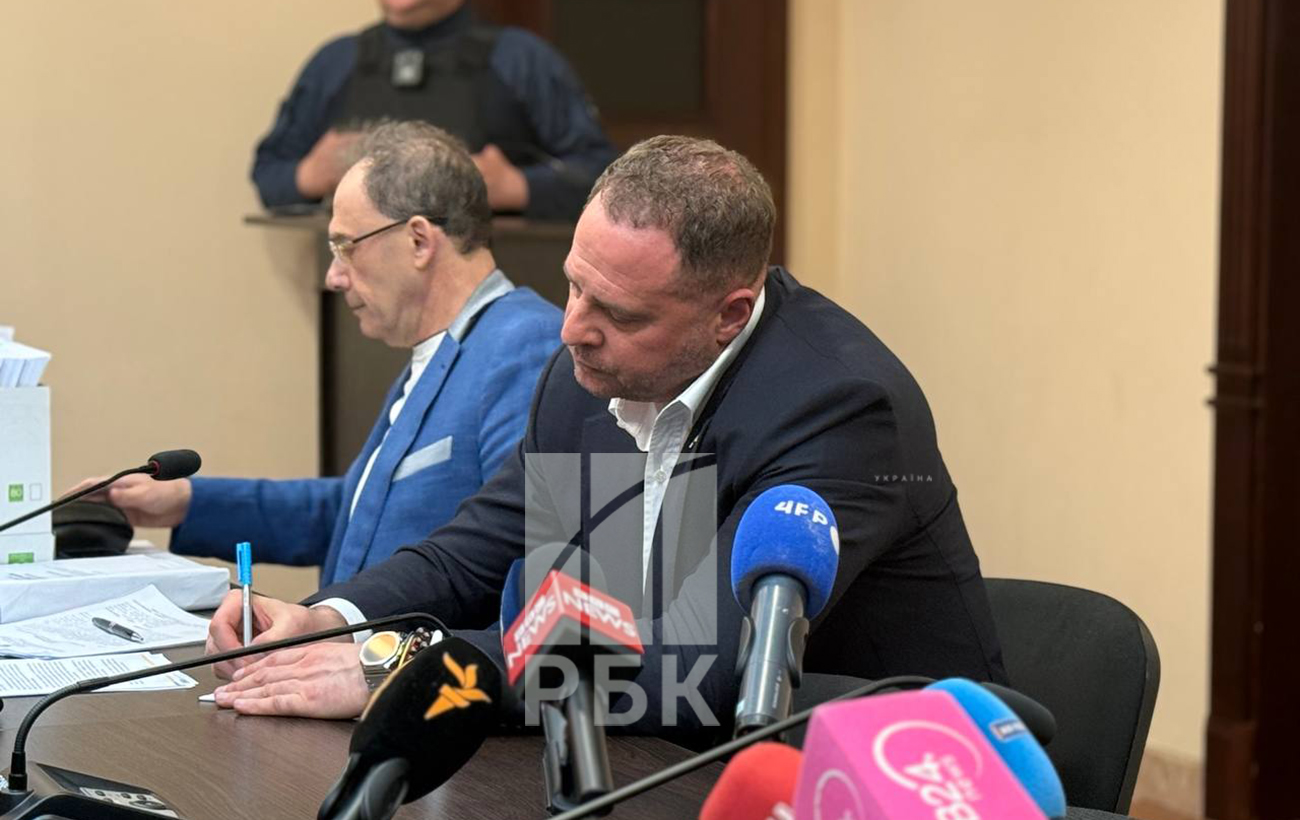
Photo: Andriy Yermak in court (Tetiana Demukh, RBC-Ukraine)
In response, the authorities chose a familiar tactic often used in similar domestic political scandals — to wait out and avoid drawing additional attention to the case through actions or comments. The strategy has proven effective before: despite the enormous public attention surrounding previous chapters of Mindichgate, they ultimately caused no serious reputational damage to President Volodymyr Zelenskyy personally.
The second aspect concerns how the charges against Zelenskyy’s former aide and participant in numerous international negotiations could affect Ukraine’s image and standing in the West.
"Did yesterday’s events damage Ukraine’s image? No. On the contrary, we are demonstrating that difficult issues are being investigated and addressed, and that is a good thing. What matters here is that the process unfolds logically. A name appears, evidence is found, charges are filed, and preventive measures are chosen. And nobody wants to see a repeat of the story involving Mindich and Zuckerman, who simply crossed the border," Yaroslav Yurchyshyn, a lawmaker from the Holos party and former executive director of Transparency International Ukraine, told RBC-Ukraine.
In his view, much now depends on the speed of the investigation. If the case is clearly dragged out, Western partners may begin questioning how sincere Ukraine really is in its fight against corruption.
"The overwhelming majority expected this to happen sooner or later. People were practically placing bets on when it would happen. In reality, the biggest shock came when the first Mindichgate tapes appeared. Now people have gotten used to it," Yurchyshyn added.
Some of the outlet’s sources, both among lawmakers and diplomats, noted that the charges against Yermak coincided almost exactly with Yulia Mendel’s revelations.
"NABU is doing its job. Let it work, just without turning everything into a show. Together with Mendel’s interview, this looks like an attempt to force peace," a source in the Servant of the People party said.
Another member of the ruling faction also told RBC-Ukraine that he does not believe the timing was accidental. He pointed out that the beginning of Mindichgate also coincided with active attempts by Washington to pressure Ukraine into concessions during peace negotiations.
"The Americans want to show some kind of victories and achievements before the elections. And their window of opportunity for that closes in about a month. When this story involving the tapes and the discrediting of people close to the President first erupted in November last year, those 28 points appeared. It’s hard to believe such coincidences are accidental," the lawmaker said.
He suggested that NABU and the Specialized Anti-Corruption Prosecutor's Office (SAP) may possess even more sensitive materials that could potentially concern President Volodymyr Zelenskyy personally, and predicted that some of them could be made public in the coming weeks. At the same time, the heads of NABU and SAP currently insist that the President is not part of the ongoing pre-trial investigation.
Pros and cons
Some Western diplomats interviewed by RBC-Ukraine pointed to a fragment from the wiretapped conversations released by NABU, in which participants in the scheme discussed the need to move forward with the construction of houses for the Dynasty cooperative while Russian troops were still stationed near Kyiv.
Like several sources in the Ukrainian Parliament, Verkhovna Rada, they interpreted this as a sign of the Ukrainian elite's confidence in Ukraine's victory over Russia — confidence that even deserves a certain degree of respect, though not without irony.
"I think this is a convincing signal that Ukraine is a functioning democracy and that the independent institutions tasked with fighting corruption are clearly doing their job under extremely difficult wartime conditions. The fact that even the most influential people in the country are not immune from investigations and accusations is clear proof of that," one European diplomat told RBC-Ukraine.
At the same time, he expressed concern that the current phase of the scandal could lead to political instability inside Ukraine, at a particularly critical moment.
"I'm afraid this could lead to internal destabilization at a time when Ukraine is successfully inflicting increasing damage on the Russian aggressors — for example, through the deep-strike campaign — and when we may be approaching a turning point in the war," the diplomat said.
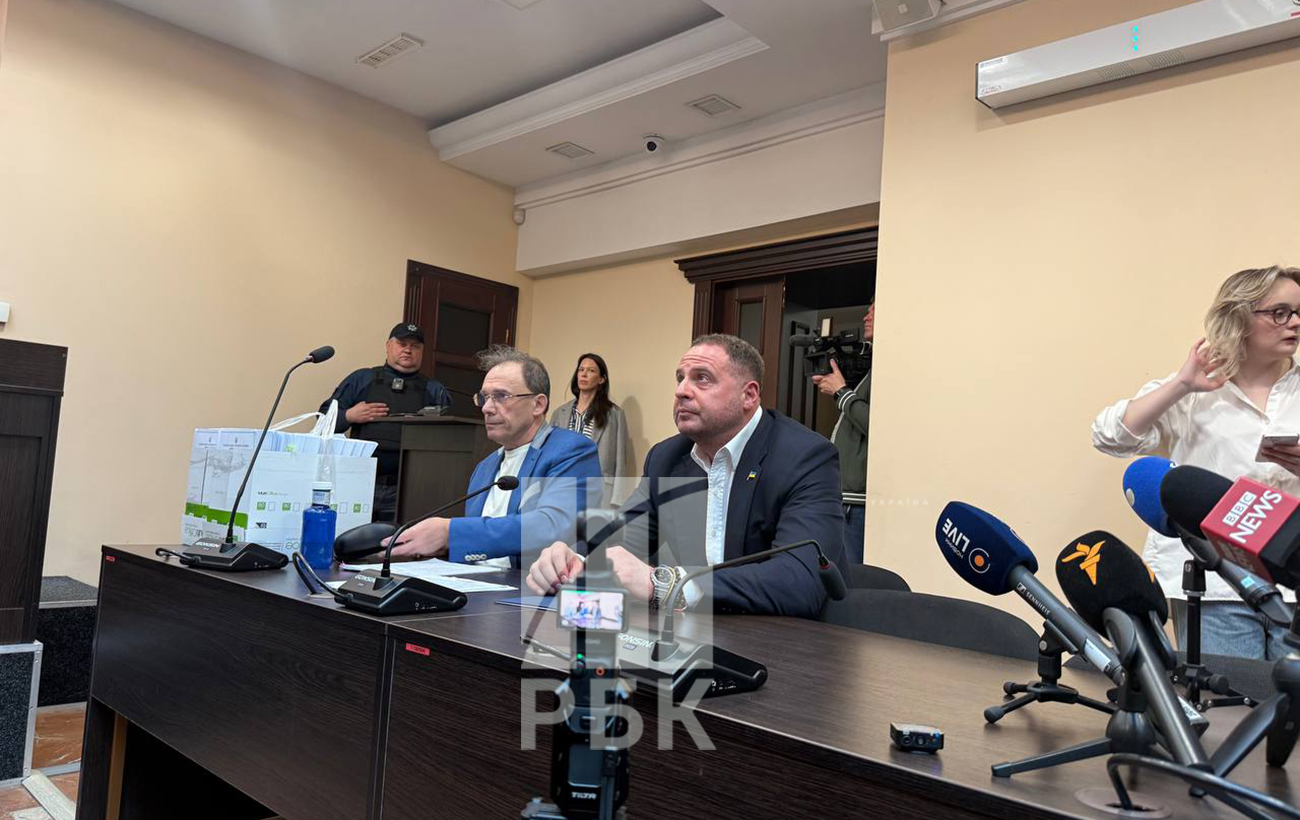
Photo: Andriy Yermak in court (Tetiana Demukh, RBC-Ukraine)
Of course, opponents of providing any assistance to Ukraine — and there are quite a few of them in Western countries — can use, and are already using, this story as proof that Ukraine is hopelessly corrupt and therefore should not receive financial aid. In much the same way, they seized on Yulia Mendel's unsubstantiated claims about President Volodymyr Zelenskyy and Ukraine supposedly losing the war to Russia.
Overall, however, there is no indication that the current scandal could leave Ukraine without Western support. Abroad, the situation is viewed differently: corruption — especially at the highest levels — is certainly a bad thing, but the fact that there are no longer any untouchables in Ukraine and that investigators can go after anyone is seen as a clear positive.
"So far, this is being viewed more as an internal political matter involving specific individuals. But if, in the future, we learn that corruption affected areas such as military procurement — and there are references to this on the tapes — then the consequences for Western aid to Ukraine could become much more serious," another diplomatic source told the outlet.