Zelenskyy’s plane in Ireland was followed by military-grade drones - Media

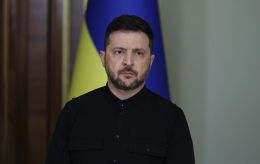
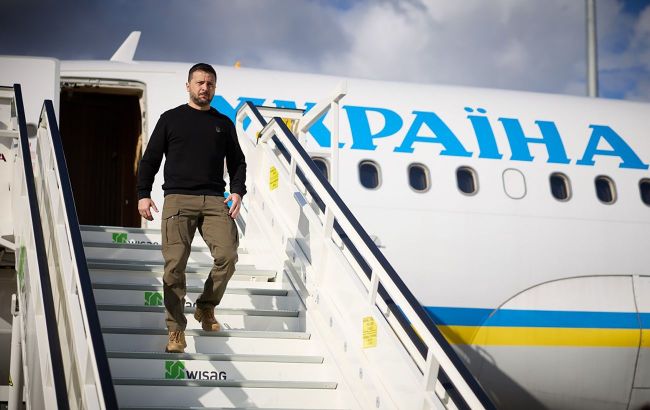 Photo: Ukrainian President Volodymyr Zelenskyy (president.gov.ua)
Four unidentified drones followed the flight path of Ukrainian President Volodymyr Zelenskyy’s plane during his visit to Ireland, The Journal informs.
According to the outlet, the plane landed at Dublin Airport slightly earlier than scheduled. Meanwhile, the drones reached the location where Zelenskyy’s flight was expected exactly on time.
After that, the drones circled over an Irish Naval Service vessel that had been secretly deployed to the Irish Sea during the Ukrainian leader’s visit. Irish authorities decided not to shoot down the drones, and the ship was not equipped with means to neutralize them.
Unnamed sources told The Journal that the drones took off from northeast Dublin and remained in the air for up to two hours. The Irish police are investigating the incident. It is still unknown who launched and controlled the drones.
Irish law enforcement believes the goal was to disrupt the arrival of Zelenskyy’s plane in Ireland, as the drones had their lights turned on.
The Commissioner of the Irish Police was informed about the incident on the morning of Tuesday, December 2. The incident was also reported to Irish Prime Minister Michéal Martin and the Ministers of Justice and Defense. It is unknown whether the information about the drones was communicated to President Zelenskyy’s team.
According to journalists, Irish security services determined that the drones at Dublin Airport were large, very expensive, military-grade, and the incident can be classified as a hybrid attack.
Zelenskyy’s visit to Ireland
Ukrainian President Volodymyr Zelenskyy, accompanied by First Lady Olena Zelenska, arrived in Ireland on the night of December 2.
During the visit, the Ukrainian leader met with Irish Prime Minister Michéal Martin.
Ireland also pledged to provide Ukraine with €100 million to counter Russian hybrid attacks and an additional €25 million for the energy sector.