Zelenskyy's office exposes Russian schemes for selling stolen Ukrainian grain

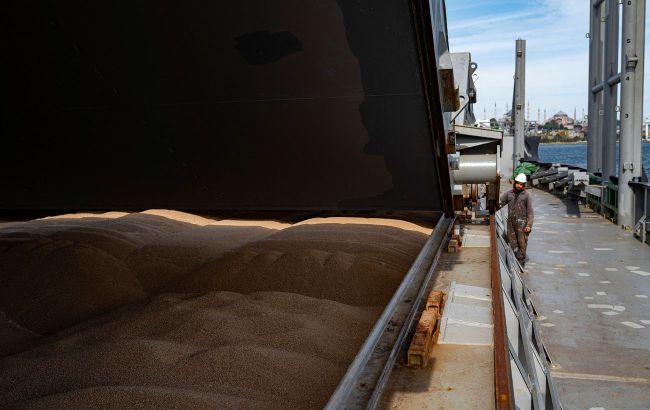 Photo: Sanctions aren't stopping Russia from selling stolen Ukrainian grain (Getty Images)
Russia continues to seek buyers for grain stolen from the temporarily occupied territories of Ukraine, using the occupied ports as a stable supply channel. This is confirmed by data for March–April 2026, according to Vladyslav Vlasiuk, the President of Ukraine's representative for sanctions policy.
He notes that Russia's activities have already been partially met with sanctions.
"A significant portion of the vessels operating on these routes are subject to restrictions imposed by Ukraine, the EU, and the US: Matros Pozynich, Severniy Proect, Damas Wave, Novaya Zemlya; Fedor, Princess Eva, Mys Zhelaniya, Zaid; Victoria K, Victoria V, Don, Asomatos," Vlasiuk says.
At the same time, he adds that, as practice shows, a vessel’s sanctioned status alone does not stop sales. Specifically, when restrictions arise, the route is changed.
"After Egypt refused to accept the Zaid due to EU sanctions, the vessel was simply redirected to Turkey. At the same time, Egypt itself continued to accept other shipments, particularly from Mariupol, including voyages by sanctioned vessels," the President of Ukraine's representative for sanctions policy says.
Model involving non-sanctioned vessels
Vlasiuk notes that another model is being used in parallel, involving non-sanctioned vessels, in which Israel is already involved. He reports that the vessels Asomatos, Abinsk, and Panormitis enter markets after transshipment in the Kerch Strait area, where the grain is mixed. According to him, about 30% of such cargo comes from the temporarily occupied territories.
"Ultimately, Russia is adapting to the restrictions: changing routes and redeploying its fleet, but not stopping exports. That is why sanctions must block not only the ships but any purchase of such grain," Vlasiuk emphasizes.
He explains that this entails both adding the grain carriers involved to sanctions lists and imposing secondary sanctions on the buyers. Furthermore, this work is being conducted diplomatically and in accordance with international law.
Israel buys stolen Ukrainian grain from Russia
Despite warnings from Kyiv regarding the grain’s illegal origin, Israeli authorities permitted the vessel to be unloaded.
The Office of the Prosecutor General of Ukraine opened a criminal investigation, and a Ukrainian court seized the ship and its cargo. Ukraine officially requested international legal assistance from Israel, demanding that the grain be seized and that the stolen resources not be legalized.
This week, a second ship arrived at the port of Haifa, which may also be carrying stolen Ukrainian grain. According to Axios, Ukrainian officials called Israel’s move a slap in the face.
In the wake of the incident, Israel’s ambassador to Ukraine, Michael Brodsky, was summoned to the Ministry of Foreign Affairs.