Zelenskyy presents action plan to protect Strait of Hormuz

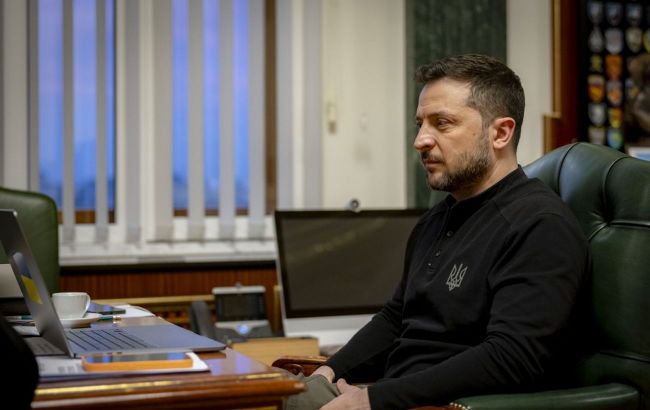 Photo: Volodymyr Zelenskyy, President of Ukraine (president.gov.ua)
To ensure freedom of navigation worldwide, threats in the Strait of Hormuz must be addressed collectively by involving Middle Eastern countries and using Ukraine’s unique defense experience, stated Ukrainian President Volodymyr Zelenskyy during an online meeting on freedom of navigation in the Strait of Hormuz.
Protecting the Strait of Hormuz
The President stressed that decisions regarding Hormuz will determine how other aggressive actors perceive the possibility of creating disruptions in other straits and regions. He called for concrete steps to avoid a prolonged security crisis similar to the situation in Gaza.
Zelenskyy proposed clearly defining the distribution of responsibilities between international partners and the United States, as well as involving Middle Eastern countries based on their shared interests.
"In Hormuz, there are security tasks that can’t be solved by political decisions only. Key principle is: after the war, security must be stronger, not weaker," he said.
Ukraine’s experience and strengthening Europe
Ukraine is ready to offer its experience in escorting commercial vessels, demining, and defending against aerial attacks — expertise gained in the Black Sea. Ukrainian specialists are already working in the Gulf region on air security and could contribute to maritime protection.
At the same time, Zelenskyy warned that the war in Iran is negatively affecting the situation in Europe due to ongoing Russian aggression. Against the backdrop of a potential shortage of air defense systems, he urged European countries to take decisive action.
"Thus, Europe needs to take even stronger steps to protect lives, above all, to defend against ballistic threats and maintain pressure on Russia," the President said.
He added that key regions of the world — Europe, the Middle East, and Asia — must rely more on their own capabilities in matters of global security.
Situation around the Strait of Hormuz
On April 17, Iran reopened the Strait of Hormuz to all commercial vessels. The decision applies for the duration of the ceasefire in Lebanon.
Earlier reports indicated that Tehran had discussed with the United States the possibility of partially reopening the strait in exchange for guarantees that the conflict would not resume.
Meanwhile, the International Energy Agency warned that even if peace is established, restoring energy supplies will not be quick, and global fuel prices may remain elevated for an extended period.