Will Russia seek peace by spring? Ukraine's frontline commanders share their forecast


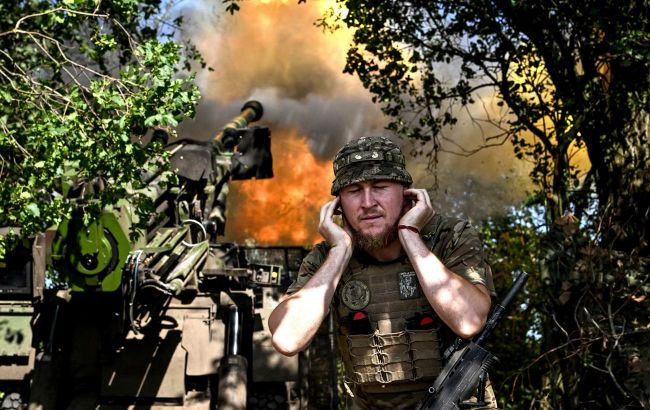 Illustrative photo: military commanders gave their forecast for the winter (Getty Images)
Russia is preparing to carry out additional mobilization in the autumn and change its tactics on the front, but the Kremlin may seek peace as early as spring if Ukraine successfully defends its skies against ballistic missiles and uses new technologies, this was discussed by commanders from Khartiia, Azov and the Third Corps at the YES Annual Meeting 2026 conference organized by the Viktor Pinchuk Foundation.
Window for negotiations will be in spring
Russia is currently pursuing two key goals — the final capture of the Donetsk and Luhansk regions, as well as economic and civilian terror aimed at breaking Ukraine's ability to defend itself, says Commander of the Third Army Corps Andrii Biletskyi.
"Russia's military leadership has set the task of accomplishing this goal (the capture of Donetsk and Luhansk regions — ed.) by mid-April. Russia's political leadership is demanding that they finish it within an absolutely unrealistic timeframe, by the beginning of 2027," Biletskyi explained.
In his opinion, the Defense Forces have every chance of holding advantageous positions, the so-called belt of fortress cities in Donetsk region, and improving their position in some areas of the front.
"I think that within the next month we will demonstrate these improvements to the whole world," the brigadier general noted.
At the same time, he acknowledges that the coming winter will be very difficult for Ukraine.
"Our victory or defeat here will depend on whether we close the Ukrainian skies this winter — from the missile threat, ballistic missiles, and the jet-powered threat: jet-powered drones such as Shaheds and Banderoľ," the Third Corps commander said.
If the front and the rear hold next winter, then, in Biletskyi's opinion, in March-April, Russia will face an existential question — why and how to continue the war at all, since it will not achieve any of its strategic goals.
"And I think that this could possibly be an ideal moment for lasting negotiations and lasting peace, if not entirely, then to a significant extent, on Ukrainian terms," Biletskyi said.
Drones attack from underground
Technology is changing very rapidly on the battlefield, says Ihor Obolenskyi, commander of the Khartiia 2nd Corps of the National Guard of Ukraine.
"What existed two years ago is no longer even discussed. Technologies change, and within two to three months everything changes," he noted.
According to the Khartiia commander, the battlefield in his corps' area of responsibility has "gone underground."
"We have started fighting underground. Everyone comes to us, and I show and explain that Western countries currently have no experience conducting underground flanking attacks. We already do. At present, we are even using DJI drones underground," Obolenskyi said.
As for protecting the skies, he believes that Ukraine and its partners currently need to build a two- or three-layered defense system.
"If we believe in technologies such as jet-powered drones, in my personal opinion, that's a problem. No, I don't have much faith in them. I only believe in missiles that will be able to stop both glide bombs and jet-powered drones," Obolenskyi noted.
In his view, this requires maximum involvement from Western partners.
"We need to develop a short-range missile and work on air-to-air missile carriers," he added.
Kremlin preparing mobilization after the elections
Russia is preparing to intensify its offensive in the autumn, says Denys "Redis" Prokopenko, commander of the Azov Corps. This process could begin very quickly after the local elections in Russia.
"From the end of September through the beginning of winter, the enemy could quite rapidly mobilize up to 600,000 servicemen. We may see them on the front line in the near future, by the end of this year," Prokopenko said.
By throwing more personnel into the fighting, the enemy, according to the Azov commander, will try by the end of the autumn campaign to gain a foothold in one of the cities of the Donetsk region — Dobropillia, Kostiantynivka, Druzhkivka, Kramatorsk, Sloviansk or Sviatohirsk — and secure an opportunity to break into operational space.
"We will not allow that. The enemy has no chance of success. The losses required for this are enormous," the military officer noted.
According to his estimates, Russian forces were losing 123 servicemen per day in his sector in July and 135 per day in August.
"We expect September to be the culmination of the summer offensive campaign, so they need to show some kind of result," Prokopenko believes.
Starting in October, he expects Russian forces to change their tactics.
"We link this to sharp changes in weather conditions. Heavy rains will begin, fog will set in, and daylight hours will become shorter. The enemy will be forced to switch from the tactic of small infantry groups to heavy armored equipment and will attempt mechanized breakthroughs deep into the defense," Prokopenko said.
In addition, he does not rule out that part of the mobilized reserve formed by the beginning of winter could be used to tie down the efforts of the Defense Forces, particularly along the border in the Sumy and Chernihiv regions, while continuing to terrorize the capital.