Why Zaporizhzhia nuclear power plant turned into stumbling block for Ukraine peace talks

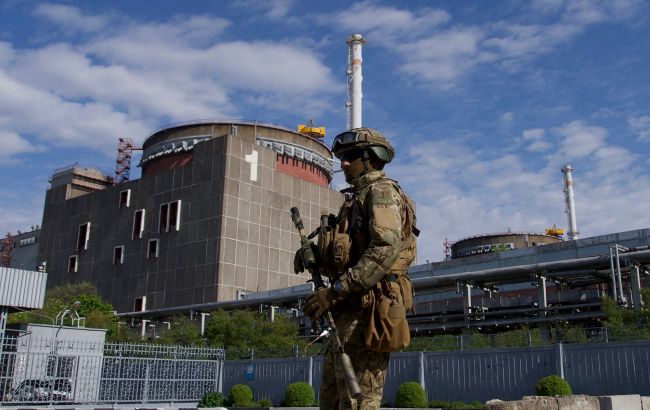 Photo: Zaporizhzhya Nuclear Power Plant, temporarily occupied by Russia (Getty Images)
The Zaporizhzhia Nuclear Power Plant, temporarily occupied by the Russian regime, has become a stumbling block between Ukraine and Russia, as it has massive capacity and both sides want to retain control over it, The New York Times reports.
According to the outlet, the Zaporizhzhia plant has a capacity of six gigawatts — about a quarter of Ukraine’s pre-war electricity generation. Both Ukraine and Russia want to restart the nuclear plant after the war, but each side insists on maintaining control over it.
The Zaporizhzhia Nuclear Power Plant is expected to play a major role in Ukraine’s post-war recovery. However, control over the facility is sought not only by the Kremlin and Kyiv.
"The United States has also shown interest, seeing the facility as an opportunity to advance American economic interests in a peace deal. US negotiators, Mr. Zelenskyy said, have proposed that the United States, Russia, and Ukraine jointly operate the plant, an idea that Kyiv opposes," the outlet says.
A generator of threats
At present, the Zaporizhzhia plant is a source of nuclear safety risks, as it is frequently cut off from external power due to hostilities. There are also problems with the water supply for cooling following Russia’s destruction of the Kakhovka Hydroelectric Power Plant. The facility currently relies on diesel generators, a cooling pond, and groundwater wells, which may be insufficient in a critical situation.
The Kremlin has said it will not abandon its claims to control the Zaporizhzhia plant. Russia plans to restart the reactors, connect the facility to its own power grid, and supply electricity to temporarily occupied parts of southern and eastern Ukraine.
At the same time, the plant is of critical importance to Kyiv. It is not only about ending the occupation of the facility but also about ensuring Ukraine’s post-war energy independence. Before the war, the Zaporizhzhia plant supplied about a quarter of the country’s electricity needs.
What the US and Ukraine propose
In November, the United States and Russia developed a plan that envisaged an initial restart of the Zaporizhzhia plant under the supervision of the International Atomic Energy Agency. The electricity generated was to be shared between Russia and Ukraine.
The current proposal from US President Donald Trump’s administration calls for joint management of the plant by the United States, Russia, and Ukraine. However, President Volodymyr Zelenskyy rejected the idea, instead proposing that the plant be operated as a joint venture between the United States and Ukraine.
The outlet notes that this suggested the United States could sell or transfer its stake to Russia. However, this option is unacceptable to the Kremlin, as the Russian regime demands full control over the facility.
Trump said after meeting with Zelenskyy on December 29 that Russian leader Vladimir Putin had made a major concession regarding the Zaporizhzhia plant, claiming it was a significant achievement that Putin was not targeting it with bombs.
Meanwhile, on December 28, Ukraine and Russia agreed to a local ceasefire near the Zaporizhzhia Nuclear Power Plant. This allowed repair work to begin on power transmission lines near the facility, after Russian provocations once again left the plant without an external electricity supply.