Why your kitchen range hood isn't pulling air and how to fix it

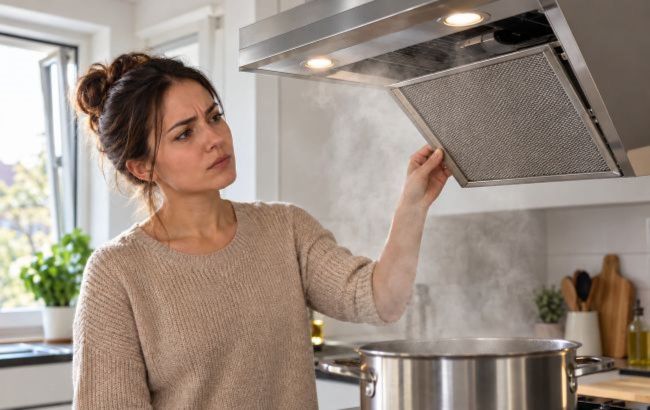 Explore when cleaning the filter is enough and when the motor needs to be checked (collage: Styler)
A range hood may be running with its usual humming noise, but steam and odors remain in the kitchen. This does not always mean the motor is broken. The cause could be dirty filters, problems with the air duct, or insufficient airflow into the room.
Styler explains what you can check yourself and when to call a repair technician.
Why range hood hums but does not draw in air
Even a properly functioning fan may have trouble drawing in air for the following reasons:
-
Dirty grease filter. Accumulated grease makes it harder for air to pass through and reduces the hood's efficiency.
-
Clogged air duct. Grease buildup, foreign objects, or bends in the duct can reduce airflow.
-
Closed backdraft damper. If the damper is stuck and does not open, air cannot escape properly.
-
Faulty fan. The motor may hum even though the fan blades aren't spinning or aren't working properly.
NEFF also lists an incorrectly selected fan speed, air duct installation problems, and mechanical failures among the possible causes of poor extraction.
What you can check yourself
1. Check the fan speed
Turn the hood to a higher speed and check whether airflow improves. Low fan speeds may not be sufficient when cooking intensively.
If the hood barely draws in air even at maximum speed, move on to the next checks.
2. Clean the grease filter
Turn off the hood and unplug it. Remove the metal filter as instructed, wash it with warm water and mild detergent, and let it dry completely before reinstalling it.
Samsung recommends cleaning metal grease filters approximately once a month. The frequency depends on how intensively you use the hood.
3. Check the type of range hood
Not all range hoods vent air outside. Recirculating models trap grease and some odors using filters before returning the air to the room. They don't remove moisture from the kitchen, so you'll need additional ventilation.
According to Electrolux, standard charcoal filters need periodic replacement. Some reusable models can be cleaned and regenerated according to the manufacturer's instructions.
4. Check the air supply
If the hood vents air outside but very little fresh air enters the kitchen, its efficiency may decrease.
Manufacturer Wolf lists insufficient air supply as a possible cause of poor airflow.
Try opening a window slightly for a short time and check whether the hood works better. If you notice a difference, the room's ventilation system may need inspection.
5. Inspect the air duct
If the hood is connected to a ventilation duct, inspect the accessible section. Look for bends, damage, and disconnected joints.
Poor airflow can also result from a blocked duct or a backdraft damper that does not open fully. Do not attempt to dismantle concealed ductwork or interfere with the building's ventilation shaft yourself.
When your range hood needs repair
If the hood hums but produces almost no airflow, the fan blades may be jammed or the motor may be faulty.
According to Victory Range Hoods, a humming motor without a spinning fan may indicate a mechanical failure.
Stop using the range hood if it:
-
Vibrates heavily or makes grinding noises
-
Becomes excessively hot
-
Smells like burning insulation
-
Continues humming but produces no airflow even after the filters have been cleaned.
If the appliance overheats or smells burnt, disconnect it from the power supply if it is safe to do so. Do not touch a hot or damaged plug.
Do not attempt to turn the fan blades manually or dismantle the motor while the hood is connected to the power supply. If these basic checks do not solve the problem, contact a qualified service technician.