Why Russians endure rather than revolt: The Atlantic explores a culture of patience

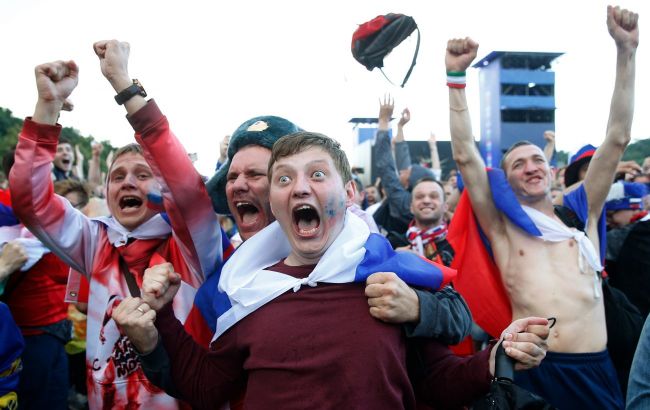 Photo: pro-government rally of Russians (Getty Images)
Constant strikes by the Armed Forces of Ukraine on oil refineries, ports, and warehouses are indeed useful for Ukraine's defense, depriving the enemy of gasoline or "gray" goods for the military. However, in society, this only causes concern behind closed doors — out of fear, and because people have grown accustomed to such conditions since Soviet times, according to an extensive analytical piece in The Atlantic.
Today, in some regions of Russia, drivers have to wait up to 69 hours for gasoline, with queues at gas stations stretching for several kilometers. It would seem that deteriorating living conditions could push society toward protests and increase pressure on the authorities ahead of the parliamentary elections. Yet this has not happened.
Russians are used to shortages
One explanation the author offers lies in the experience of the Soviet past. Shortages and queues were a familiar part of life in the USSR, and waiting in line was so widespread that Soviet researchers even viewed it as an element of social and cultural identity.
According to data cited in the article, books were even published with chapter titles such as "The Queue as a Form of Soviet Life." The newspaper Sotsialisticheskaya Industriya calculated that Soviet citizens spent 30 billion working hours per year waiting in line for essential goods.
People grew accustomed to everyday inconveniences, accepting them as normal: "Everyone lives like this." At the same time, the authorities demonstrated a willingness to brutally suppress organized resistance.
A telling example is the Novocherkassk tragedy of 1962. After protests over wage cuts and price hikes, Soviet authorities deployed troops against the demonstrators. During the crackdown, around two dozen people were killed.
Fear of power is stronger than dissatisfaction
Today, as the article notes, fear of the state remains one of the key factors deterring Russians from taking to the streets.
The author recounts a conversation with a former neighbor from St. Petersburg, whom she calls Svetlana. The woman works as an art teacher and is an activist. When asked about street protests, she replied that the situation in Russia is dangerous even compared to Soviet times.
According to her, people can report neighbors to security forces even for listening to anti-war music. She also spoke about an acquaintance who spent two years in prison after leaving a poem and flowers at a monument to a Ukrainian poet.
That is why, in many families, criticism of the authorities does not extend beyond the kitchen, Svetlana said.
After the start of the full-scale war, protests in Russia were much more visible. According to OVD-Info data, police detained nearly 19,000 anti-war activists in 2022. Since then, street protests have virtually disappeared.
Opposition in Russia has been entirely purged
Another telling example is the Russian Supreme Court's ruling regarding the Yabloko party. According to the article, it is the only anti-war political force that was barred from participating in the parliamentary elections.
Far-right politicians accused the party of foreign funding, copyright violations, and promoting extremism. The Supreme Court sided with them and excluded Yabloko from the ballot.
Only a few hundred people turned out to protest outside the courthouse.
The opposition in Russia is now exclusively systemic: the tame Communist Party and other parties criticize officials, but not Putin — and not too strongly.
"We are human. We’ll adapt.”
Ultimately, even worsening living conditions do not necessarily translate into political protest in Russia. Journalist Irina Borogan, who has studied Russian dissidents, explains this not only as fear but also as a particular ability of society to adapt to hardship.
According to her, instead of war fatigue, Russians may perceive the worsening situation as a reason to unite and "tighten their belts."
This mindset is well illustrated by the response of a middle-aged man from Crimea, when asked about the fuel shortage. He simply shrugged: "We are human. We’ll adapt.”
Context of the article
Due to systematic strikes by the Armed Forces of Ukraine on energy, port, and warehouse infrastructure, Russia's economy is facing a crisis. The country's largest state-owned banks — Sber and VTB — are reporting a deterioration in the quality of their loan portfolios, with growing problems among marketplace clients, particularly Wildberries, where an increasing number of borrowers are seeking debt restructuring.
Due to the fuel shortage caused by a series of Ukrainian strikes on Russian oil refineries, Russia has begun importing gasoline from India.