Why are Russians still getting Schengen visas? New EU data sparks outrage

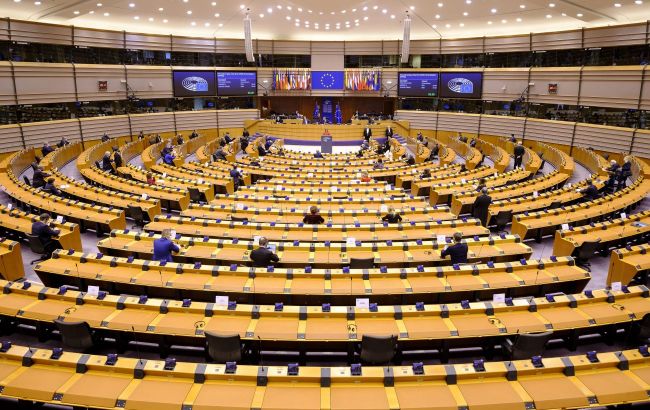 Members of European Parliament (photo: Getty Images)
EU countries issued more than 620,000 Schengen visas to Russians in 2025 — 10% more than a year earlier. Data sparked tensions among EU diplomats and exposed a deep divide between France, Italy and Spain on one side, and Baltic states and Poland on other, Euractiv reports.
Numbers that divided the EU
Russian citizens submitted more than 670,000 applications for Schengen visas in 2025 — almost 8% more than in 2024. More than 620,000 visas were issued. More than 477,000 of them were tourist visas, accounting for about 77% of the total number.
Three-quarters of all applications went to France, Italy, and Spain. France showed the biggest increase, plus 23% compared to 2024. More than 56,000 Russians live in France, a significant part of them on the French Riviera, where more than 50 real estate properties linked to sanctioned individuals have been frozen.
Scandal over hidden statistics
At the center of the scandal is the European Commission's internal monitoring document, "Schengen Barometer". Data on visas for Russians provoked such sharp disputes that they were simply removed from the latest version of the document. Several diplomats drew attention to this during discussions. After eight EU countries raised an issue, figures were returned — but only in a separate technical annex.
Divide in approaches
Baltic states and Poland have long insisted that Russians should not have the right to tourist travel to Europe while Moscow is waging war against Ukraine. France and other Western European countries see this differently — partly because of economic ties, partly because of the argument that isolating Russians could cut them off from the world beyond Kremlin propaganda.
European Commission recalled that back in 2022, it recommended member states deprioritize applications from Russians. The EU also fully suspended the visa facilitation agreement with Russia and, in 2025, canceled multiple-entry visas for Russians.
Earlier, Estonia proposed permanently closing Schengen borders to Russian military personnel who fought against Ukraine. According to Prime Minister Kristen Michal, after the war, such people could become a threat to European security.
Tallinn's initiative is currently being discussed in the European Union. The European Commission has already received a task from the European Council to analyze the possibility of implementing these restrictions.